The Best Sugar Substitutes for Baking: A Quick Guide
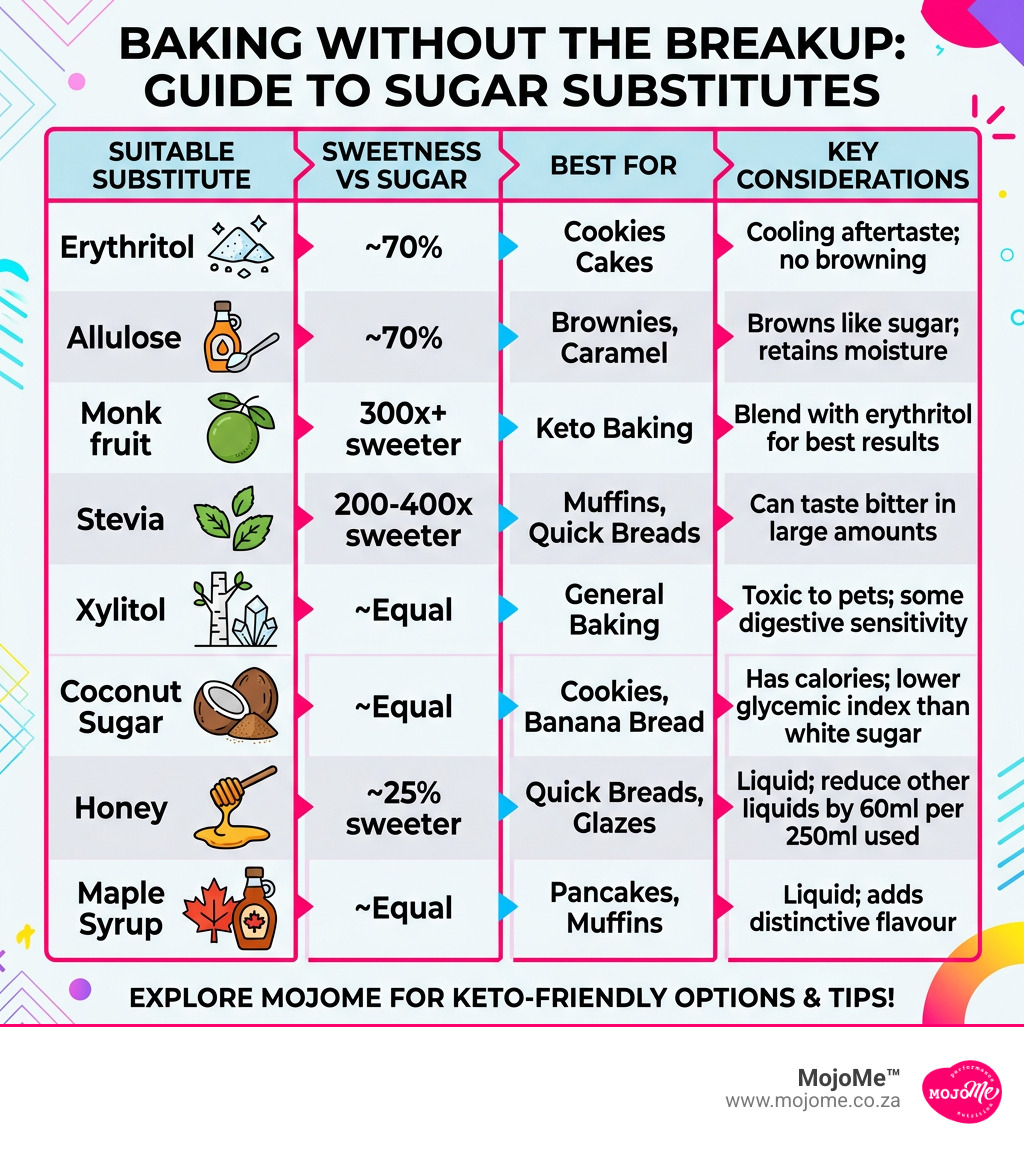
The best sugar substitute baking results come down to matching the right alternative to your recipe and health goals. Here is a quick overview before we dive deeper:
| Substitute | Sweetness vs Sugar | Best For | Key Consideration |
|---|---|---|---|
| Erythritol | ~70% | Cookies, cakes | Cooling aftertaste; no browning |
| Allulose | ~70% | Brownies, caramel | Browns like sugar; retains moisture |
| Monk fruit | 300x+ sweeter | Keto baking | Blend with erythritol for best results |
| Stevia | 200-400x sweeter | Muffins, quick breads | Can taste bitter in large amounts |
| Xylitol | ~equal | General baking | Toxic to pets; some digestive sensitivity |
| Coconut sugar | ~equal | Cookies, banana bread | Has calories; lower glycemic index than white sugar |
| Honey | ~25% sweeter | Quick breads, glazes | Liquid; reduce other liquids by 60ml per 250ml used |
| Maple syrup | ~equal | Pancakes, muffins | Liquid; adds distinctive flavour |
Most of us bake because we love the result. The smell of something warm from the oven, the satisfaction of sharing something made from scratch. But sugar is one of the biggest barriers for people managing their weight, blood sugar or inflammation.
The average South African, like their American counterpart, consumes far more sugar than recommended. The American Heart Association advises no more than 25g per day for women and 36g per day for men. Most people eat nearly three times that amount daily.
The challenge with swapping sugar in baking is that sugar does far more than sweeten. It adds bulk, traps moisture, helps baked goods rise and drives that golden-brown colour we all love. Replace it badly and you get something dry, pale and oddly textured.
The good news is that the right substitute, used correctly, can get you surprisingly close to the real thing.
How Sugar Substitutes Affect Baking Chemistry
Baking is a science and sugar is one of its most hardworking laboratory assistants. When we talk about finding the best sugar substitute baking option, we are not just looking for sweetness. We are looking for a molecular partner that can replicate sugar’s complex roles.
Sugar is hygroscopic, which is a fancy way of saying it loves to hold onto water. This property is what keeps your Sponge Cake moist for days. Many zero-calorie alternatives do not attract moisture in the same way, which is why sugar-free bakes can sometimes turn out dry or crumbly. Understanding Baking Hints & Tips is essential here; you often need to add extra fats or fibres to compensate for this lack of water retention.
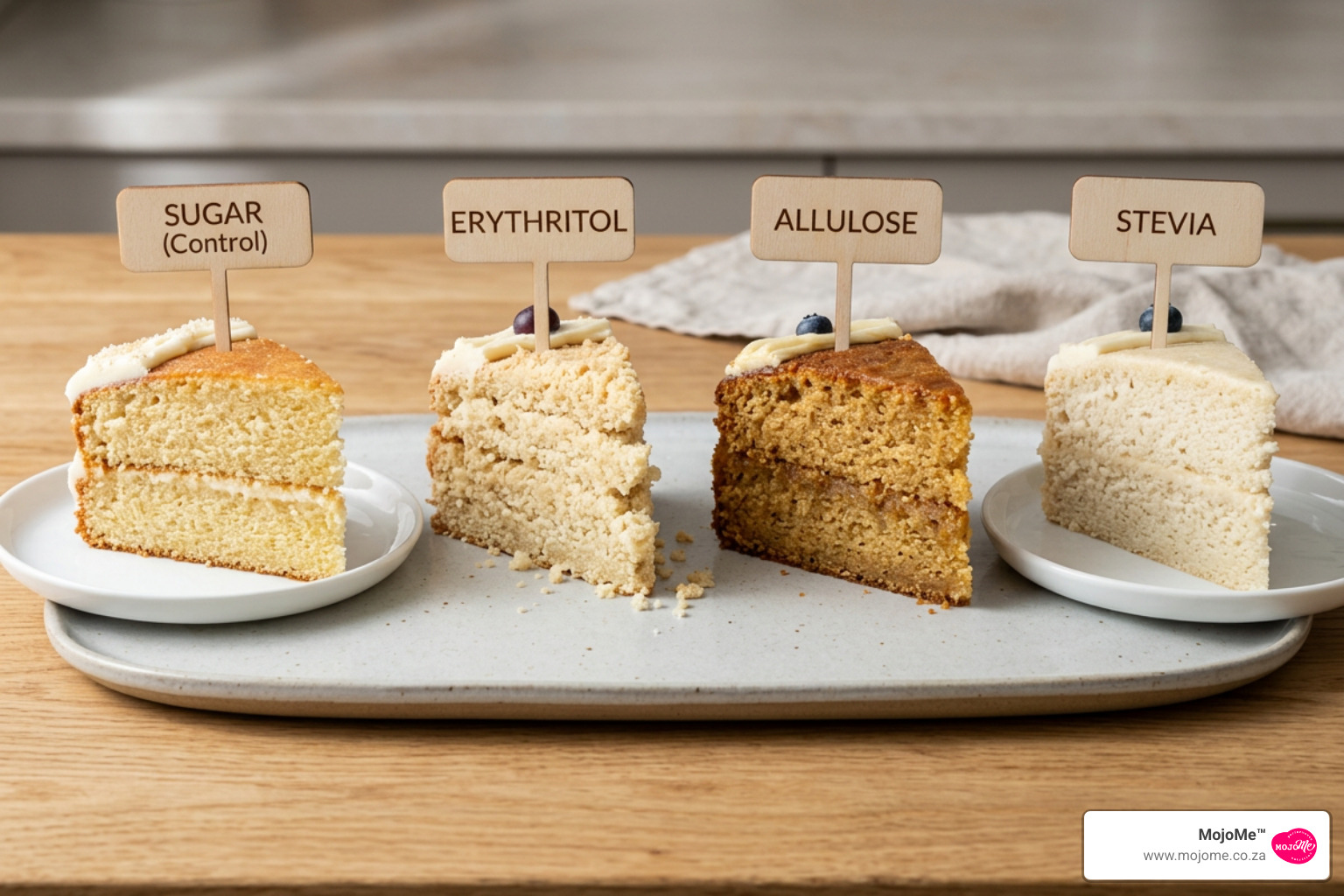
Then there is the matter of browning and caramelisation. Regular sugar undergoes the Maillard reaction, creating that golden crust and deep flavour profile. Most sugar alcohols, like erythritol, do not caramelise. If you use them alone, your cookies might stay pale even when they are fully cooked.
Sugar also provides structural integrity. It interferes with gluten development to keep cakes tender and provides the “bulk” that gives muffins their height. Without it, the rise and spread of your dough changes. High sugar intake is strongly linked to heart disease and metabolic issues, so making the switch is vital for health, but it requires a bit of chemical “cheating” to get the texture right.
Finding the Best Sugar Substitute Baking for Your Kitchen
When you stand in the baking aisle in Cape Town, the options can be overwhelming. To choose the right one, you need to know if you are substituting by volume or weight. While many brands claim to be 1:1 replacements, the density often differs.
| Feature | Erythritol | Xylitol | Allulose |
|---|---|---|---|
| Sweetness | 70% of sugar | 100% of sugar | 70% of sugar |
| Browning | None | Minimal | High |
| Calories | 0.2 per gram | 2.4 per gram | 0.4 per gram |
| Cooling Effect | High | Low | None |
Erythritol Sweetener is a popular choice because it has zero calories and a zero glycemic index. However, it has a distinct “cooling effect” on the tongue, similar to the sensation of mint without the flavour. This happens because erythritol absorbs heat from your mouth as it dissolves. To mitigate this, many bakers use bulking agents or blends. Xylitol Sweetener is another fantastic 1:1 alternative that tastes almost exactly like sugar, though it is slightly higher in calories and must be kept far away from dogs, as it is highly toxic to them.
Why Allulose is the Best Sugar Substitute Baking for Browning
If you have ever been frustrated by pale, soft-looking sugar-free biscuits, allulose is your new best friend. Known as a “rare sugar”, allulose is found naturally in figs and raisins. It is unique among zero-calorie sweeteners because it actually caramelises and browns just like sucrose.
It helps create a soft crumb and prevents the dry, “sand-like” texture often found in poor substitutions. If you are Fixing Sugar Free Baking Mix Texture Problems, adding a bit of allulose can provide the “gooeyness” required for brownies or the crisp edges needed for a Chocolate Cake.
Choosing the Best Sugar Substitute Baking for Keto Diets
For those following a ketogenic lifestyle in South Africa, the goal is zero net carbs and minimal blood sugar impact. This is where high-intensity sweeteners like monk fruit and stevia shine. Because they are hundreds of times sweeter than sugar, they are usually blended with erythritol to create a manageable powder.
For decorating, Erythritol Icing Dust is indispensable. It allows you to create a Sugar Free Icing that looks and pipes exactly like traditional buttercream without the insulin spike. These options ensure that you can enjoy a treat without falling out of ketosis.
Natural Sweeteners vs Zero Calorie Alternatives
Not everyone is looking for zero calories. Sometimes the goal is simply to avoid refined white sugar. Natural liquid sweeteners like honey, maple syrup and agave nectar are popular, but they require significant recipe adjustments.
When baking with liquid sweeteners, you are adding moisture and acidity. For every 250ml of honey used, you should reduce the other liquids in the recipe by about 60ml and add a pinch of baking soda to neutralise the acid. Fruit purees, like applesauce or mashed dates, add wonderful fibre and moisture but result in a much denser, “snack-cake” texture.
While these are “natural”, they still contain calories and impact blood sugar. If you are looking for a treat that feels indulgent but remains healthy, pairing them with Sugar Free Chocolate can help balance the overall sugar load of the recipe.
Health Benefits and Considerations of Sugar Swaps
The motivation for finding the best sugar substitute baking option is usually health-driven. Reducing refined sugar is a powerful tool for obesity prevention and managing Type 2 diabetes.
Sugar is a primary fuel for the bacteria that cause cavities. By switching to xylitol or erythritol, you are actually protecting your dental health, as these sweeteners do not ferment in the mouth. Furthermore, reducing sugar helps combat insulin resistance, which is a precursor to many metabolic diseases.
There has been some discussion regarding artificial sweeteners and health conditions. While research is ongoing, most experts agree that for the average person, the risks of high sugar consumption—including fatty liver disease and systemic inflammation—far outweigh the potential concerns of moderate sweetener use. For those with sensitive digestive systems, sugar alcohols can sometimes cause bloating if consumed in very large quantities, so it is always best to start with small portions.
Expert Tips for Success with the Best Sugar Substitute Baking
To get professional results at home, you need to adjust more than just the ingredients.
- Lower Your Temperature: Baked goods made with alternatives (especially those containing allulose or milk proteins) tend to brown faster. Reduce your oven temperature by about 25 degrees Celsius and check for doneness 5 to 10 minutes earlier than the recipe suggests.
- Mind Your Flour: Alternatives often work best with grain-free flours. Almond Flour provides a natural richness that complements sweeteners, while Coconut Flour is highly absorbent and helps provide structure where sugar is missing.
- Add Moisture: Since most sweeteners are not as hygroscopic as sugar, add a tablespoon of yoghurt, sour cream or an extra egg yolk to keep your Almond Cake from drying out.
- Sift Your Powders: Some substitutes, particularly erythritol-based ones, can be “clumpy”. Sifting them with your dry ingredients ensures an even distribution of sweetness.
- Start with a Mix: If you are nervous about the chemistry, starting with a Dark Chocolate Brownie Mix that is already balanced for sugar alternatives is a great way to build confidence.
Frequently Asked Questions about the Best Sugar Substitute Baking
What is the best 1:1 sugar substitute for cookies?
Xylitol is arguably the best 1:1 substitute for cookies because it provides a similar “crunch” and sweetness profile. However, if you want a softer, chewier cookie, a blend of erythritol and allulose is often superior.
How do I prevent a cooling aftertaste in sugar-free baking?
The cooling effect is most prominent in pure erythritol. To fix this, mix it with a small amount of a different sweetener like stevia or monk fruit, or use it in recipes with strong flavours like cocoa or cinnamon which help mask the sensation.
Can I use liquid sweeteners to replace granulated sugar?
Yes, but it is not a direct swap. You generally use 180ml of liquid sweetener for every 250ml of sugar and must reduce the overall liquid content of the recipe to prevent the batter from becoming too runny.
Conclusion
At MojoMe, we believe that choosing a healthier lifestyle shouldn’t mean saying goodbye to your favourite treats. Based in the beautiful Muizenberg, Cape Town, we are dedicated to providing 100% natural, science-backed nutrition that fits your wellness goals. Whether you are looking for a Carrot Cake mix or the perfect Sugar Substitute Category product to start your own kitchen experiments, we have you covered.
Baking without sugar is a journey of discovery. By understanding the chemistry and choosing the best sugar substitute baking tools, you can create delicious, health-conscious desserts that your whole family will love. No breakup with your oven required.