Marine vs Bovine Collagen: Which One Is Right for You?
When comparing marine vs bovine collagen, the short answer is this: marine collagen is best suited for skin, hair and nail goals, while bovine collagen offers broader support across skin, joints, gut health and connective tissue.
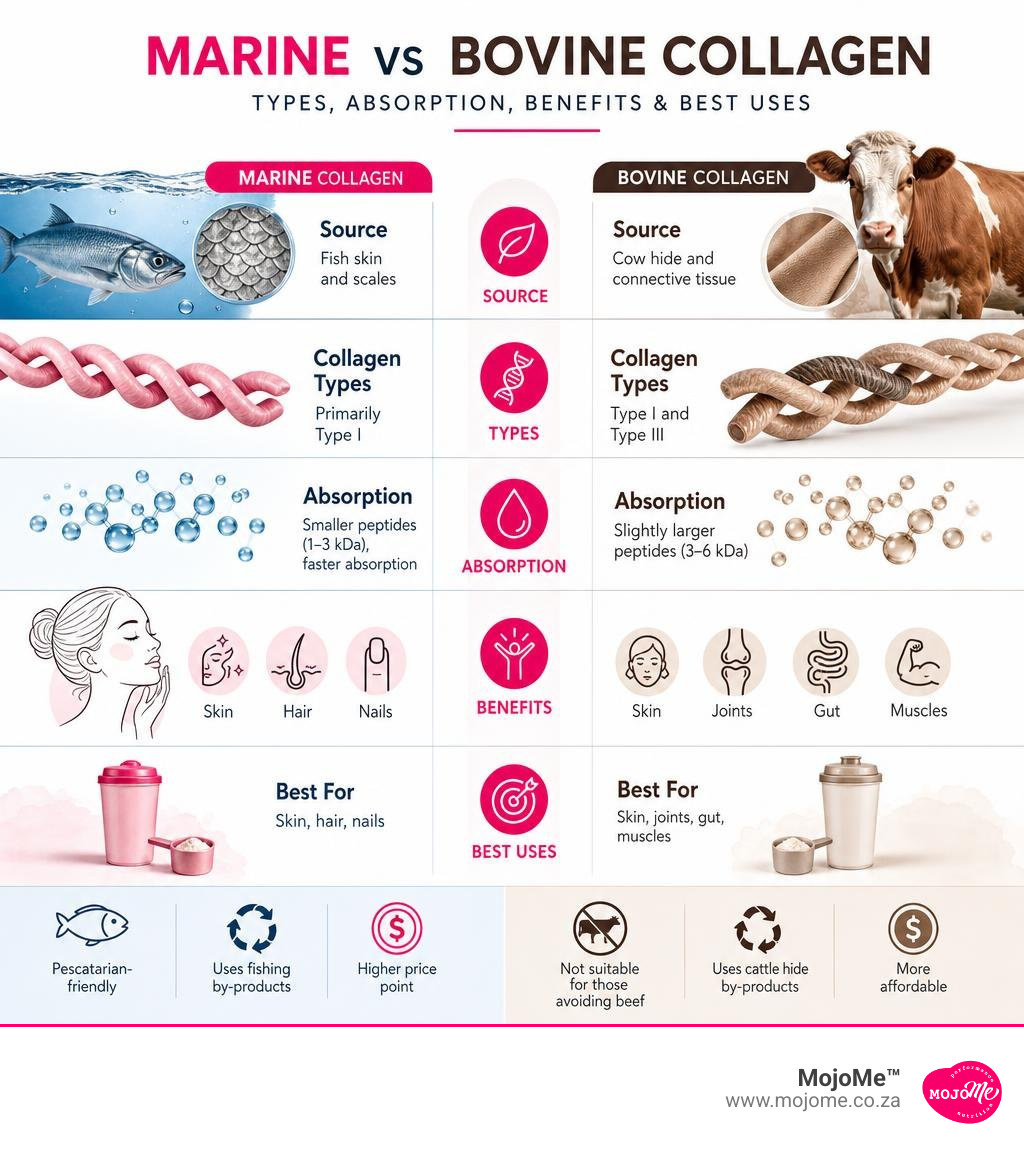
| Feature | Marine Collagen | Bovine Collagen |
|---|---|---|
| Source | Fish skin and scales | Cow hide and connective tissue |
| Collagen types | Primarily Type I | Type I and Type III |
| Absorption | Smaller peptides (1-3 kDa), faster absorption | Slightly larger peptides (3-6 kDa) |
| Best for | Skin, hair, nails | Skin, joints, gut, muscles |
| Dietary fit | Pescatarian-friendly | Not suitable for those avoiding beef |
| Sustainability | Uses fishing by-products | Uses cattle hide by-products |
| Cost (per 10g serving) | Higher price point | More affordable |
Collagen is the most abundant protein in the human body, making up roughly 30% of total protein content. It gives skin its firmness, keeps joints cushioned and supports gut lining integrity. The problem is that natural collagen production starts to decline from your mid-twenties at approximately 1.5% per year, and by the time most people notice the effects, that decline has been underway for years.
Choosing the right collagen supplement depends on more than marketing claims. Your health goals, dietary preferences, budget and lifestyle all matter. This guide cuts through the noise with evidence-based information to help you make a confident decision.
Easy marine vs bovine collagen glossary:
- fish vs beef collagen
- is bovine collagen better than marine
- is bovine or fish collagen better
Marine vs Bovine Collagen: Key Differences and Sourcing
To understand the core differences between these two popular supplements, we must look at the specific types of collagen they contain and their molecular structures. While there are at least 28 different types of collagen identified in the human body, Type I and Type III are the most critical for structural integrity, representing the vast majority of our natural dermal and connective tissues.
Marine collagen is almost exclusively Type I collagen. Because Type I is the primary building block of human skin, representing about 80% of our dermal layer, marine collagen is highly sought after for beauty-focused goals. It is biochemically structured to support skin elasticity, smooth out fine lines and strengthen brittle nails.
Bovine collagen provides a more diverse profile, containing both Type I and Type III collagen. Type III collagen is found in abundance in our muscles, blood vessels, intestinal walls and organs. This combination makes bovine collagen a more versatile, full-body supplement. It works exceptionally well for individuals who want to address joint comfort, muscle recovery and gut health alongside basic skin support.
From an amino acid perspective, both sources are incredibly rich in glycine, proline and hydroxyproline, which are the essential building blocks your body needs to manufacture its own collagen. However, subtle differences exist. Bovine collagen typically contains slightly higher concentrations of glycine and proline, whereas marine collagen boasts higher levels of alanine, which plays a key role in cellular energy production during exercise.
| Property | Marine Collagen | Bovine Collagen |
|---|---|---|
| Primary Collagen Types | Type I | Type I and Type III |
| Average Peptide Size | 2000 to 3000 Daltons | 3000 to 8000 Daltons |
| Glycine Content | High | Very high |
| Alanine Content | Very high | Moderate |
| Primary Targeted Tissues | Dermis, hair follicles, nail beds | Cartilage, gut lining, muscles, dermis |
Sourcing and Sustainability of Marine vs Bovine Collagen
The environmental footprint of our supplements is a growing concern for South African consumers. Both marine and bovine collagen are upcycled products, meaning they utilise parts of animals that would otherwise be discarded as waste by the food industry.
Marine collagen is extracted from the skin, scales and bones of fish. When sourced responsibly from wild-caught ocean fish, it utilises a massive waste stream, as fish processing typically generates 60% to 70% waste by weight. This makes wild-caught marine collagen an exceptionally eco-friendly option with a low carbon footprint. However, consumers must be vigilant about sourcing. Farmed fish collagen can sometimes carry risks of exposure to antibiotics or heavy metals, which is why choosing wild-caught marine collagen is highly recommended for purity and environmental integrity. You can read more about this distinction in our guide on Why Choose Wild Caught Marine Collagen.
Bovine collagen is sourced from the hides and connective tissues of cattle. To ensure the highest quality and ethical standards in South Africa, it is vital to select collagen derived from grass-fed, pasture-raised cows that are raised without hormones or routine antibiotics. Grass-fed sourcing not only ensures a cleaner nutritional profile but also supports agricultural practices that are far more sustainable than intensive factory farming. For a deeper look into how these sourcing methods impact the final product, explore our detailed analysis of Collagen Marine v Bovine.
Bioavailability and Absorption Rates
Bioavailability refers to how efficiently your body can absorb and utilise the nutrients you consume. In the collagen market, you will frequently hear the claim that marine collagen is up to 1.5 times more bioavailable than bovine collagen. To understand why, we have to look at molecular weight, which is measured in Daltons.
In their natural states, collagen molecules are incredibly large and impossible for the human digestive tract to absorb. Through a process called enzymatic hydrolysis, these large proteins are broken down into smaller chains of amino acids known as collagen peptides.
Marine collagen peptides typically have a lower molecular weight, averaging between 2000 and 3000 Daltons. Bovine collagen peptides, on the other hand, usually range between 3000 and 8000 Daltons in standard commercial preparations. Because marine peptides are smaller, they pass through the intestinal wall more rapidly via the PEPT1 transporter, entering the bloodstream with ease.
However, this does not mean bovine collagen is poorly absorbed. If a premium bovine collagen is thoroughly hydrolysed down to a low molecular weight of 2000 to 3000 Daltons, the absorption gap virtually disappears. The quality of the hydrolysis process matters far more than the animal source itself. We unpack this science in detail in our article, Is Fish Collagen Really Better Than Beef?.
Health Benefits and Clinical Evidence
Both marine and bovine collagen are backed by solid clinical research showing real, measurable benefits for human health. When we ingest hydrolysed collagen peptides, they act in two ways: they provide the exact amino acid raw materials needed for collagen synthesis and act as signalling ligands, binding to receptors on fibroblasts (the cells responsible for producing collagen in our skin) and osteoblasts (the cells that build bone) to stimulate natural production.
Skin Health and Anti-Ageing Benefits of Marine vs Bovine Collagen
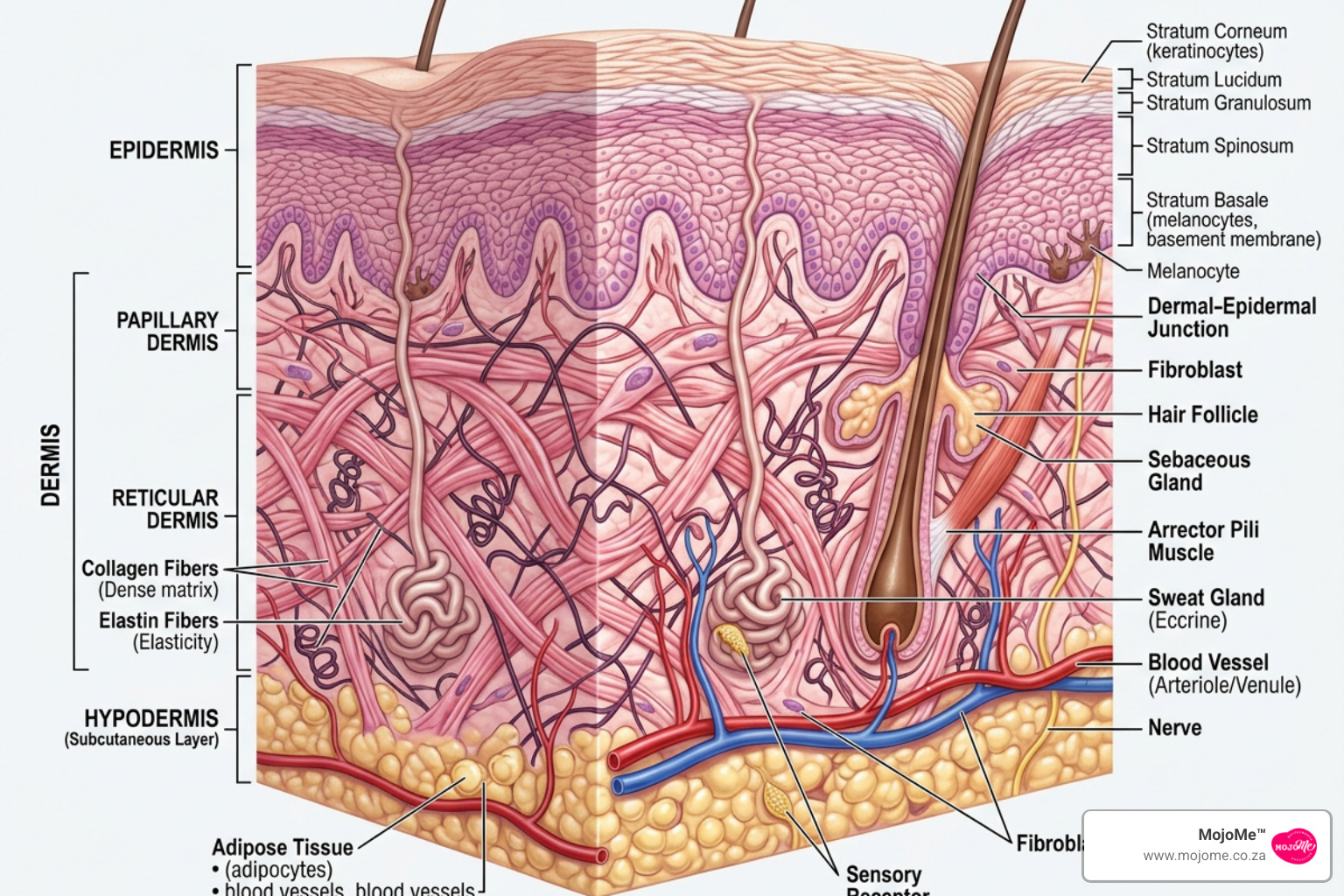
As we age, the collagen matrix in our dermis becomes fragmented and sparse, leading to visible sagging, fine lines and a loss of moisture.
Clinical trials have shown that daily supplementation with hydrolysed collagen can significantly reverse these signs of ageing by increasing dermal density and promoting hydration.
Because marine collagen is rich in Type I collagen, it is highly efficient at targeting the skin. A clinical study published in 2019 demonstrated that daily intake of marine collagen peptides significantly improved skin elasticity, hydration and roughness after 8 to 12 weeks of consistent use. The high concentration of hydroxyproline in marine sources helps stimulate hyaluronic acid synthesis in the skin, which locks in moisture and creates a plumping effect. It also supports the structural integrity of the skin, helping to minimise the appearance of cellulite by strengthening the dermal tissue that holds fat cells in place.
Bovine collagen is equally capable of delivering glowing skin. In a landmark double-blind, placebo-controlled trial, researchers found that women taking just 2.5g of bovine collagen peptides daily showed significant improvements in skin elasticity and a reduction in wrinkle depth after 8 weeks. Because bovine collagen also contains Type III, it supports the overall vascular structure of the skin, keeping it healthy from the inside out.
To help you decide which profile fits your specific aesthetic goals, check out our resources on Marine vs Bovine Collagen and Why Your Skin Might Prefer the Sea and The Science Behind Bovine Collagen for Glowing Skin.
Joint, Bone and Gut Support
For those looking beyond aesthetics, joint comfort and structural health are often the primary drivers for supplementation. This is where bovine collagen typically takes the lead.
Our joint cartilage is highly dependent on collagen to maintain its smooth, shock-absorbing properties. Clinical research on knee osteoarthritis has shown that daily supplementation with bovine collagen peptides helps reduce joint pain and improves physical mobility after 12 weeks. Bovine collagen also provides the structural matrix that supports bone mineral density, making it a valuable tool for preventing age-related bone loss.
Furthermore, bovine collagen is highly regarded for gut health. The amino acids glycine and glutamic acid, which are highly concentrated in bovine sources, are essential for maintaining and repairing the delicate endothelial lining of the digestive tract. By supporting the integrity of the gut barrier, bovine collagen can help soothe inflammation and support overall digestive wellness.
While marine collagen can also support joint and bone health, its lack of Type III collagen makes it slightly less comprehensive for gut lining support. To compare how these structural benefits align with your lifestyle, read our guide on Collagen Marine v Bovine.
Practical Considerations for South African Consumers
When choosing between marine and bovine collagen in South Africa, practical daily factors like budget, dietary restrictions, taste and ease of use should play a major role in your decision. Supplementation is a long-term commitment, so your choice must fit seamlessly into your daily routine.

Cost, Value and Daily Dosage
One of the most immediate differences you will notice in the South African market is the price point. Marine collagen is a premium, specialist product that is more expensive to harvest and process. On average, marine collagen can cost twice as much per gram as high-quality bovine collagen.
If you are on a budget and want to ensure you can maintain your daily routine without financial strain, grass-fed bovine collagen offers exceptional value. It allows you to take a robust daily dose of 5g to 10g consistently, which is the range shown in clinical trials to produce the best results for skin, joint and gut health.
Regardless of which source you choose, you should always look for a pure, clean formulation free from artificial fillers, sweeteners and flow agents. For the best absorption, we recommend pairing your daily collagen with a source of vitamin C. Vitamin C is a critical cofactor in the synthesis pathway, acting as the essential spark that allows your body to turn those absorbed amino acids back into strong, stable collagen fibres.
Additionally, some users experience minor mixing issues when starting out. If you are using a pure, additive-free powder, you might occasionally deal with clumping in cold liquids. Understanding how to easily dissolve your supplement makes your daily routine much more enjoyable. For practical tips, check out our guide on Solving Marine Collagen Powder Dissolution Problems.
Dietary and Allergy Considerations
Your individual dietary patterns and health profile will often make the final decision for you:
- Fish and Seafood Allergies: If you have a known allergy to fish or shellfish, marine collagen is not safe for you to consume. Bovine collagen is the logical, safe alternative.
- Cultural and Religious Preferences: For those who follow a pescatarian diet, marine collagen is the perfect fit. For individuals who avoid beef products for cultural, religious or personal reasons, marine collagen provides an ideal alternative.
- Halal and Kosher Dietary Laws: Bovine collagen must be specifically certified Halal or Kosher to meet these requirements. Marine collagen sourced from scaled fish species is naturally compliant with many traditional dietary laws, but checking for official certification on the packaging is always recommended.
Frequently Asked Questions about Collagen Supplements
Can you take marine and bovine collagen together?
Yes, you can absolutely combine marine and bovine collagen. In fact, doing so provides a highly diverse amino acid profile and delivers a wider spectrum of collagen types (Types I and III) to support both your skin and your joints simultaneously. Many people choose to use a multi-collagen blend to get the targeted, fast-absorbing beauty benefits of marine collagen alongside the deep structural and gut-supporting benefits of bovine collagen. To learn more about how these sources can complement each other, read our breakdown on Collagen Marine v Bovine.
How long does it take to see results from collagen?
Consistency is key when it comes to collagen supplementation. Most clinical trials show that visible improvements in skin hydration and elasticity can begin to appear within 4 to 6 weeks of daily use. For deeper structural changes, such as reduced joint discomfort, improved bone density and gut lining support, it typically takes 8 to 12 weeks of continuous daily supplementation.
Does collagen require vitamin C to work?
Yes, vitamin C is a non-negotiable cofactor for collagen production in the human body. Without adequate vitamin C levels, the enzymes responsible for building and stabilising the triple-helix structure of collagen (specifically prolyl hydroxylase) cannot function. Taking collagen without sufficient vitamin C means your body will struggle to synthesise the peptides into functional tissue, meaning a large portion of your supplement could simply be metabolised as regular protein.
Conclusion
Whether you choose the targeted, highly bioavailable benefits of marine collagen or the versatile, cost-effective, full-body support of grass-fed bovine collagen, adding a clean, pure supplement to your daily wellness routine is an excellent investment in your long-term health.
At MojoMe™, based in beautiful Cape Town, South Africa, we are committed to producing pure, potent and 100% natural supplements. Our products are crafted without any fillers, sugars, gluten or grains, ensuring you receive only the active, science-backed nutrients your body needs to thrive. Explore our award-winning range and Shop Collagen Powder today to find your perfect partner in health and age powerfully from the inside out.