Is Bovine or Fish Collagen Better? Here Is What the Evidence Actually Shows
Is bovine or fish collagen better depends on what you are trying to achieve. There is no single winner. Each type has a distinct collagen profile, absorption rate and set of benefits that make it better suited to specific health goals.
Here is a quick summary to help you decide:
| Goal | Best Choice | Why |
|---|---|---|
| Skin elasticity and anti-ageing | Fish (marine) collagen | Smaller peptides, higher bioavailability, primarily Type I |
| Joint health and cartilage support | Bovine collagen | Contains Types I and III, supports connective tissue |
| Gut lining and muscle recovery | Bovine collagen | Rich in glycine and Type III collagen |
| Hair and nail strength | Fish (marine) collagen | High Type I content absorbed quickly |
| Budget-conscious supplementation | Bovine collagen | Widely available and generally lower cost |
| Halaal or pescatarian diet | Fish (marine) collagen | No beef-derived ingredients |
Both types are derived from animal by-products and broken down through enzymatic hydrolysis into peptides your body can absorb. What differs is the type of collagen, molecular size and which tissues benefit most.
Collagen makes up roughly 30% of the total protein in the human body. Production begins declining from around age 25 to 30. That is why supplementing with the right type for your specific goals matters.
The sections below walk through the science, sourcing, absorption rates and practical considerations so you can make a well-informed choice for your health.
Understanding the Sources: Bovine vs Fish Collagen
To understand whether is bovine or fish collagen better, we must first look at where these proteins come from. Collagen is not a single substance but a family of proteins found in the connective tissues of animals. In the supplement world, we primarily focus on Type I and Type III collagen because these are the most abundant in our own bodies.
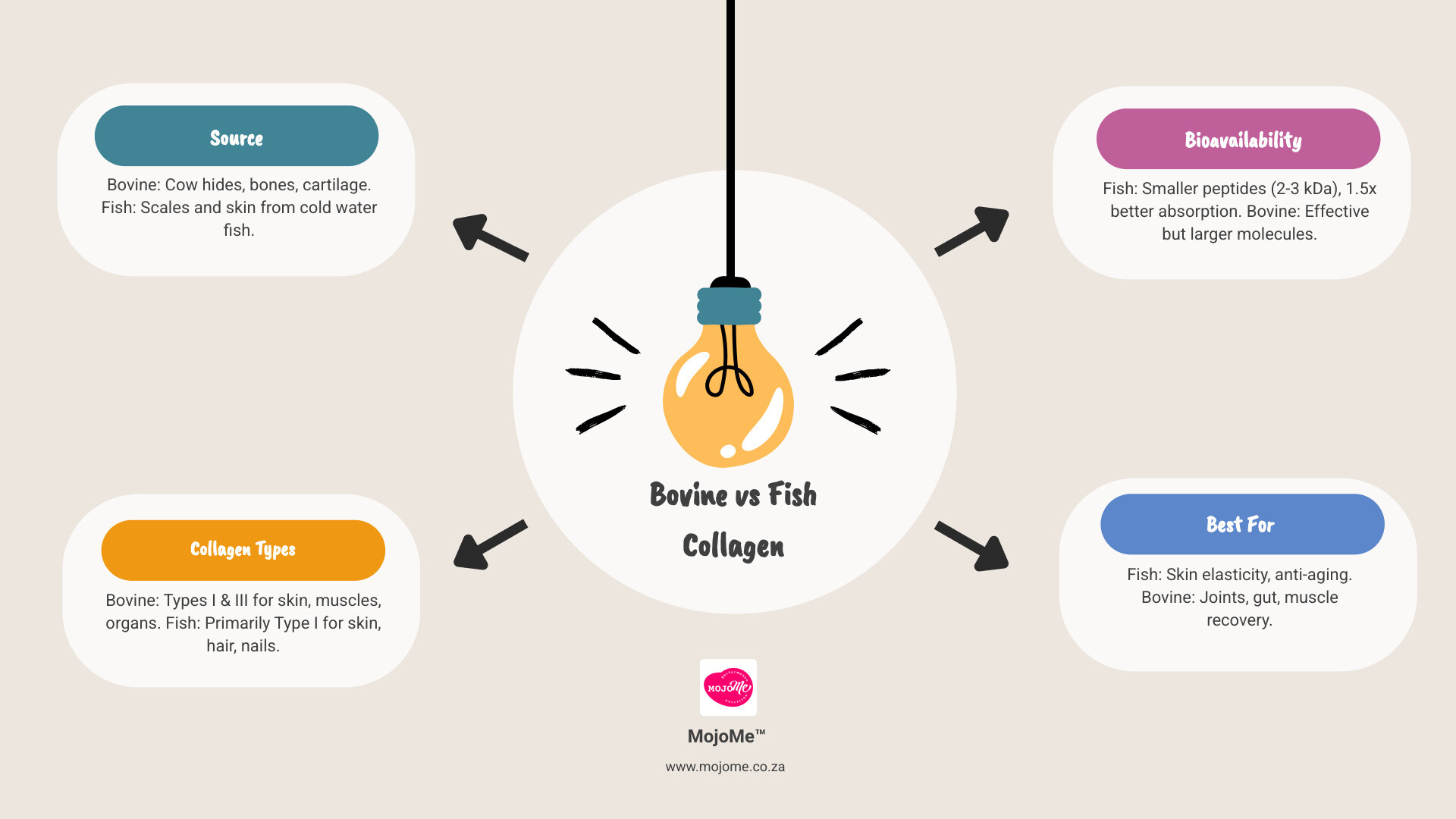
Bovine collagen is typically sourced from the hides, bones and cartilage of cattle. It is a robust source of both Type I and Type III collagen. Type I is the major component of our skin, hair and nails, while Type III is found in our muscles, organs and blood vessels. When we source bovine collagen from pasture-raised, grass-fed cattle, we ensure a cleaner product free from the hormones and antibiotics often found in factory-farmed animals.
Fish collagen, often referred to as marine collagen, is sourced from the skin, scales and bones of fish. It is composed almost entirely of Type I collagen. Because Type I makes up about 70 to 80 per cent of our skin structure, marine collagen is frequently the top choice for those focused on beauty and anti-ageing.
At MojoMe, we believe in the power of Hydrolysed Collagen regardless of the source, but we recognise that your personal values and health needs will dictate Marine vs Bovine Collagen: Which One Should You Actually Swallow?

Sourcing and Production Methods
The process of turning a cow hide or a fish scale into a tasteless, dissolvable powder is a feat of modern science called enzymatic hydrolysis. Raw collagen is a large, complex molecule that the human body finds difficult to digest in its natural state. By using specific enzymes, we break these large protein chains down into smaller units called peptide chains.
This process is also an excellent example of upcycling. The hides and scales used for collagen are typically by-products of the beef and fishing industries that would otherwise go to waste. For fish collagen, we prefer sourcing from cold-water fish or sustainably managed freshwater sources. For bovine collagen, we look for pasture-raised cattle, which is particularly relevant in the South African context where high-quality, grass-fed beef is a hallmark of our local agriculture.
Bioavailability and Absorption: Is Bovine or Fish Collagen Better?
When people ask is bovine or fish collagen better, they are often asking about bioavailability. Bioavailability refers to how much of the supplement actually makes it into your bloodstream after you swallow it.
The general scientific consensus is that marine collagen has a slight edge in this department. Research indicates that marine collagen is absorbed up to 1.5 times more efficiently than bovine collagen. This is primarily due to the molecular weight of the peptides. Marine collagen molecules are smaller, which allows them to pass through the intestinal wall more easily.
| Feature | Bovine Collagen | Fish (Marine) Collagen |
|---|---|---|
| Primary Collagen Types | Type I and Type III | Type I |
| Average Molecular Weight | 3 to 5 kDa | 2 to 3 kDa |
| Absorption Rate | High | Very High (up to 1.5x better) |
| Best For | Joints, Gut, Muscle | Skin, Hair, Nails |
A Scientific research on marine collagen bioavailability highlights that the smaller size of fish collagen peptides leads to a 90 per cent absorption rate. This efficiency makes it a powerhouse for those who want fast results for skin hydration. However, knowing How to Choose the Best Marine Collagen Powder involves looking beyond just the source and ensuring the product is properly hydrolysed to a low molecular weight, ideally between 2 and 3 kDa (kilodaltons).
Why Molecular Size Matters for Digestion
Why does molecular size matter so much? Once collagen peptides enter your bloodstream, they act as messengers. They signal your body’s fibroblasts, the cells responsible for producing new collagen, to get to work. If the molecules are too large, they simply pass through your digestive system without being absorbed.
Smaller peptides also provide high levels of specific amino acids like hydroxyproline, which is essential for the stability of our own collagen fibres. Because marine collagen is so rich in these specific peptides, it is often more effective at lower doses for skin-related goals compared to bovine alternatives.
Targeted Health Benefits: Skin Beauty vs Structural Support
The choice of whether is bovine or fish collagen better usually comes down to your primary health goal.
If your focus is on the mirror, fish collagen is likely your best friend. It is scientifically proven to increase skin moisture levels and protect against the harmful effects of UV exposure. By rebuilding the tissues that provide skin elasticity, it helps to reduce the appearance of fine lines and wrinkles.
Bovine collagen, on the other hand, is the heavy lifter for structural support. Because it contains both Type I and Type III collagen, it offers a broader spectrum of amino acids that support the entire body. It is particularly effective for those dealing with joint pain or looking to speed up athletic recovery.
Scientific research on bovine collagen for cartilage production suggests that it can stimulate the cells in our joints to produce new cartilage, which cushions the joints and reduces inflammation. This makes it a preferred choice for active South Africans who enjoy hiking, running or competitive sports. You can find more details on the Benefits of Marine Collagen and how it compares to bovine in our dedicated guides.
Connective Tissue and Gut Health
Beyond skin and joints, collagen plays a vital role in gut health. The amino acids in collagen, particularly glycine and glutamine, are essential for maintaining the integrity of the gut lining. This is why many health professionals recommend bovine collagen for those suffering from “leaky gut” or general digestive inflammation.
Scientific research on collagen for gut lining repair shows that collagen can help repair the microscopic holes in the intestinal lining. Bovine collagen’s Type III content is particularly helpful here, as it is a major component of the tissues that make up our digestive tract. Additionally, the glycine in collagen supports muscle recovery by helping the body produce creatine, which provides energy for our muscles during high-intensity exercise.
Practical Considerations: Cost, Taste and Sustainability
In the South African market, practical factors like price and availability often influence whether is bovine or fish collagen better for an individual.
Bovine collagen is generally more cost-effective. Because the beef industry is so large in South Africa, sourcing high-quality bovine hides is more straightforward, which keeps the R value per gram lower for the consumer. It is an excellent choice for those who want to take a larger daily dose (10 to 20 grams) without breaking the bank.
Marine collagen tends to be more expensive. Sourcing wild-caught fish and the more delicate extraction process required for fish scales drives the price up. However, many people find that the higher bioavailability justifies the cost, as they may see results with a smaller daily serving.
Taste and solubility are also important. High-quality hydrolysed collagen from either source should be virtually tasteless and odourless. Some lower-quality marine collagens can have a slight fishy aftertaste, but premium versions, like those we produce at MojoMe, are designed to be neutral and dissolve easily in your morning coffee or smoothie. We always recommend Why Choose Wild Caught Marine Collagen to ensure you are getting a product free from the contaminants sometimes found in farmed fish.
Dietary Restrictions and Allergies
Your diet or health history might make the decision for you.
- Allergies: If you have a known shellfish or fish allergy, you must avoid marine collagen. Conversely, those with a rare beef allergy should opt for fish.
- Pescatarian Diets: For those who do not eat red meat but do eat fish, marine collagen is the only viable option.
- Religious Requirements: Fish collagen is naturally halaal and kosher-friendly, whereas bovine collagen must be specifically certified to meet these standards.
- Hormone Concerns: Some people prefer Marine Collagen vs Factory Farmed Fish Collagen because fish are generally not treated with the growth hormones or antibiotics that can be present in conventionally raised cattle.
Frequently Asked Questions
Is bovine or fish collagen better for anti-ageing and wrinkles?
For anti-ageing, fish collagen is widely considered superior. This is because it is almost 100 per cent Type I collagen, which is the specific type our skin needs to stay firm and hydrated. The smaller peptide size of marine collagen allows for faster absorption, meaning the amino acids reach your skin cells more quickly to stimulate dermal thickness and hydration.
A Scientific research on marine collagen for skin health found that consistent supplementation with marine collagen significantly improved skin elasticity and reduced the appearance of wrinkles in as little as four to eight weeks. We recommend a daily dose of 2.5 to 5 grams of marine collagen for targeted skin benefits.
Is bovine or fish collagen better for joint recovery and gut health?
Bovine collagen takes the win for joints and gut health. Its combination of Type I and Type III collagen provides a more comprehensive amino acid profile for repairing connective tissues and the intestinal lining. While marine collagen can support joints, the Type III collagen found in bovine sources is more closely aligned with the structural needs of our organs and muscles.
For joint recovery and athletic support, a higher daily dose is usually required. Most studies suggest that 10 grams of bovine collagen daily is the “sweet spot” for noticing improvements in joint mobility and a reduction in exercise-induced pain.
Can you take bovine and fish collagen together?
Absolutely. In fact, many of our customers at MojoMe prefer a multi-collagen approach. By combining both, you get the rapid absorption and skin-boosting benefits of fish collagen alongside the deep structural and gut-lining support of bovine collagen.
Taking them together creates a synergistic effect, providing your body with a full spectrum of Type I and Type III peptides. This ensures that whether your body needs to repair a tendon, hydrate your skin or heal your gut, the necessary building blocks are available. You can read more about the Collagen Marine v Bovine relationship in our comparison blog.
Conclusion
The question of is bovine or fish collagen better does not have a “wrong” answer. Both are exceptional tools for supporting your health as you age. If your primary concern is glowing skin and you have the budget for a premium supplement, marine collagen is a fantastic choice. If you are looking for an all-rounder that supports your joints, gut and muscles while remaining budget-friendly, bovine collagen is hard to beat.
At MojoMe, we are committed to providing South Africans with the purest, most potent collagen peptides available. Whether you choose our grass-fed bovine or our wild-caught marine options, you can trust that you are getting a science-backed product with no fillers, sugars or artificial additives.
Ready to start your journey to better health? You can Shop Collagen Powder on our website and find the perfect fit for your lifestyle. Based in Cape Town, we ship nationwide to help you achieve your wellness goals with the best that nature and science have to offer.