Why Protein Timing Matters During Pregnancy
Knowing the best time to take protein powder in pregnancy can help support steadier energy, foetal development and better management of symptoms such as nausea and afternoon fatigue.
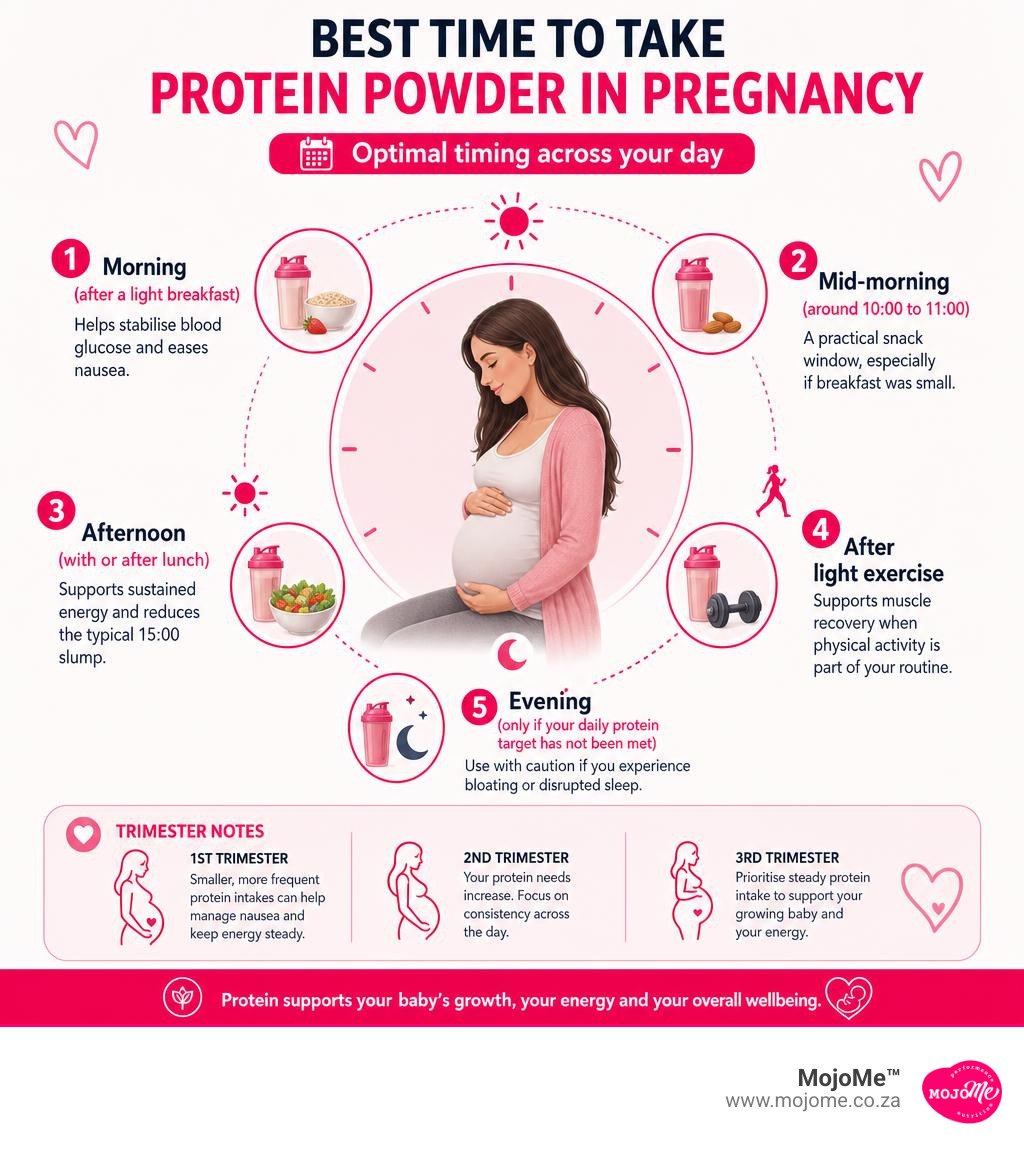
Quick answer: the best times to take protein powder during pregnancy are:
- Morning after a light breakfast: may help stabilise blood glucose and ease nausea
- Mid-morning, around 10:00 to 11:00: a practical snack window, especially if breakfast was small
- Afternoon, with or after lunch: supports sustained energy and may reduce the typical 15:00 slump
- After light exercise: supports muscle recovery when physical activity is part of your approved routine
- Evening, only if your daily protein target has not been met: use with caution if you experience bloating or disrupted sleep
Pregnancy is nutritionally demanding. Your body is supporting foetal growth while also expanding blood volume, growing the placenta and maintaining your own muscle and tissue. Protein contributes to all of this.
Most South African pregnant women need somewhere between 70 and 100 grams of protein per day, depending on body weight and trimester. Many women consume less than that through food alone, particularly when nausea, food aversions or a busy daily schedule affect normal meals.
That is where a suitable protein powder can help. It should not replace meals, but it can help close the gap between what you are managing to eat and what your body needs.
The key is not just how much protein you take, but when you take it and how it fits into your day.
Best time to take protein powder in pregnancy definitions:
Why Protein Matters and How Much You Need Daily
During pregnancy, protein contributes to some of the most important physiological work your body performs.
Protein helps support:
- Foetal tissue growth, including muscles, organs, skin and connective tissue
- Placenta formation and function
- Maternal tissue growth, including the uterus and breasts
- Increased blood volume, which can expand substantially during pregnancy
- Hormone and enzyme production
- Immune function
- Healthy muscle maintenance for the mother
Protein is made from amino acids. Some amino acids are essential, meaning your body cannot make them in sufficient amounts and they must come from food. This is one reason quality matters. It is not only about reaching a number on a nutrition label.
Daily protein targets during pregnancy
Most pregnant women need about 70 to 100 grams of protein per day, although your exact requirement depends on body weight, trimester, appetite, activity level and medical history.
A practical way to think about protein needs is:
| Pregnancy stage | General daily protein guide | Practical note |
|---|---|---|
| First trimester | About 70 grams daily for many women | Needs may not feel higher, but nausea can make intake harder |
| Second trimester | About 75 to 85 grams daily for many women | Foetal growth and blood volume increase |
| Third trimester | About 85 to 100 grams daily for many women | Protein demands are usually highest |
Some clinicians use body weight to estimate protein needs. A common pregnancy range is about 1.1 to 1.5 grams of protein per kilogram body weight per day, depending on trimester and individual needs. For example, a woman weighing 70 kilograms may need roughly 77 to 105 grams daily.
If you are carrying multiples, following a vegetarian or vegan diet, experiencing severe nausea, recovering from illness or exercising regularly, your needs may differ. This is where a dietitian or doctor can help you calculate a safe target.
For a deeper guide to pregnancy protein needs, read our complete guide to best protein powder for pregnancy.
How much of your protein can come from protein powder?
Protein powder should supplement your diet, not replace it.
For most pregnant women who need support, 20 to 30 grams of protein from protein powder per day is a common practical range. This is usually enough to close a gap without pushing total intake too high.
Whole foods should still provide most of your protein because they also bring iron, zinc, choline, omega-3 fats, calcium, fibre and other nutrients that powders do not always provide.
Good whole-food protein options include:
- Eggs
- Plain Greek yoghurt
- Cottage cheese
- Lentils, beans and chickpeas
- Lean chicken or beef
- Low-mercury fish
- Tofu or tempeh
- Nuts and seeds
- Milk or fortified dairy alternatives
A protein shake can be helpful, but a full pregnancy diet still needs balanced meals based on whole foods.
The Best Time to Take Protein Powder in Pregnancy
The best time to take protein powder in pregnancy is the time that helps you meet your daily protein target without worsening nausea, reflux, bloating or blood glucose swings.
For busy South African mothers, timing has to work around real life:
- School runs
- Commuting
- Work meetings
- Clinic appointments
- Food aversions
- Load shedding meal planning
- The 15:00 energy dip
The best approach is to spread protein across the day rather than taking most of it at night. This supports steadier energy, better appetite control and more consistent amino acid availability.
A useful daily rhythm is:

| Time | When it helps most | How to use it |
|---|---|---|
| After a light breakfast | Nausea, low morning appetite, blood glucose dips | Mix 20 grams protein into oats, yoghurt or a smoothie |
| Mid-morning | Small breakfast, long workday, commuting | Use as a snack with fruit or nuts |
| Afternoon | Fatigue, cravings, long gap before dinner | Add to a smoothie or plain yoghurt |
| Post-exercise | After approved walking, swimming or strength work | Take with carbohydrate and fluids |
| Evening | Only if protein target is still low | Keep it light and avoid if reflux or bloating worsens |
There is also emerging research on pre-meal whey protein in women with gestational diabetes mellitus. A 2025 randomised controlled trial found that 20 grams of whey protein isolate taken 30 minutes before breakfast lowered breakfast post-meal glucose levels in women with gestational diabetes during the third trimester. This does not mean every pregnant woman should copy that protocol. It suggests that timing protein before breakfast may be useful in specific medical contexts under clinical supervision. You can read the study here: research on pre-meal whey protein and gestational diabetes.
If you have gestational diabetes, do not start a pre-meal whey routine without your doctor, dietitian or diabetes educator. Blood glucose management during pregnancy needs individual monitoring.
Morning and Mid-Morning: The Best Time to Take Protein Powder in Pregnancy for Nausea Support
For many women, morning is the most useful time to take protein powder. It does not need to be taken immediately after waking. It is often better tolerated after a small amount of food.
Morning protein may help when:
- You wake up nauseous
- You cannot face eggs, meat or strong-smelling foods
- You feel shaky between breakfast and lunch
- You are rushing to work or school drop-off
- You struggle to eat enough in the first trimester
A mistake many women make is taking protein powder on a completely empty stomach, especially during the first trimester. This can sometimes worsen nausea or cause a heavy feeling.
A gentler option is to first eat something small, then add protein.
Try:
- A banana, then a protein shake
- Oats stirred with protein powder after cooking
- Plain yoghurt with protein powder and berries
- A smoothie with milk, yoghurt, oats and protein powder
- A slice of toast with nut butter, followed by a small shake

A practical amount is usually 20 to 30 grams of protein from powder, depending on the product and your total daily target. Check the label carefully because serving sizes vary. Some products provide 20 grams of protein in about 25 grams of powder, while others need more powder to reach the same protein amount.
For nausea support, smaller amounts are often better. If 30 grams of protein feels too much, split it:
- 10 to 15 grams with breakfast
- 10 to 15 grams mid-morning
This can be easier on digestion and more realistic during early pregnancy.
Afternoon and Evening: The Best Time to Take Protein Powder in Pregnancy for Sustained Energy
Afternoon is another strong option, especially if lunch is light or rushed.
Many pregnant women feel a dip in energy between 14:00 and 16:00. This can happen because lunch was too low in protein, breakfast was small or blood glucose has been rising and falling through the day.
An afternoon protein option may help you:
- Stay fuller until dinner
- Reduce sweet cravings
- Avoid arriving at dinner very hungry
- Support muscle maintenance
- Keep energy steadier during a long workday
Good afternoon combinations include:
- Protein powder blended with milk and berries
- Protein powder stirred into plain yoghurt
- A small smoothie with banana, peanut butter and protein powder
- Protein powder mixed into cooled oats
- A shake plus a handful of nuts
Evening protein can be useful, but it is not always ideal. If you have reflux, bloating, constipation or disrupted sleep, a large evening shake may make things worse.
A better evening strategy is usually a balanced dinner with whole-food protein such as eggs, lentils, chicken, fish, yoghurt, tofu or beans. This provides amino acids overnight while also supplying other nutrients.
Use evening protein powder only if:
- Your total daily protein intake is still clearly low
- You tolerate it well
- It does not worsen reflux
- It does not replace dinner
- Your healthcare provider has not advised you to restrict protein
If you are often short on protein at night, the better fix may be to add more protein earlier in the day rather than relying on a bedtime shake.
How to Choose a Safe Protein Powder for Pregnancy
Choosing protein powder during pregnancy is less about trendy flavours and more about purity, testing and label transparency.
A pregnancy-friendly protein powder should ideally have:
- A short ingredient list
- Clearly stated protein grams per serving
- No unnecessary sugars or fillers
- No stimulants
- No herbal blends unless approved by your healthcare provider
- Third-party testing where possible
- Heavy metal screening
- Clear allergen information
- No megadoses of added vitamins or minerals that overlap with your prenatal supplement
Some protein powders can contain high sugar levels. Research cited in pregnancy nutrition discussions has found some powders with up to 23 grams of sugar per serving, which is nearly an entire day’s added sugar limit for many women. In pregnancy, this matters even more if you are managing insulin resistance, gestational diabetes or strong cravings.
Also be cautious with wellness blends. Natural does not automatically mean pregnancy-safe.
Avoid protein powders containing:
- Caffeine or stimulant blends
- Weight-loss ingredients
- Detox ingredients
- Ashwagandha
- Maca root
- Liquorice root
- Holy basil
- High-dose green tea extract
- Proprietary herbal blends
- Excessive added vitamin A
- Artificial sweeteners if you do not tolerate them
- Sugar alcohols if they cause bloating or diarrhoea
Heavy metals are another concern. Protein powders can sometimes contain lead, arsenic, cadmium or mercury due to soil, processing or raw materials. This is why testing matters, especially in pregnancy.
At MojoMe™, we value simple, natural formulations with no fillers, sugars, gluten or grains where relevant. For women considering whey, purity and digestibility are especially important. Learn more in our deep dive into whey protein isolates.
You can also view MojoMe Pure Whey Isolate if your healthcare provider has confirmed that whey protein is appropriate for you.
Whey isolate vs plant-based protein in pregnancy
| Feature | Whey protein isolate | Plant-based protein |
|---|---|---|
| Protein quality | Complete protein with all essential amino acids | Varies by source. Pea and rice blends can improve amino acid balance |
| Digestibility | Often easy to digest and lower in lactose than whey concentrate | Can be good, but some plant proteins cause bloating |
| Lactose content | Usually very low | Naturally dairy-free |
| Allergy concerns | Avoid if dairy allergy is present | Check for pea, soy or seed sensitivities |
| Heavy metal risk | Still needs testing | Some plant proteins may accumulate more heavy metals from soil |
| Pregnancy suitability | Can be suitable if pure, tested and tolerated | Can be suitable if tested, balanced and free from additives |
Neither whey nor plant-based protein is automatically best for every pregnant woman. The safest choice is the one that fits your digestion, allergies, dietary pattern, blood glucose needs and healthcare guidance.
Collagen Peptides as an Alternative Protein Source
Collagen peptides can be useful during pregnancy, but they are different from whey, egg or many plant proteins.
Collagen is rich in amino acids such as glycine, proline and hydroxyproline. These amino acids are important structural components in connective tissue. During pregnancy, collagen may help support:
- Skin elasticity
- Joint comfort
- Connective tissue integrity
- A balanced protein intake when used alongside complete proteins
However, collagen is not a complete protein because it is low in some essential amino acids. This means it should not be your only protein supplement if you are trying to meet total pregnancy protein needs.
Think of collagen as a supportive protein, not the whole protein plan.
Bovine collagen is commonly used and can fit well into a balanced pregnancy diet when it is pure and free from unnecessary additives. As always, discuss it with your doctor or dietitian, especially if you have allergies, medical conditions or a high-risk pregnancy.
For more detail, read our guide: is collagen safe during pregnancy. If you prefer capsules, we also cover the topic here: can you take collagen pills while pregnant.
Frequently Asked Questions about Protein Powder in Pregnancy
Can I take protein powder on an empty stomach?
You can, but it is not always the best option during pregnancy.
If you are in the first trimester or prone to nausea, taking protein powder on an empty stomach may feel too heavy. It can also trigger gagging, reflux or bloating in some women.
A gentler approach is to pair it with a small amount of food, such as:
- Yoghurt
- Oats
- A banana
- Toast
- Milk
- A smoothie with fruit
If you tolerate protein powder well on an empty stomach, that may be fine. If it makes symptoms worse, take it with food or ask your healthcare provider for advice.
Is whey protein isolate safe for pregnant women?
Whey protein isolate can be safe for many pregnant women when it is high quality, tested and free from unnecessary additives.
Whey isolate is often lower in lactose than whey concentrate, which may make it easier to digest for some people. It is also a complete protein, meaning it provides all essential amino acids.
Before choosing whey isolate, check that it:
- Provides clear protein grams per serving
- Does not contain stimulants
- Does not include herbal blends
- Has no unnecessary fillers or high sugar levels
- Is tested for contaminants where possible
- Fits your allergy and digestion profile
Avoid whey if you have a dairy allergy. If you are lactose sensitive, ask your healthcare provider whether whey isolate is appropriate.
How much protein powder can I safely consume daily?
For many pregnant women, 20 to 30 grams of protein from powder per day is a reasonable practical range when supplementation is needed. This should be included within your total daily protein target, not added on top without calculation.
For example, if your daily target is 85 grams and food provides 65 grams, then 20 grams from protein powder may close the gap well.
If food already provides 90 to 100 grams daily, you may not need protein powder at all.
Too much protein, especially if it crowds out carbohydrates, fibre and healthy fats, is not ideal. Research has linked high-protein, low-carbohydrate patterns in pregnancy with possible concerns such as slower foetal growth and increased gestational diabetes risk. The concern is not protein itself, but dietary imbalance.
Speak to your doctor or dietitian before using protein powder if you have:
- Kidney disease
- Gestational diabetes
- Preeclampsia
- Severe vomiting or hyperemesis gravidarum
- A high-risk pregnancy
- Food allergies
- A history of eating disorders
- Unexplained swelling
- Protein restrictions from your healthcare provider
Stop using a protein powder and seek medical advice if you notice rash, wheezing, severe bloating, persistent diarrhoea, vomiting, unusual swelling or symptoms that concern you.
Conclusion
The best time to take protein powder in pregnancy is the time that helps you meet your daily protein needs safely, comfortably and consistently.
For many busy South African mothers, that means:
- Morning after a light breakfast if nausea is an issue
- Mid-morning if breakfast was small
- Afternoon if fatigue or cravings occur
- After approved exercise if you are active
- Evening only when needed and only if digestion allows
Aim to get most of your protein from whole foods, then use a suitable protein powder to fill realistic gaps. Choose products with transparent labels, minimal ingredients, no unnecessary sugars, no stimulants and appropriate testing.
Pregnancy nutrition does not need to be perfect. It needs to be steady, safe and suited to your body.
At MojoMe™, we focus on science-backed nutrition that fits real life in South Africa. If you are considering protein powder during pregnancy, speak to your healthcare provider first, then choose the simplest high-quality option that supports your needs.
Explore our range here: MojoMe pure protein powders