What Is Whey Protein Content and Why Does It Matter?
Whey protein content refers to the percentage of actual protein found in a whey supplement, and it varies significantly depending on how the whey is processed.
Here is a quick reference to help you compare the three main types:
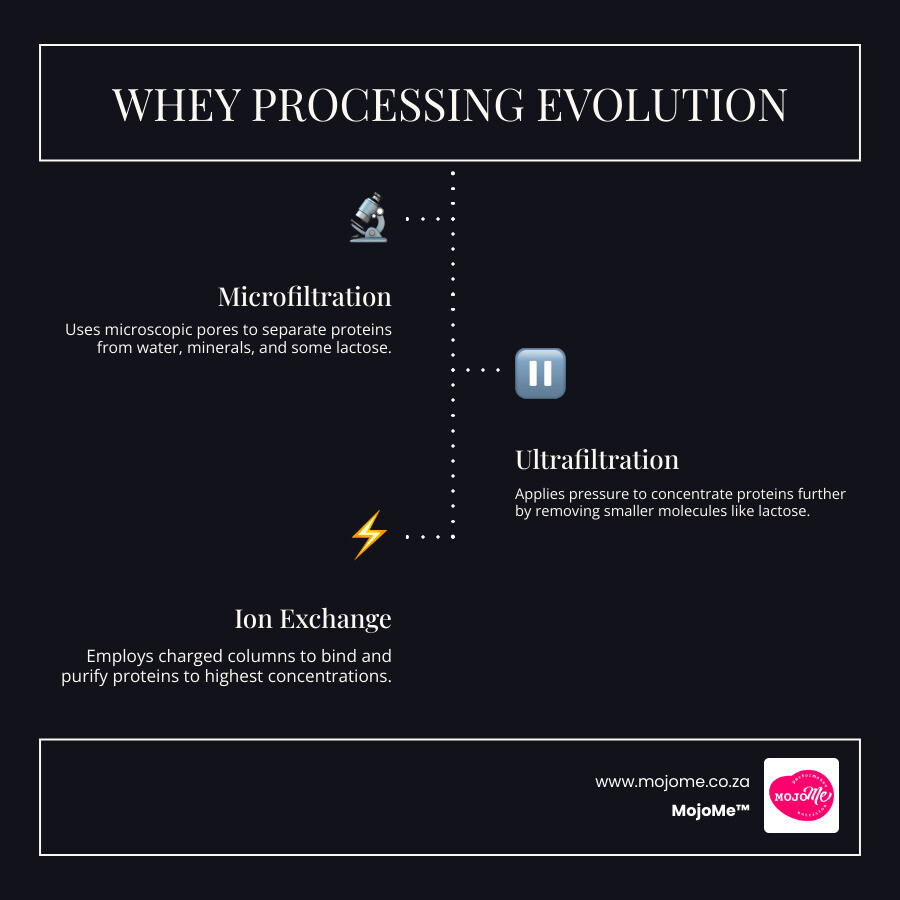
| Whey Type | Protein Content (dry basis) | Lactose | Fat | Best For |
|---|---|---|---|---|
| Whey Protein Concentrate (WPC) | 58% to 89% | Moderate | Moderate | General use, muscle building |
| Whey Protein Isolate (WPI) | 90% or higher | Minimal (~0.5 to 1%) | Very low (max 1.5%) | Lactose sensitivity, lean diets |
| Whey Protein Hydrolysate (WPH) | Up to 99% | Minimal | Minimal | Fastest absorption, sensitive digestion |
Not all whey protein supplements are created equal. The label might say “whey protein” but the actual protein percentage per gram can differ dramatically depending on the manufacturing process used.
This matters most if you are managing your sugar intake, avoiding lactose or simply trying to get the most protein per rand spent.
Whey starts as a liquid by-product of cheese production. It is then filtered and concentrated into a powder. The more non-protein material that is removed, such as lactose, fat and moisture, the higher the final protein percentage becomes.
For health-conscious consumers who are sensitive to grains, fillers or synthetics, understanding these differences is not just useful. It is essential for choosing a supplement that actually supports your goals.
Introduction and the Science of Whey Extraction
To truly understand whey protein content, we must look at where it begins. Whey is one of the two primary proteins found in cow’s milk. While milk is often seen as a simple liquid, it is actually a complex emulsion of water, fats, carbohydrates and proteins.
When we look at the protein fraction of milk, it is divided into two main camps: casein and whey. Casein makes up about 80% of the total protein and is famous for being the “slow” protein that forms the curds in cheese. Whey, however, represents the remaining 20% and is the liquid phase that remains after the solids have been separated.
How Whey is Derived from Milk
The journey from a dairy farm in the Western Cape to a tub of high-quality powder involves a fascinating separation process. During cheese production, specific enzymes or acids are added to milk to cause the casein to coagulate. As the curds form, they trap the milk fat. What is left behind is a thin, translucent liquid known as sweet whey.
This liquid is roughly 94% to 95% water. The remaining solids consist of lactose (milk sugar), water soluble lipids, minerals and the precious whey proteins themselves. In its raw form, whey is not very protein dense. In fact, the protein fraction in raw liquid whey is only about 10% of the total dry solids. This is why advanced processing is required to create the concentrated powders we use in our shakes and recipes.
The Evolution of Whey Processing
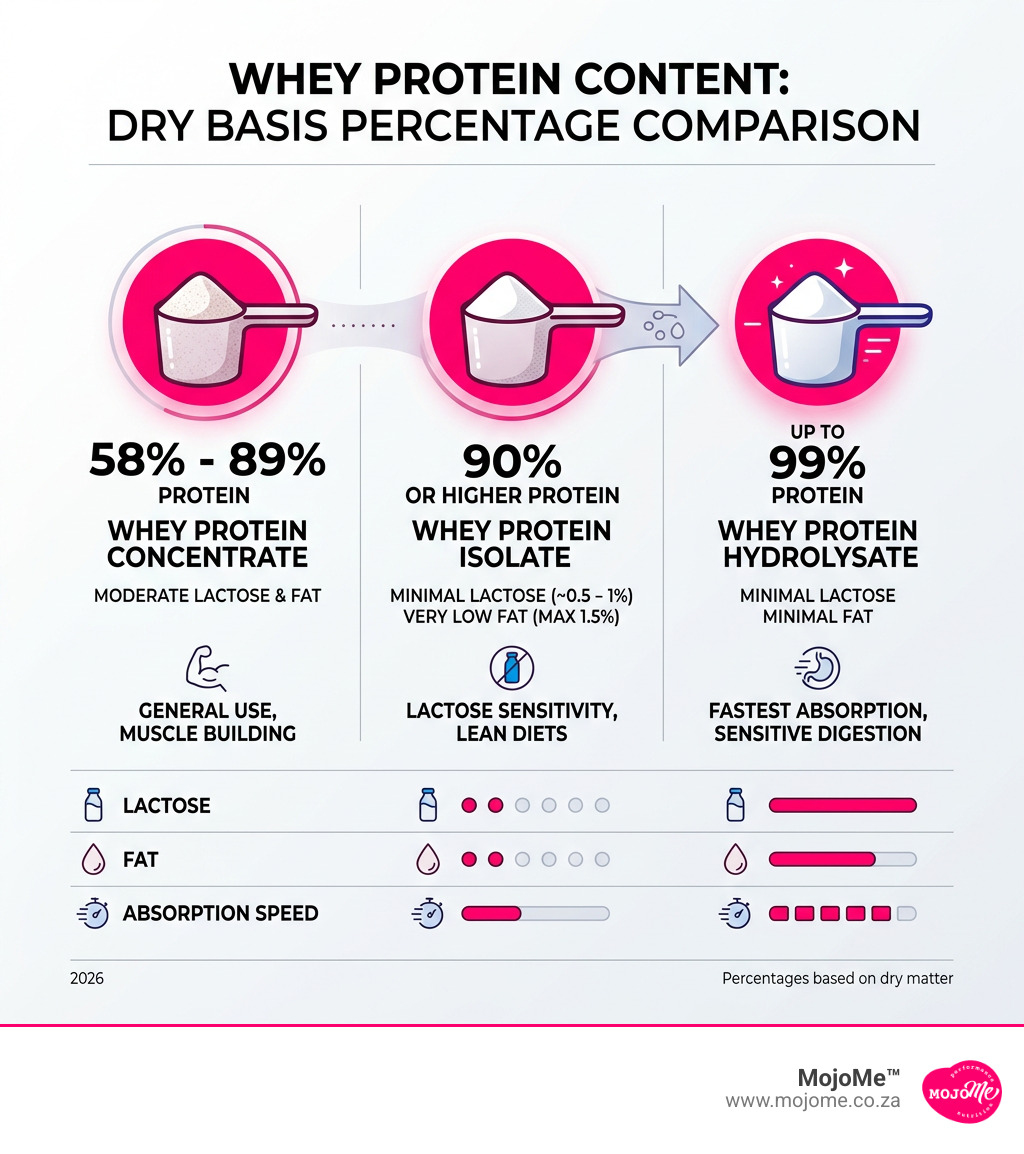
In the early days of the dairy industry, whey was often discarded as a waste product. However, as science uncovered its incredible biological value, technology evolved to capture it. Today, we use sophisticated membrane filtration techniques to refine whey protein content.
Modern methods like microfiltration and ultrafiltration use physical pressure to push the liquid whey through microscopic pores. These pores are sized specifically to allow water, minerals and some lactose to pass through while trapping the larger protein molecules. By repeating this process, manufacturers can “concentrate” the protein.
For even higher purity, some producers use ion exchange chromatography. This involves sending the whey through a column that uses electronic charges to bind the protein while letting everything else wash away. Organizations like the Whey Protein Research Consortium have been pivotal in advancing these technologies to ensure that the final product is not only high in protein but also retains its functional health properties.
Comparing Whey Protein Content: Concentrates vs Isolates
When you browse our Whey Protein Category, you will notice different terms. Choosing between a concentrate and an isolate depends largely on your dietary needs and how your body handles lactose.
Factors Influencing Whey Protein Content in Supplements
The primary difference between a concentrate and an isolate is the level of refinement.
- Whey Protein Concentrate (WPC): This is the least processed form. WPC can range from 35% to 89% protein. Most high-quality retail concentrates sit at the 80% mark. Because it is less filtered, it contains more of the naturally occurring fats and lactose found in milk. Many people prefer the taste of WPC as the small amount of milk fat provides a creamier texture.
- Whey Protein Isolate (WPI): This is the “gold standard” for purity. To be classified as an isolate, the product must contain at least 90% protein on a dry matter basis. Our Mojome Pure Whey Isolate is specifically designed for those who want maximum protein with minimal “baggage.” By removing almost all the fat and lactose, we create a product that is incredibly lean and highly digestible.
Beyond just the protein, we also monitor moisture levels (typically under 6%) and ash content (minerals left after processing). For an isolate, the lactose content is usually less than 1%, making it a much safer choice for South Africans who experience discomfort from dairy sugars.
Whey Protein Hydrolysate and Pre-digestion
There is a third, even more advanced form called Whey Protein Hydrolysate (WPH). This version takes either a concentrate or an isolate and subjects it to enzymatic hydrolysis. This process mimics our own digestive system by breaking the long protein chains into shorter sequences called peptides.
WPH can reach a concentration of up to 99%. Because the protein is essentially “pre-digested,” it is absorbed into the bloodstream faster than any other form. This makes it a popular choice in clinical settings, such as for patients with compromised digestion or in hypoallergenic infant formulas. Research suggests that partially hydrolysed 100% whey protein infant formula can even reduce the risk of atopic dermatitis in high risk infants.
Amino Acid Profile and Bioactive Components
The real power of whey protein content lies in its amino acid profile. Protein is not just one thing; it is a collection of building blocks. Whey is a “complete” protein, meaning it contains all nine essential amino acids that our bodies cannot produce on their own.
Primary Protein Fractions in Whey
Whey is composed of several smaller protein sub-fractions, each with unique health benefits:
- Beta-lactoglobulin (~65%): The most abundant fraction. It is an excellent source of essential and branched chain amino acids (BCAAs).
- Alpha-lactalbumin (~25%): A major component that is also found in human breast milk. It is rich in tryptophan, an amino acid that supports mood and sleep.
- Bovine Serum Albumin (~8%): A large protein that is rich in precursors for glutathione, the body’s master antioxidant.
- Immunoglobulins: These support the immune system by providing passive immunity.
- Glycomacropeptide (GMP): A unique component formed during cheese making that may help with appetite suppression.
Optimising Muscle Protein Synthesis with Whey
For those of us hitting the gym in Cape Town or Muizenberg, the goal is often Muscle Protein Synthesis (MPS). Whey is superior for this because of its high biological value and rapid digestion. It delivers a massive “spike” of amino acids to the muscles exactly when they need it most.
A key player here is the amino acid leucine. Leucine acts as a biological “on switch” for muscle growth by activating a pathway called mTOR. Scientific research shows that the postprandial rise in essential amino acid concentrations is the primary driver for muscle repair. Whey typically contains about 11% leucine, which is significantly higher than plant based alternatives like hemp (5%) or soy (8%).
Evidence Based Health and Performance Benefits
Whether you are a professional athlete or just someone looking to age gracefully, the benefits of high whey protein content extend far beyond the gym.
Maximising Results Based on Whey Protein Content
To trigger the maximum anabolic response, research suggests a “threshold” of about 2.7 grams of leucine per meal. For a high quality whey isolate, this is usually achieved with a 25 gram dose of protein.
While some studies, such as those focusing on well-nourished postmenopausal women, showed that protein alone did not increase muscle mass, the results change dramatically when combined with resistance training. Supplementing with whey during a weight training programme has been shown to significantly augment lean body mass and strength. This is why we often say, Don’t Waste Your Gains and Drink Your Whey Protein Post Workout.
Therapeutic Roles in Metabolic Health
The benefits of whey extend into the realm of metabolic health:
- Glycaemic Control: Taking whey protein before a high carbohydrate meal can help regulate blood sugar levels. It stimulates the release of insulin and slows down gastric emptying, which is incredibly beneficial for those managing type 2 diabetes.
- Antioxidant Defence: Whey is rich in cysteine, an amino acid required for the production of glutathione. By boosting glutathione levels, whey helps the body fight oxidative stress and inflammation.
- Heart Health: Certain peptides found in hydrolysed whey have been shown to have antihypertensive effects, potentially helping to lower blood pressure in individuals with hypertension.
Frequently Asked Questions
Does whey protein content affect digestibility?
Yes, absolutely. The more refined the whey, the easier it generally is on the stomach. Whey protein isolate is almost entirely free of lactose, which is the primary cause of bloating and gas for many South Africans. If you have a very sensitive gut, a hydrolysed whey (WPH) is even easier to absorb because the peptide chains are already broken down. We always recommend checking for fillers, as many commercial brands add thickeners that can cause digestive upset.
Can whey protein help with weight loss in South Africa?
Protein is the most satiating macronutrient. High whey protein content helps stimulate hormones like CCK and GLP-1, which tell your brain that you are full. By preserving lean muscle mass while you are in a calorie deficit, whey ensures that your metabolic rate stays high. In a local context, replacing a high carb snack with a whey shake can be a game changer for weight management.
Are there side effects to high whey protein intake?
For most healthy individuals, whey is incredibly safe. The primary “side effect” is usually related to lactose intolerance in lower quality concentrates. Regarding kidney health, there is no evidence that high protein intake damages healthy kidneys. However, if you have pre-existing renal conditions, you should consult a doctor. General guidelines suggest a safe upper limit of about 2.2 grams of protein per kilogram of body weight for active individuals.
Conclusion
Understanding whey protein content allows you to cut through the marketing noise and choose a supplement that truly aligns with your health goals. At MojoMe, we believe in the power of purity. Whether you are looking for the rapid recovery of an isolate or the comprehensive nutrition of a natural blend, the quality of your protein source matters.
Our products are 100% natural, free from the sugars, gluten and grains that often hide in inferior supplements. Based right here in Cape Town, we are committed to providing science backed nutrition that helps you perform at your best. If you have ever struggled with clumping or texture, we have even put together a guide on Protein Powder Supplements Solving Mixing Issues to help you get that perfect, smooth shake every time.
Ready to upgrade your nutrition? Shop our Pure Whey Protein range today and experience the difference that high potency, natural ingredients can make to your health journey.