The Real Difference Between Fish vs Beef Collagen (And Which One Your Body Needs)
Fish vs beef collagen are the two most popular collagen supplement sources, and choosing between them comes down to your health goals, dietary needs and budget.
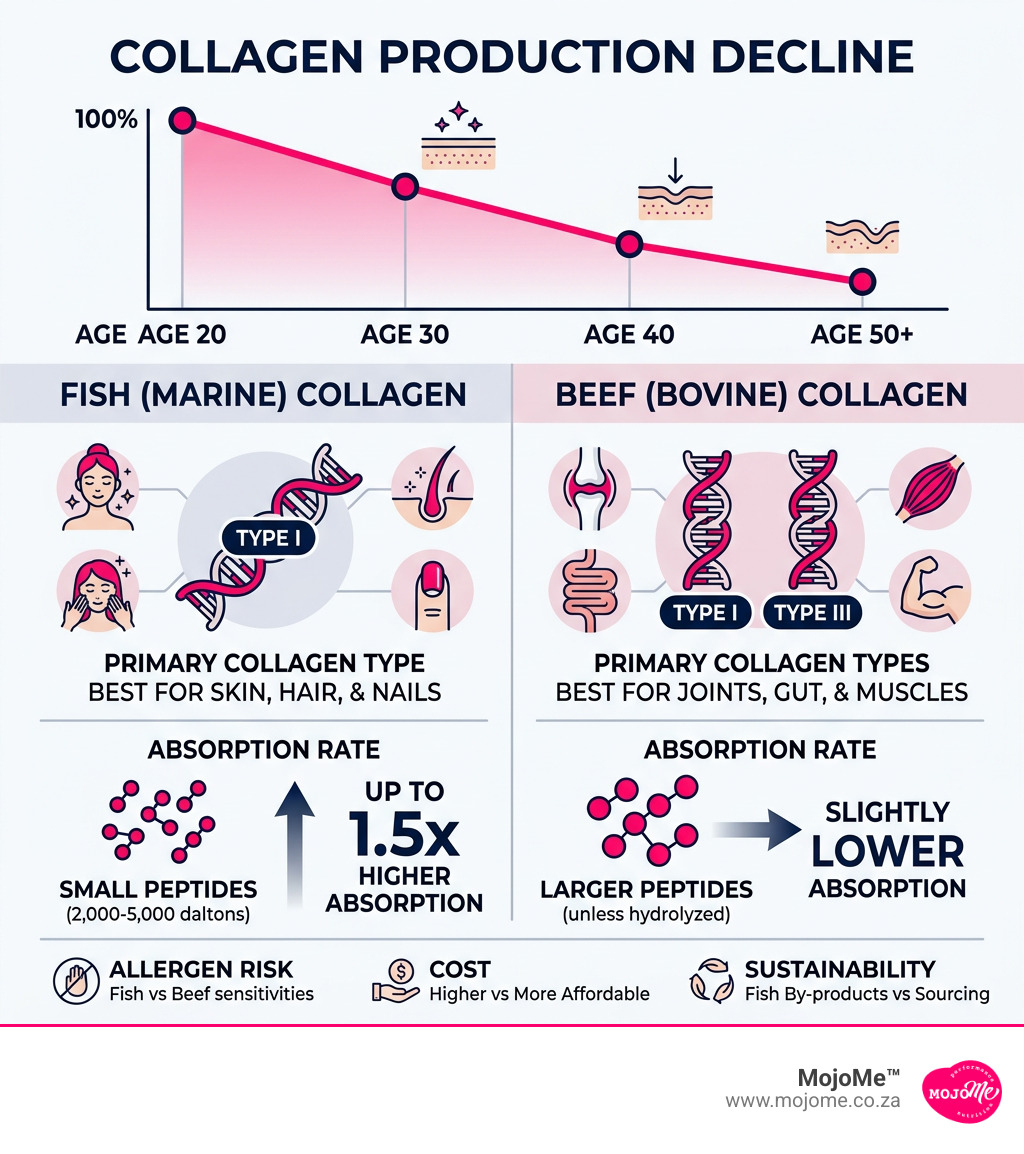
Here is a quick comparison to help you decide:
| Feature | Fish (Marine) Collagen | Beef (Bovine) Collagen |
|---|---|---|
| Primary collagen type | Type I | Type I and Type III |
| Best for | Skin, hair and nails | Joints, gut and muscles |
| Absorption rate | Up to 1.5x higher | Slightly lower (unless hydrolysed to same size) |
| Peptide size | Smaller (2,000-5,000 daltons) | Larger |
| Allergen risk | Avoid if fish-sensitive | Avoid if beef-sensitive |
| Cost | Generally higher | More affordable |
| Sustainability | Often uses fish waste by-products | Depends on sourcing |
Both types provide the amino acids your body needs to rebuild collagen. The difference lies in how well they are absorbed and which tissues they support most.
Collagen is the most abundant protein in the human body, making up roughly 30% of your total protein. It holds your skin firm, keeps your joints mobile and supports your gut lining. The problem is that your body starts producing less of it from your mid-twenties onwards, with the decline becoming more noticeable from age 30.
That is where supplementation comes in. But not all collagen supplements work the same way, and the source matters more than most labels will tell you.
Understanding the Basics: Fish vs Beef Collagen Sources
To understand the debate of fish vs beef collagen, we first need to look at where these proteins come from. Collagen is not a single substance but a family of proteins. While there are at least 28 different types, Type I, II and III make up about 80 to 90% of the collagen in your body.
Bovine collagen is typically derived from the hides, bones and muscles of cows. It is a robust source of both Type I and Type III collagen. Type I is found almost everywhere in the body except for cartilage, while Type III is found in our muscles, organs and blood vessels. This combination makes bovine collagen a fantastic all rounder for structural support.
Marine collagen, on the other hand, is extracted from fish skin and scales. It is almost exclusively Type I collagen. While that might sound like it is “missing” something compared to bovine, Type I is actually the most abundant type in the human body and is the primary structural component of our skin.
The amino acid profiles are quite similar between the two sources, both being rich in glycine, proline and hydroxyproline. However, this 2022 study highlights that marine collagen is particularly rich in Type I, which plays a key role in maintaining healthy skin, bones and connective tissues.
At MojoMe, we focus on the purity of these sources. Whether it is bovine sourced from grass-fed cattle or marine collagen from wild-caught fish, the goal is to provide the building blocks your body can no longer produce efficiently on its own. You can learn more about how these variations impact your health in our guide to collagen types and benefits.

Bioavailability and Absorption: Why Molecular Size Matters
When we talk about fish vs beef collagen, the word “bioavailability” comes up often. Bioavailability refers to how much of the supplement actually makes it into your bloodstream to be used by your cells.
This is where marine collagen often takes the lead. The collagen molecules in fish are naturally smaller than those in beef. To make collagen absorbable, it must undergo a process called hydrolysis, which breaks the large protein chains into smaller “peptides.”
Marine collagen peptides typically have a molecular weight of 2,000 to 5,000 daltons, whereas bovine peptides are often larger. Because the particles are smaller, marine collagen is absorbed up to 1.5 times more efficiently than other sources. In fact, research shows that marine collagen peptides can be detected in the bloodstream within just 30 minutes of consumption.
| Metric | Marine Collagen | Bovine Collagen |
|---|---|---|
| Molecular Weight | 2,000 to 5,000 Daltons | 5,000 to 10,000+ Daltons |
| Absorption Rate | Approximately 95% | Approximately 90% (if hydrolysed) |
| Bioavailability | 1.5x higher than bovine | Standard |
However, it is important to note that when bovine collagen is high quality and properly hydrolysed, it still boasts an impressive absorption rate of roughly 95%. The “superiority” of fish collagen usually comes down to that slight edge in speed and efficiency due to its smaller peptide size. This is particularly beneficial for those with compromised gut health who may struggle to break down larger proteins. For a deeper dive into this process, read our article on what is hydrolysed collagen.
Targeted Benefits: Choosing Between Marine and Bovine Collagen
Choosing between fish vs beef collagen often depends on what you see when you look in the mirror or how you feel when you wake up in the morning.
Both sources are packed with glycine, an amino acid that does more than just build skin. Glycine has been shown to positively impact sleep and help with insomnia by regulating our body’s core temperature. If you find yourself tossing and turning, a serving of collagen in the evening might be exactly what you need.
Specific Health Benefits of Fish vs Beef Collagen
Marine Collagen: The Beauty Specialist If your primary goal is anti-ageing, marine collagen is your best friend. Because it is so rich in Type I collagen (which makes up 80% of our skin), it is incredibly effective at:
- Improving skin hydration: Clinical studies show significant improvements in skin moisture levels after 8 to 12 weeks.
- Reducing wrinkles: By rebuilding the dermal matrix, it helps “fill in” fine lines from the inside out.
- Protecting against UV damage: Marine collagen contains antioxidants that help protect the skin from photoageing caused by the harsh South African sun.
Bovine Collagen: The Body Rebuilder Bovine collagen is the preferred choice for those looking at “inner” health and recovery. Because it contains both Type I and Type III collagen, it offers a broader range of benefits:
- Joint health: Studies have demonstrated that bovine collagen helps with joint pain, flexibility and mobility by stimulating cartilage production.
- Gut health: Bovine collagen is rich in the amino acids needed to repair the gut lining, making it a go-to for those dealing with “leaky gut” or digestive sensitivity.
- Muscle and athletic recovery: It supports the repair of tendons and ligaments, helping athletes bounce back faster after a heavy session at the gym.
For a more detailed breakdown of these differences, check out our comparison on collagen marine vs bovine.
Which is Better: Fish vs Beef Collagen for Your Goals?
So, which one should you choose?
If you are focused on anti-ageing, glowing skin and strong nails, marine collagen is the winner. Its high bioavailability and Type I concentration make it the most efficient “beauty” supplement. You can explore the benefits of marine collagen further on our dedicated page.
If you are looking for joint support, gut healing or muscle maintenance, bovine collagen is generally better. It provides a more diverse collagen profile (Types I and III) and is often more cost-effective for the higher daily doses required for joint repair.
For our pescatarian friends in South Africa, marine collagen is obviously the only choice. However, if you have a shellfish or fish allergy, bovine collagen will provide all the skin-boosting amino acids you need without the allergen risk.
Sustainability, Cost and Dietary Considerations in South Africa
In the South African market, budget and sourcing are major factors.
Cost Generally, fish vs beef collagen pricing reflects the complexity of sourcing. Marine collagen is usually more expensive, often costing more per gram than bovine. This is because extracting collagen from fish skins and scales is a more delicate and costly process than processing cow hides. Bovine collagen is a by-product of the beef industry, making it more widely available and affordable for long-term use.
Sustainability Marine collagen is often praised for its sustainability. It uses parts of the fish (scales and skin) that would otherwise be discarded by the fishing industry. However, you should always look for “wild-caught” to ensure you are not supporting intensive fish farming which can have a higher environmental impact. We explain why to choose wild-caught marine collagen to help you make an ethical choice.
Bovine collagen sustainability depends entirely on the farming practices. At MojoMe, we advocate for grass-fed, pasture-raised cattle. This ensures the collagen is free from hormones and antibiotics while supporting more traditional, less intensive farming methods.
Allergens This is a critical distinction. If you have a known allergy to fish or shellfish, you must avoid marine collagen. Conversely, bovine collagen is a safe alternative. Both are naturally gluten-free and dairy-free, making them suitable for most South African diets, including Paleo and Keto.
How to Choose a High-Quality Supplement
Not all powders are created equal. When you are standing in a shop in Cape Town or browsing online, here is what you should look for on the label:
- Hydrolysed Peptides: Ensure the label says “hydrolysed” or “collagen peptides.” This guarantees the protein is broken down enough for your body to actually use.
- No Fillers: Many brands add sugars, artificial flavours or bulking agents like maltodextrin. These can cause bloating and spike your blood sugar. MojoMe products are 100% natural with zero fillers.
- Third-Party Testing: Look for brands that test for heavy metals (like mercury in fish) and contaminants.
- Sourcing Transparency: It should state clearly if it is grass-fed bovine or wild-caught marine.
For marine-specific tips, see our guide on how to choose the best marine collagen powder.
Frequently Asked Questions about Collagen
Can you take fish and beef collagen together?
Absolutely. In fact, many people find that a “multi-collagen” approach works best. By combining both, you get the rapid absorption of marine collagen for your skin and the broader Type I and III support from bovine for your joints and gut. You could take marine collagen in your morning coffee and stir bovine collagen into a soup or smoothie later in the day.
How long does it take to see results?
Consistency is key. While marine collagen peptides enter your blood in 30 minutes, it takes time for your body to rebuild tissue.
- Skin: Most people notice better hydration and a “glow” within 4 to 6 weeks.
- Joints and Gut: This typically takes longer, usually 8 to 12 weeks of daily use.
- Hair and Nails: You will likely see a difference in strength after 12 weeks as the new growth comes through.
Are there any side effects or precautions?
Collagen is generally very safe. Some people might experience mild digestive “heaviness” or bloating if they start with a large dose too quickly. We recommend starting with 5 grams (about one teaspoon) and working your way up to a full 10 gram or 15 gram serving. If you are pregnant or have chronic kidney disease, always consult your healthcare provider before starting any new protein supplement.
Conclusion
In the battle of fish vs beef collagen, there is no single “winner”—only the best choice for your specific needs. If you want to target wrinkles and skin elasticity with maximum efficiency, let your skin “prefer the sea” with marine collagen. If you want to support your active lifestyle, heal your gut and keep your joints supple without breaking the bank, bovine collagen is a powerhouse.
At MojoMe, we believe in pure, science-backed nutrition that fits the South African lifestyle. Whether you choose the sea or the field, ensure you are choosing a product free from fillers and full of potential.
Ready to start your journey? Shop the MojoMe collagen range and find your perfect match today.