Your Body Is Losing Its Most Abundant Protein Right Now
Grass fed beef collagen is a hydrolysed protein supplement sourced from the connective tissues of pasture-raised cattle, and it is one of the most effective ways to support your skin, joints and gut as your body’s natural collagen production declines with age.
Quick answer: what is grass fed beef collagen and why does it matter?
- Collagen is the most abundant structural protein in the human body, making up roughly 30% of total protein
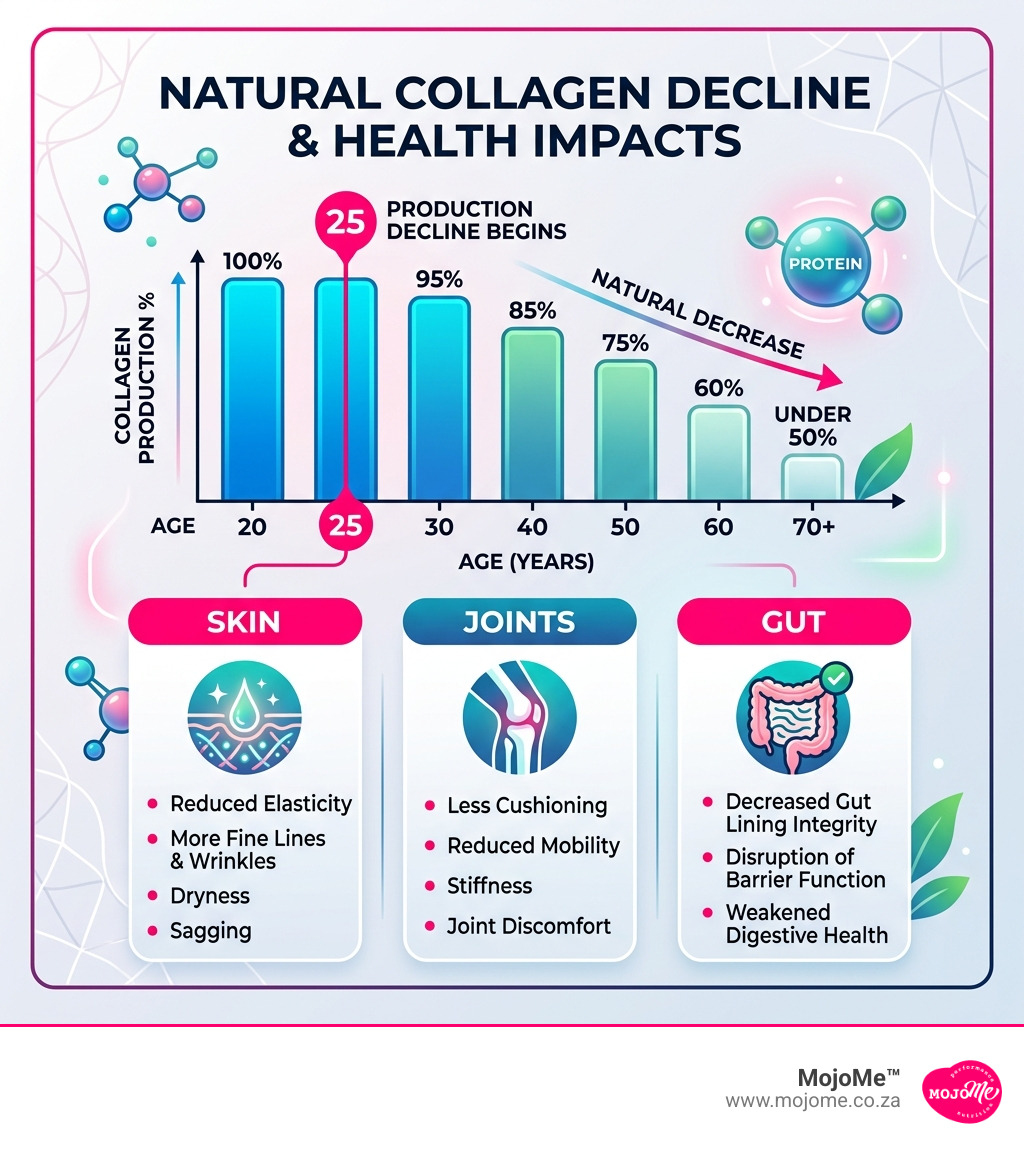
- Natural production begins declining from your mid-twenties onward
- By age 60, collagen levels are approximately half of what they were in youth
- Grass fed sources provide a cleaner amino acid profile, free from antibiotics and hormones
- The key amino acids are glycine, proline and hydroxyproline, which are difficult to obtain from ordinary muscle meat
- Daily supplementation of 10 to 20 grams supports skin elasticity, joint mobility and gut lining integrity
- Most people notice initial changes within 4 to 8 weeks of consistent use
Here is the reality: most of us eat plenty of muscle meat but almost none of the connective tissue that was central to traditional diets across cultures. Slow-cooked bones, oxtail, trotters, and cartilage-rich cuts were everyday foods for previous generations. Today they are largely absent from our plates.
That gap matters. Collagen from connective tissue has a fundamentally different amino acid composition to the protein in your chicken breast or eggs. It concentrates the structural amino acids your body needs to maintain skin integrity, cushion your joints and seal the gut lining. No amount of whey protein fills that gap.
For health-conscious South Africans dealing with joint discomfort, skin concerns or digestive sensitivity, grass fed beef collagen offers a targeted, natural and well-researched solution.
Understanding the Power of Grass Fed Beef Collagen
When we talk about grass fed beef collagen, we are referring to a premium pure collagen powder derived from the hides and connective tissues of cattle that have spent their lives grazing on open pastures. This is not just a marketing term. The diet and lifestyle of the animal directly influence the quality and purity of the protein you consume.

At its core, collagen is a complex protein made up of 19 different amino acids. However, three specific amino acids do the heavy lifting: glycine, proline and hydroxyproline. Glycine makes up about 30% of the amino acids in collagen and plays a vital role in metabolic health and restorative sleep. These specific building blocks are rare in standard muscle meat diets, which is why supplementation is so effective.
To make these proteins useful to your body, they must undergo a process called enzymatic hydrolysis. You may have wondered what is hydrolysed collagen and why it is the gold standard. In its raw form, collagen molecules are too large for the human gut to absorb efficiently. Hydrolysis uses natural enzymes to break these long protein chains into smaller “peptides”. These peptides have a low molecular weight, which significantly increases their bioavailability. This means the collagen can pass through the intestinal wall and enter the bloodstream quickly, where it can be used to stimulate the body’s own natural collagen production.
In the South African context, we prioritise sourcing from cattle raised under strict welfare standards. This ensures the end product is free from the pesticides, hormones and antibiotics often found in intensive feedlot operations.
Therapeutic Benefits for Total Body Wellness
The benefits of grass fed beef collagen extend far beyond vanity. Because collagen is the “glue” that holds the human body together, providing structural support to everything from your corneas to your heart valves, the impact of supplementation is systemic.
Research into the surprising benefits of grass-fed beef collagen highlights its role in supporting metabolic health. Glycine, for instance, has been linked to improved insulin sensitivity and can even mimic some of the longevity benefits of calorie restriction. Furthermore, taking collagen before bed may improve sleep quality by lowering core body temperature and calming the central nervous system.
Skin Health and Anti-Ageing Support
Your skin is about 75% collagen. Specifically, it relies on Type I and Type III collagen to maintain its structure. Type I is the most abundant and provides the mechanical strength of the skin, while Type III is often called “baby collagen” because it is prevalent in young skin and provides elasticity.
As we age, the dermal layer thins. Supplementing with grass fed beef collagen helps increase dermal thickness and hydration. A meta-analysis of clinical trials showed that 90 days of consistent supplementation significantly reduced wrinkles and improved skin elasticity. By providing the body with the specific collagen types and benefits it needs, you are effectively providing the raw materials for internal repair that topical creams simply cannot reach.
Joint Mobility and Structural Integrity
For active South Africans, joint health is a primary concern. Whether you are hiking in the Cape mountains or hitting the gym, your joints endure significant stress. Cartilage is primarily made of collagen, and when it wears down, the result is pain and inflammation.
Clinical studies have shown that athletes who consume collagen peptides experience reduced joint pain during activity. This is because the peptides accumulate in the cartilage and stimulate cells called chondrocytes to produce new extracellular matrix. This supports ligament strength and tendon health, which is crucial for injury prevention. Between 65% and 80% of the dry weight of your tendons is collagen, making it the most important nutrient for structural resilience.
Gut Health and Digestive Resilience
One of the most exciting areas of research is the link between collagen and gut health. The lining of your digestive tract is a delicate barrier that, when compromised, can lead to “leaky gut” or systemic inflammation.
Glycine and proline are essential for repairing the intestinal wall. They help seal the gut lining, which may reduce symptoms of bloating and digestive discomfort. In one study, over 90% of participants reported a significant reduction in digestive issues after six weeks of consistent collagen use.
Why Sourcing Matters: Grass-Fed vs Grain-Fed
In South Africa, we have a choice between grass-fed and grain-fed (feedlot) beef products. When it comes to collagen, the difference is profound. Grass-fed cattle live in a more natural environment, which leads to a superior nutritional profile.
| Feature | Grass-Fed Beef Collagen | Grain-Fed (Regular) Collagen |
|---|---|---|
| Diet | Natural grass and forage | Grains, soy and corn |
| Omega-3 Levels | Significantly higher | Lower |
| Antibiotics | Generally free from | Common in feedlot environments |
| Hormones | No added growth hormones | Often used to speed weight gain |
| CLA Content | Higher levels of healthy fats | Lower |
| Antioxidants | Rich in Vitamin A and E precursors | Lower |
Choosing grass-fed is not just about your health; it is about ethical farming and environmental sustainability. Grass-fed systems support soil health and carbon sequestration, which is vital for our local ecosystem. You can also boost your collagen intake with these foods like bone broth made from organic bones, but for daily convenience, a clean supplement is often more practical.
Practical Guide to Supplementation
Incorporating grass fed beef collagen into your life is remarkably simple. Unlike gelatin, which requires hot water to dissolve and sets into a jelly, hydrolysed collagen is highly soluble.
You can choose between collagen powder or grass fed collagen capsules. While capsules are convenient for travel, powder allows for higher therapeutic doses. High-quality bovine collagen is virtually tasteless and odourless, making it a “stealth” health booster.
How to Use Grass Fed Beef Collagen for Best Results
For general wellness and skin support, a daily dose of 10g is recommended. If you are targeting joint recovery or gut repair, increasing this to 20g per day is often more effective.
- Morning Ritual: Stir 10g into your morning coffee or tea. It is heat-stable, so the temperature won’t damage the protein.
- Smoothie Boost: Add a scoop to your post-workout shake.
- Cooking and Baking: You can mix it into soups, stews or even pancake batter.
- The Vitamin C Factor: Vitamin C is a crucial co-factor for collagen synthesis. Always ensure you have adequate Vitamin C intake (from citrus, berries or supplements) to help your body “lock in” the collagen you are consuming.
When deciding between sources, many people ask about marine vs bovine collagen. While marine collagen is excellent for skin (Type I), bovine collagen provides a broader spectrum by including Type III, making it a more comprehensive choice for total body support.
Timeline for Noticing Changes with Grass Fed Beef Collagen
Patience and consistency are the two most important factors in your collagen journey. You are not just masking a symptom; you are rebuilding structural tissue.
- 4 to 8 Weeks: Most users report improved skin hydration, a “glow”, and stronger, faster-growing nails.
- 2 to 3 Months: Hair often becomes thicker and more resilient.
- 3 to 6 Months: This is the window where joint mobility improvements and reduced discomfort typically become most apparent.
Frequently Asked Questions
Are there any side effects to taking bovine collagen?
Most people tolerate grass fed beef collagen exceptionally well. Because it is a pure protein, it is free from common allergens like dairy, gluten and soy. Some individuals who are not used to high protein intake may experience mild bloating or a feeling of fullness. If you have a sensitive stomach, we recommend starting with a smaller dose of 5g and gradually increasing to the full 10g or 20g over a week.
Is grass-fed collagen suitable for a keto diet?
Absolutely. In fact, it is often considered a “secret weapon” in the keto community. It contains zero carbohydrates and provides the specific amino acids that help balance the high intake of muscle meat common in keto diets. It is an excellent way to maintain protein-sparing levels without kicking you out of ketosis.
How does bovine collagen compare to marine alternatives?
Bovine collagen is rich in both Type I and Type III collagen. This makes it particularly effective for those looking for a “whole body” approach that includes gut and joint support. Marine collagen is almost exclusively Type I, which is fantastic for skin but less comprehensive for structural repair. Furthermore, bovine collagen is a great alternative for those with shellfish or fish allergies. You can read more about collagen marine v bovine to decide which fits your specific goals.
Conclusion
At MojoMe, we believe that health should be simple, natural and backed by science. Our hydrolysed collagen is a testament to our commitment to quality. Sourced from pasture-raised cattle, our grass fed beef collagen is 100% natural, free from fillers, sugars and gluten.
Based in Cape Town, we understand the South African lifestyle and the need for supplements that actually work. Whether you are looking to reclaim your youthful skin glow, move without joint pain or heal your gut, our collagen range provides the pure, potent nutrition your body deserves.
Shop the MojoMe Grass Fed Collagen Range today and start your journey toward a stronger, more resilient you.