Why Collagen Supplement Pregnancy Nutrition Deserves Serious Attention
Collagen supplement pregnancy safety is one of the most common questions South African mothers-to-be are asking right now, and the short answer is: yes, collagen is generally considered safe during pregnancy and may offer meaningful support for both mother and baby.
Quick answer for those in a hurry:
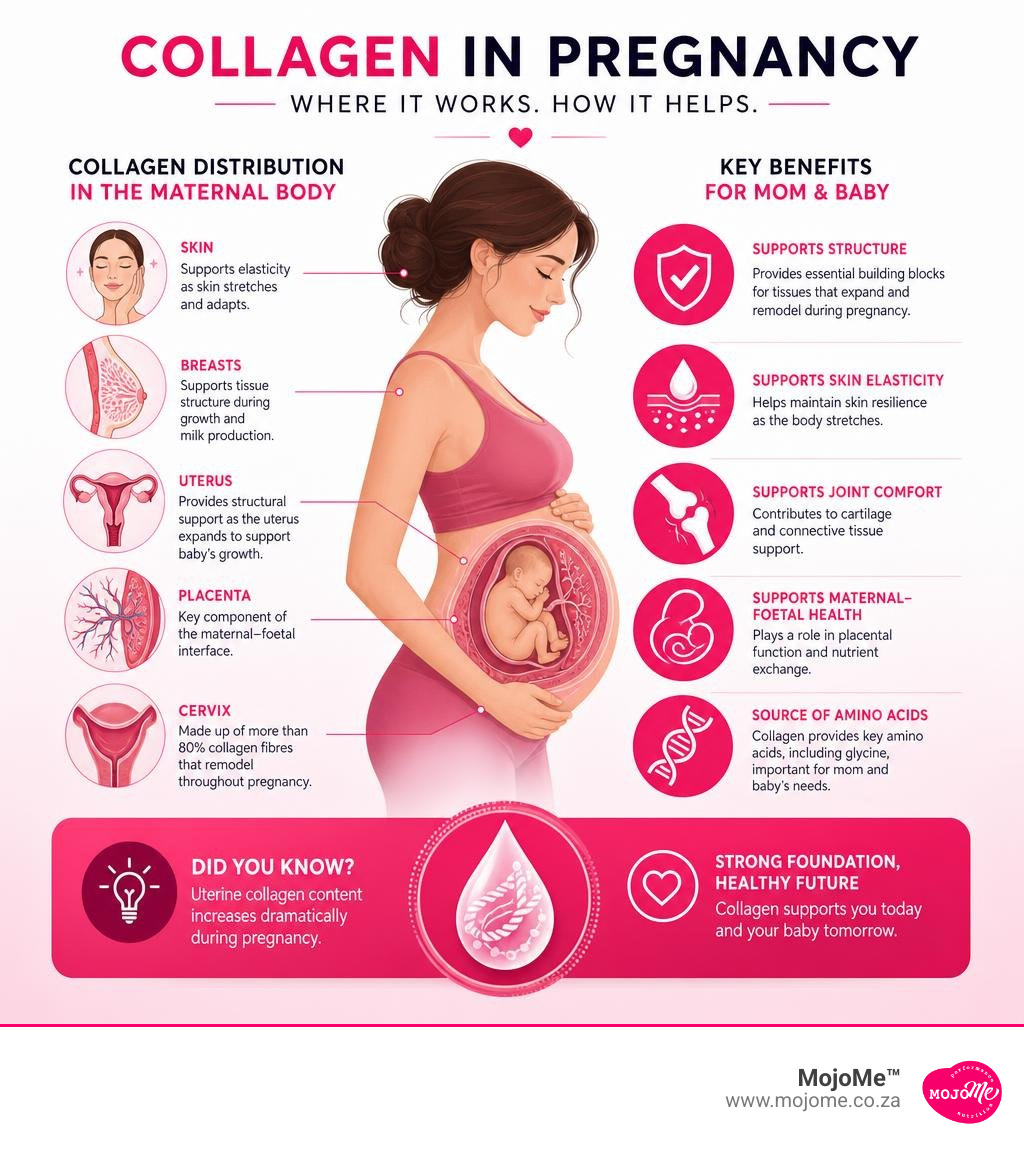
- Collagen is the most abundant structural protein in the human body, making up roughly one-third of total protein content
- During pregnancy, collagen demand rises sharply as the uterus, placenta, cervix and skin all expand and remodel
- Uterine collagen content increases by approximately 800% at term compared to the non-pregnant state
- The cervix is composed of more than 80% collagen fibres, which must remodel significantly throughout pregnancy
- Hydrolysed bovine collagen peptides are widely regarded as safe for use during pregnancy when sourced from quality, tested suppliers
- The generally recommended intake ranges from 2.5 to 10 grams per day, though some practitioners suggest up to 10 grams daily for pregnant and breastfeeding women
- Always consult your healthcare provider before starting any new supplement during pregnancy
Beyond skin and joints, collagen plays a far deeper biological role during pregnancy than most people realise. It is a critical component of the maternal-foetal interface, the tissue zone where mother and baby exchange nutrients, oxygen and immune signals. Trophoblasts (the cells that form the placenta) actively produce and interact with collagen to regulate invasion, blood vessel formation and immune tolerance.
The amino acid glycine, which makes up about one-third of collagen’s structure, becomes conditionally essential by the third trimester. This means the body can no longer produce enough on its own to meet the demands of a growing pregnancy, and dietary or supplemental sources become increasingly important.
This guide breaks down what the science actually says, what to look for in a supplement and how to support your body safely throughout pregnancy and beyond.
Simple guide to collagen supplement pregnancy:
The Biological Role of Collagen at the Maternal-Foetal Interface
During a healthy pregnancy, the maternal-foetal interface is a highly dynamic environment where maternal decidual cells, immune cells and invading foetal trophoblasts interact. Far from being a passive structural scaffold, the extracellular matrix at this interface is actively involved in cellular signalling and tissue remodelling.
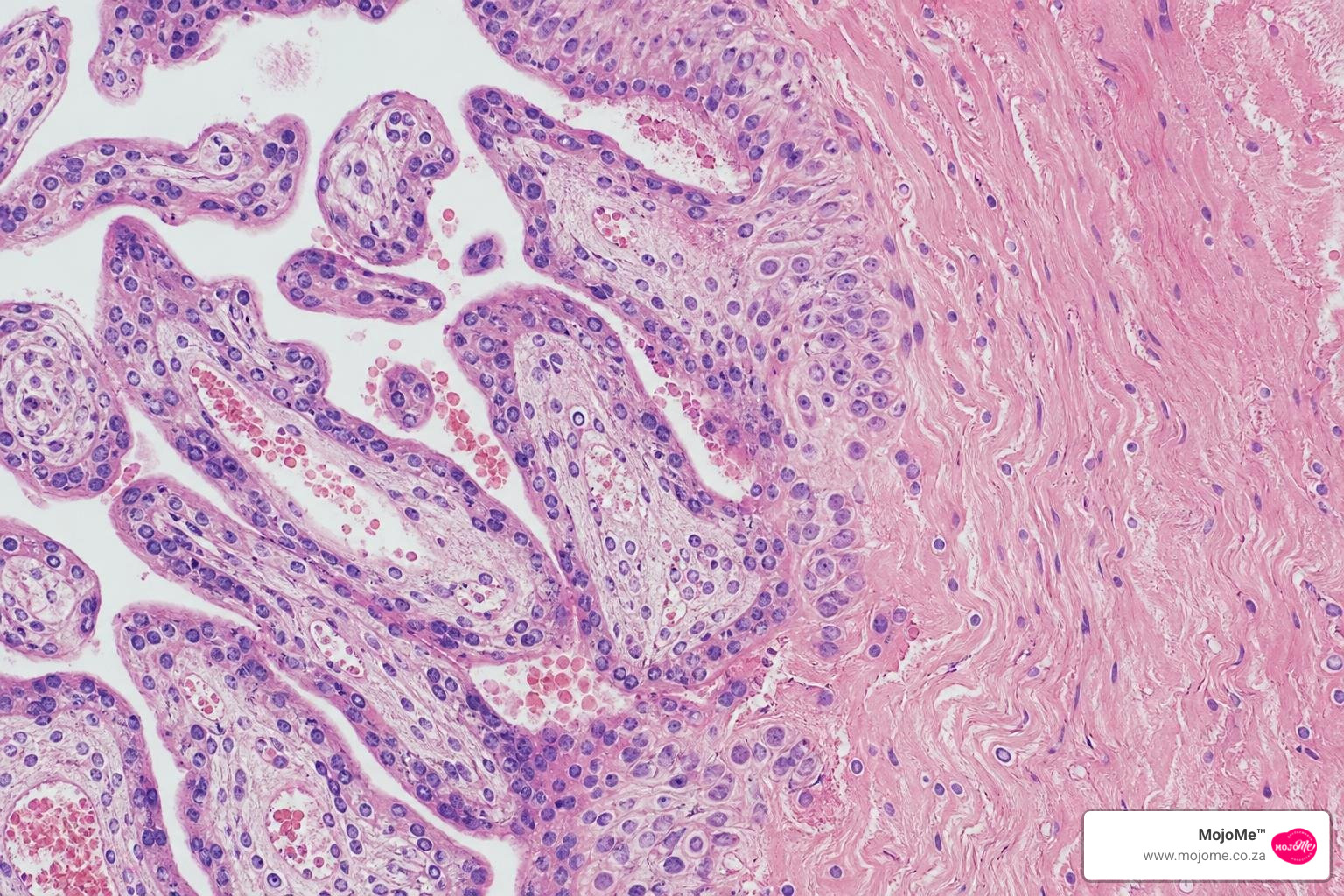
Collagen type IV expression is upregulated at the maternal-foetal interface in the first trimester compared to proliferative and secretory endometrium. It is especially highly expressed in the decidua, which is the modified mucosal lining of the uterus formed during pregnancy. Decidual stromal cells and trophoblasts are the primary producers of collagen type IV at this interface.
This specific collagen network is crucial for:
- Trophoblast Invasion: Foetal trophoblast cells must invade the maternal decidua and remodel the spiral arteries to establish proper blood flow to the placenta. Intact collagen provides the necessary substrate for trophoblast adhesion, migration and proliferation.
- Immune Tolerance: The maternal immune system must tolerate the semi-allogeneic foetus. Decidual natural killer (NK) cells constitute approximately 70% of decidual immune cells. Collagen interacts directly with leukocyte-associated immunoglobulin-like receptor 1 (LAIR-1) on these decidual NK cells, which reduces their cytotoxicity and helps promote maternal-foetal immune tolerance.
- Placental Development: Other collagen types, including types I, III, V, VI and XVIII, are present in the placental villi and decidua, supporting the structural integrity of the developing placenta.
For a comprehensive breakdown of these mechanisms, you can read the Scientific research on collagen at the maternal-foetal interface.
Regulation of Collagen Expression by Hormones and Hypoxia
The expression of collagen at the maternal-foetal interface is tightly regulated by pregnancy-associated hormones and local environmental factors.
Progesterone and oestrogen play crucial roles in modulating the synthesis and degradation of the uterine extracellular matrix. Progesterone supports the decidualisation of endometrial stromal cells, which in turn upregulates the production of basement membrane collagens like type IV.
Additionally, the early maternal-foetal interface exists in a physiological hypoxia microenvironment. Before maternal blood flow to the placenta is fully established in the late first trimester, oxygen tension is relatively low. This local hypoxia activates hypoxia-inducible factor 1-alpha (HIF-1α), which is a transcription factor that directly promotes collagen expression. This hypoxia-driven mechanism ensures that the structural foundation of the placenta is securely established before blood flow increases.
How Collagen Fragments Influence Foetal Development
As tissues remodel during pregnancy, intact collagen is naturally broken down into bioactive fragments. These fragments, particularly non-collagenous 1 (NC1) domains, have distinct physiological properties that are often opposite to those of the parent molecule.
For example, endostatin is a fragment derived from the NC1 domain of collagen type XVIII. While intact collagen type XVIII supports cell adhesion and vascular stability, endostatin acts as a potent inhibitor of angiogenesis (the formation of new blood vessels) and trophoblast invasion.
This creates a highly regulated feedback loop. Intact collagen promotes trophoblast invasion and blood vessel development, while its degradation products, such as endostatin, act as natural brakes to prevent excessive invasion into the uterine wall. This delicate balance ensures healthy placental development without compromising maternal tissue integrity.
Clinical Implications of Abnormal Collagen Metabolism in Pathological Pregnancies
Because collagen is so fundamental to placental development and maternal tissue strength, abnormal collagen expression or metabolism is closely linked to several pregnancy complications.
- Recurrent Miscarriage: Adequate collagen expression is necessary for successful implantation and early placental growth. Studies have shown that the staining of total collagens in the villi and decidua is significantly weaker in miscarriages compared to normal pregnancies. Specifically, a decreased expression of collagen types IV and V has been observed in cases of recurrent miscarriage.
- Preeclampsia: This serious condition is characterised by high blood pressure and organ damage, often stemming from poor spiral artery remodelling in the placenta. Research indicates that abnormal deposition of collagen type I can impair trophoblast invasion. You can read more about this in the Research on collagen and preeclampsia, which outlines how excess collagen type I may suppress pathways critical for healthy placental development.
- Premature Rupture of Membranes (PROM): The foetal membranes must remain strong until labour. A premature degradation of the collagen network within these membranes can weaken them, leading to early rupture.
- Gestational Diabetes: Altered collagen metabolism and increased glycation of extracellular matrix proteins can occur in diabetic pregnancies, affecting placental function and baby’s growth.
Matrix Metalloproteinases and Cervical Remodelling
The mechanical strength of the cervix is determined by its extracellular matrix, of which collagen types I and III are the primary components. Collagen type I consists of rigid fibres that provide tensile strength, while collagen type III is more elastic.
During pregnancy, the cervix must remain firm and closed to support the growing uterus. This is known as cervical competence. However, as labour approaches, the cervix must undergo a dramatic process of softening, shortening and dilating.
This cervical remodelling is driven by matrix metalloproteinases (MMPs), specifically MMP-2 and MMP-9. These enzymes degrade collagen and other matrix components to allow the tissue to stretch. If MMP expression is abnormally high too early in pregnancy, it can lead to premature cervical remodelling, cervical insufficiency and preterm birth. Conversely, inadequate MMP activity can result in a failure of the cervix to dilate during labour.
Safety Guidelines for a Collagen Supplement Pregnancy Routine
Given the massive structural demands placed on the maternal body, many women look to a collagen supplement pregnancy routine to support their joints, skin and general protein intake. However, safety and purity must be your top priorities when choosing a supplement.

When evaluating a supplement, keep the following guidelines in mind:
- Third-Party Testing: Ensure the product is independently tested for heavy metals, pesticides and environmental toxins. Heavy metals like lead, mercury and arsenic can easily cross the placenta and pose risks to the developing foetus.
- Sourcing: Opt for high-quality, ethically sourced grass-fed bovine collagen. Grass-fed bovine collagen is rich in types I and III, which closely match the structural collagens found in human skin, bones and blood vessels.
- Avoid Additives: Many commercial collagen powders contain artificial sweeteners, synthetic flavours, preservatives or herbal blends that may not be safe during pregnancy. A clean, single-ingredient formula is highly recommended.
- Allergen Awareness: If you have known allergies to fish or shellfish, avoid marine collagen. Bovine collagen is a safer and highly palatable alternative.
For a deeper look at safety considerations, see our detailed guide: Is collagen safe during pregnancy?.
Selecting the Right Collagen Supplement Pregnancy Formulation
To get the most out of your supplement, choose hydrolysed collagen peptides. Hydrolysis breaks the long collagen proteins down into smaller, highly bioavailable peptides that your body can easily absorb and utilise.
Additionally, collagen synthesis in the human body cannot occur without specific co-nutrients:
- Vitamin C: This vitamin is a mandatory co-factor for the enzymes that cross-link and stabilise collagen fibres. Without adequate vitamin C, your body cannot efficiently build new collagen, regardless of how much supplement you consume.
- Vitamin D3: This nutrient supports bone health, immune function and maternal mood, working alongside collagen to maintain skeletal strength.
When selecting a supplement, look for clean formulations that either include these essential co-factors or pair your pure collagen powder with vitamin C-rich foods. For more tips on selecting clean supplements, read The skinny on collagen in pregnancy.
Recommended Daily Dosage for a Collagen Supplement Pregnancy Routine
Protein requirements increase significantly during pregnancy to support maternal tissue expansion and foetal development. The American Pregnancy Association suggests that pregnant women require 75 to 100 grams of protein daily, with needs peaking in the second and third trimesters.
While collagen is an excellent source of specific amino acids, it is important to remember that it is an incomplete protein. It is exceptionally rich in glycine, proline, hydroxyproline and arginine, but it completely lacks tryptophan, one of the nine essential amino acids. Therefore, collagen should never be used as your sole source of protein. Instead, it should complement a balanced diet rich in complete proteins like eggs, dairy, lean meats, fish and legumes.
A standard daily dose of 10 grams (or approximately one standard tablespoon) of hydrolysed collagen peptides is widely considered safe and effective for pregnant women. This dosage provides a concentrated source of glycine to support uterine expansion and foetal development without overwhelming your digestive system.
For more information on protein options, check out The complete guide to protein powder for pregnancy.
Dietary Sources of Collagen and Co-Factors
You can also support your body’s collagen levels through a whole-food diet. Traditional diets across many cultures have long emphasised slow-cooked, bone-in meats and broths during pregnancy.
| Dietary Source | Key Nutrients Provided | Role in Pregnancy |
|---|---|---|
| Bone Broth | Collagen, glycine, proline, minerals | Supports gut health, joint comfort and hydration |
| Slow-Cooked Meats | Collagen, gelatin, amino acids | Provides easily digestible protein and zinc |
| Citrus Fruits & Berries | Vitamin C | Essential co-factor for natural collagen synthesis |
| Dark Leafy Greens | Vitamin C, copper, folate | Supports immune function and tissue repair |
| Nuts & Seeds | Zinc, copper, healthy fats | Co-factors for collagen formation and cell growth |
Including a variety of these foods in your daily meals helps ensure your body has both the direct building blocks of collagen and the essential vitamins and minerals required to assemble them.
Postpartum Recovery and the Fourth Trimester
The demand for collagen does not end once your baby is born. The postpartum period, often called the fourth trimester, is a time of intense physical recovery, tissue repair and hormonal transitions.
Collagen supplementation during the postpartum phase can support your recovery in several ways:
- Wound Healing: Whether you are recovering from a vaginal birth (requiring perineal healing) or a Caesarean section, your body relies heavily on amino acids like glycine and proline to rebuild damaged skin and connective tissues.
- Pelvic Floor Rehabilitation: The pelvic floor muscles and ligaments undergo immense strain during pregnancy and childbirth. Collagen supports the structural integrity of these tissues as they heal and regain tone.
- Managing Postpartum Alopecia: Many women experience significant hair shedding between two and five months postpartum due to a sudden drop in oestrogen levels. While collagen cannot prevent this hormonal shift, it provides the specific amino acids, such as proline, that your body uses to produce keratin, supporting healthy hair regrowth.
- Joint Comfort: As your hormone levels stabilise and you carry your growing baby, your joints and ligaments remain vulnerable. Collagen helps protect and rebuild joint cartilage.
To learn how to time your protein intake for maximum benefit during this busy phase, read about the Best time to take protein powder in pregnancy and postpartum.
Frequently Asked Questions about Collagen and Pregnancy
Can you take collagen during the first trimester?
Yes, pure collagen is safe to consume during the first trimester. In fact, it can be highly beneficial for managing early pregnancy symptoms. Many women struggle with morning sickness, nausea and food aversions during these early weeks, making it difficult to consume solid protein sources like meat or eggs.
Because high-quality hydrolysed collagen is virtually tasteless and dissolves easily in liquids, it can be added to ginger tea, warm water or fruit smoothies. This provides a gentle, easy-to-digest source of baseline protein that helps stabilise blood sugar levels and manage nausea without triggering aversions. For professional medical insights on this topic, you can refer to the OBGYN guidance on prenatal collagen safety.
Does collagen prevent stretch marks during pregnancy?
While no supplement can guarantee the complete prevention of stretch marks, which are heavily influenced by genetics and rapid weight gain, collagen can support your skin’s resilience. Stretch marks occur when the dermal matrix stretches beyond its elastic limit, causing microscopic tears in the collagen and elastin networks.
By providing your body with the amino acids necessary to maintain dermal density and hydration, collagen helps support skin elasticity from the inside out. For the best results, start supporting your skin early in pregnancy before maximum stretching occurs.
Is marine collagen safe for pregnant women?
While marine collagen is highly bioavailable, it carries specific considerations during pregnancy. Marine collagen is derived from fish skin or scales. If you have any history of fish or shellfish allergies, marine collagen should be strictly avoided to prevent allergic reactions. Additionally, there is a minor risk of heavy metal or shellfish contamination in lower-grade marine supplements.
For these reasons, pure, grass-fed bovine collagen is widely preferred as a safer, allergy-friendly alternative for pregnant women.
Conclusion
Navigating nutrition during pregnancy can feel overwhelming, but supporting your body’s structural framework does not have to be. Collagen is far more than a cosmetic wellness trend; it is a fundamental biological building block that supports your placenta, cervix, joints and recovering tissues throughout your pregnancy journey.
At MojoMe, we understand that you want only the absolute best for yourself and your developing baby. Based in Cape Town, South Africa, we produce premium, 100% natural supplements that are completely free from fillers, sugars, gluten and grains. Our award-winning formulations are science-backed and manufactured to the highest standards of purity and safety.
If you are ready to support your pregnancy and postpartum journey with clean, trusted nutrition, you can Shop MojoMe pure collagen products today. Always remember to discuss any new supplement routine with your midwife or OB-GYN to ensure it aligns with your personal healthcare needs.