Why Collagen Is the Foundation of Your Dog’s Health
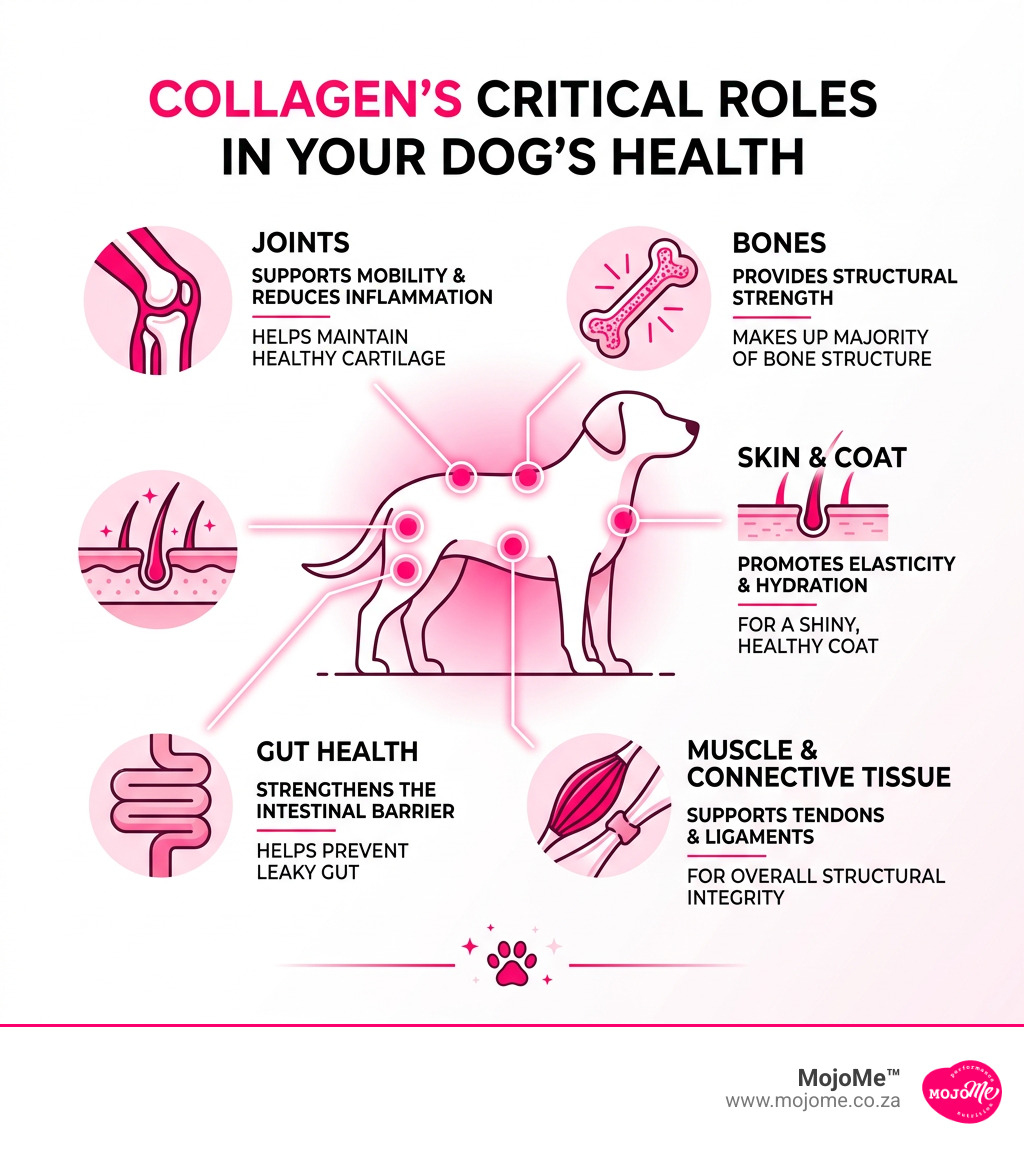
Is collagen good for dogs? Yes — and the research backs it up clearly. Collagen is the most abundant protein in your dog’s body, and it plays a critical role in keeping joints mobile, skin healthy, bones strong, and the gut lining intact.
Here’s a quick summary of why collagen matters for dogs:
- Joints — supports cartilage and reduces pain and inflammation, especially in aging or active dogs
- Bones — makes up approximately 90% of a dog’s bone structure as type I collagen
- Skin and coat — maintains elasticity, hydration, and a healthy, shiny coat
- Gut health — strengthens the intestinal lining and helps prevent leaky gut
- Muscle and connective tissue — supports tendons, ligaments, and overall structural integrity
The problem? Dogs naturally produce less collagen as they age. This slowdown can show up as stiff joints, a dull coat, digestive issues, and slower recovery from injury or exercise.
The good news is that collagen can be replenished through diet and supplementation — and the science behind it is genuinely compelling.
Is collagen good for dogs? Understanding the “Glue” of the Body
To understand why we’re so passionate about this protein, we first need to look at what it actually is. In the scientific world, collagen is often referred to as the “scaffolding” or the “glue” that holds the body together. It is a complex structural protein found in the connective tissues, providing the strength and elasticity our dogs need to jump, run, and wag their tails.
There are several types of collagen, but two are particularly important for our canine companions:
- Type I Collagen: This is the most prevalent type in a dog’s body. It is found in the skin, tendons, and especially the bones. In fact, dogs’ bones are made up of around 90% type I collagen. This provides the necessary rigidity and strength to withstand weight without the bones becoming brittle.
- Type II Collagen: This type is the primary component of joint cartilage. It acts as a shock absorber, allowing joints to glide smoothly. Without enough Type II collagen, cartilage begins to wear down, leading to the dreaded “bone-on-bone” friction that causes so much discomfort in senior pets.
As our dogs age, their internal “collagen factory” starts to slow down. Environmental factors and high activity levels can also deplete these reserves. This is why we developed our Shop Maintenance Collagen for Dogs & Cats—to help bridge that gap and keep that biological “glue” strong.
The Science-Backed Benefits of Collagen for Canine Health
When people ask us, “is collagen good for dogs?”, we don’t just rely on anecdotes; we look at the data. Multiple studies have shown that collagen supplementation can significantly improve a dog’s quality of life, particularly regarding mobility and inflammation.
One of the most impressive statistics comes from research on undenatured type II collagen (UC-II). In a landmark study, UC-II was found to be 59% more effective than the traditional combination of chondroitin and glucosamine in relieving dog pain and improving mobility. While glucosamine provides the building blocks for repair, UC-II actually works with the immune system to stop the destruction of cartilage in the first place.
But it isn’t just for senior dogs with arthritis. Even healthy, active dogs benefit. A study involving 40 healthy Labrador Retrievers showed that those supplemented with UC-II had significantly lower pain scores after exercise. Specifically, researchers noted a lower inflammation index in Labradors 24 hours after a long run compared to those who received a placebo.
Why hydrolyzed collagen is good for dogs’ digestion
While joint health gets most of the spotlight, the benefits of collagen for the gut are equally vital. Many dogs suffer from “leaky gut syndrome,” where the intestinal lining becomes too permeable, allowing toxins and undigested food particles to enter the bloodstream. This can lead to allergies, skin issues, and chronic inflammation.
Hydrolyzed collagen is packed with specific amino acids—glycine, proline, and glutamine—that are essential for repairing the intestinal wall.
- Glutamine serves as the primary fuel for the cells lining the digestive tract.
- Glycine helps soothe the gut lining and supports healthy digestive enzyme production.
By strengthening the gut barrier, collagen helps ensure your dog absorbs nutrients properly and maintains a robust immune system. For an extra boost to your dog’s metabolic health, you might also want to read about Super Awesome MCTs for Your Dog.
How undenatured type II collagen is good for dogs’ joints
We mentioned UC-II earlier, but its mechanism of action is fascinating. Unlike hydrolyzed collagen, which is broken down into small peptides for easy absorption, UC-II is “undenatured,” meaning its complex 3D structure is preserved.
When a dog consumes UC-II, it interacts with lymphoid tissue in the digestive tract. This triggers a process called oral tolerance. Essentially, it “trains” the dog’s immune system to stop attacking its own joint cartilage. This immune-modulating effect is a game-changer for efficacy in arthritic dogs, as it shifts the body from a state of cartilage breakdown to one of repair and stabilization.
Choosing the Right Supplement: Types and Sources
Not all collagen is created equal. When browsing for supplements, you’ll likely see sources like bovine (beef), chicken, or marine (fish).
- Bovine Collagen: Excellent source of Types I and III. Great for skin, coat, and bone health.
- Chicken Collagen: Typically sourced from sternum cartilage, this is the gold standard for Type II collagen and joint support.
- Marine Collagen: Highly bioavailable but sometimes less palatable for picky eaters.
The most important factor is bioavailability. This is why we use hydrolyzed collagen in many of our formulas. The “hydrolyzation” process breaks the large collagen molecules into tiny “peptides” that a dog’s body can absorb and put to work almost immediately.
Of course, we know that some dogs are more “discerning” than others when it comes to their dinner. If you’re struggling to get your pet to take their supplements, we’ve put together a guide on Resolving Pet Collagen Supplement Feeding Challenges to help make mealtime stress-free.
Comparing hydrolyzed peptides vs. UC-II
It’s helpful to think of these two as a “dynamic duo” rather than competitors. They do different jobs in the body.
| Feature | Hydrolyzed Collagen Peptides | Undenatured Type II (UC-II) |
|---|---|---|
| Primary Goal | Provides building blocks for tissue repair | Stops immune-mediated cartilage damage |
| Molecular Weight | Low (highly digestible) | High (interacts with gut immunity) |
| Main Benefit | Gut health, skin, coat, and general recovery | Targeted joint mobility and pain reduction |
| Dosage | Larger amounts (grams) | Tiny, precise amounts (milligrams) |
Using both ensures that your dog has the raw materials for structural support while simultaneously controlling the inflammation that causes joint wear and tear.
Dosage and Safety: How to Supplement Responsibly
Safety is our top priority at MojoMe™. Collagen is a natural protein and is generally considered extremely safe for dogs. However, like any new addition to the diet, it should be introduced gradually.
General Dosage Guidelines: Most experts recommend a daily dose based on the dog’s weight. A common rule of thumb for hydrolyzed powder is:
- Small Dogs (under 10kg): 1-2 grams daily.
- Medium Dogs (11-25kg): 3-5 grams daily.
- Large Dogs (over 25kg): 5-10 grams daily.
We often suggest a “loading phase” for the first 2-4 weeks. This involves doubling the standard dose to quickly replenish the body’s depleted stores, then dropping back to a maintenance level once you see improvements in mobility or coat shine.
Always be vigilant about what else is in the supplement. Some human products contain ingredients that are Toxic for Dogs, such as Xylitol (a sweetener) or excessive sodium. Always choose a pet-specific formula to be safe.
Frequently Asked Questions about Collagen for Dogs
Can I give my dog human collagen supplements?
While the collagen itself is often the same, we strongly advise against using human supplements. Human powders often contain flavorings, sweeteners like Xylitol (which is lethal to dogs), or anti-caking agents that can cause digestive upset. Furthermore, the dosage for a 70kg human is vastly different from that of a 10kg Terrier. It’s always best to stick to pet-specific formulations.
Are there any side effects?
Side effects are rare and usually mild. The most common is mild diarrhea or soft stool if too much is given too quickly. This is simply the digestive system adjusting to a new protein. If this happens, just reduce the dose for a few days and then slowly increase it again.
At what age should I start supplementation?
There is no “wrong” age, but it is particularly beneficial for:
- Seniors (7+ years): To manage arthritis and muscle wasting.
- Large Breeds: For preventative joint care (e.g., Labradors, Shepherds, Great Danes).
- Active/Working Dogs: To support muscle recovery and prevent injuries to tendons and ligaments.
Conclusion
At MojoMe™, we believe that every dog deserves to live a life free from discomfort. Whether your pup is a high-energy athlete or a senior who just wants to get onto the couch for a cuddle, the right nutrition makes all the difference.
Our collagen products are 100% natural, science-backed, and free from the fillers, sugars, and grains that can trigger inflammation. We take pride in producing pure, potent supplements right here in Cape Town to support your pet’s wellness at every stage of life.
Ready to see the difference for yourself?
- Shop Advanced Collagen for Dogs & Cats for senior or recovering pets.
- Discover the MojoMe™ Pet Collagen Range to find the perfect fit for your furry friend’s needs.