
Is Collagen Actually Worth It for Arthritis?
Collagen supplements and arthritis is one of the most searched topics in joint health right now — and for good reason. Here’s the short answer:
Yes, collagen supplements can help with arthritis symptoms — particularly osteoarthritis — but results depend on the type, dose, and how long you take them.
| Factor | What the Evidence Shows |
|---|---|
| Best type for joints | Type II collagen (native or hydrolyzed) |
| Best type for bones | Type I collagen |
| Effective dose (hydrolyzed) | 10g daily |
| Effective dose (native type II) | 40mg daily |
| How long to see results | 3–6 months of consistent use |
| Key benefits | Reduced pain, improved function, lower inflammation markers |
| Safety | Generally well-tolerated with mild side effects |
| Best for | Early to moderate OA (grade II/III), ages 30–81 |
Collagen is the most abundant protein in your body — it makes up around 30% of your total protein content. It’s the structural backbone of your cartilage, bones, tendons, and ligaments. Think of it as the scaffolding that keeps your joints working smoothly.
The problem? Your body produces less and less collagen as you age. By the time joint pain becomes noticeable, that scaffolding is already breaking down.
That’s where collagen supplements come in. But with so many products on the market — powders, tablets, peptides, native vs. hydrolyzed — it’s hard to know what actually works.
This guide cuts through the noise with real science, so you can make a smart, informed decision.
Understanding Collagen Supplements and Arthritis
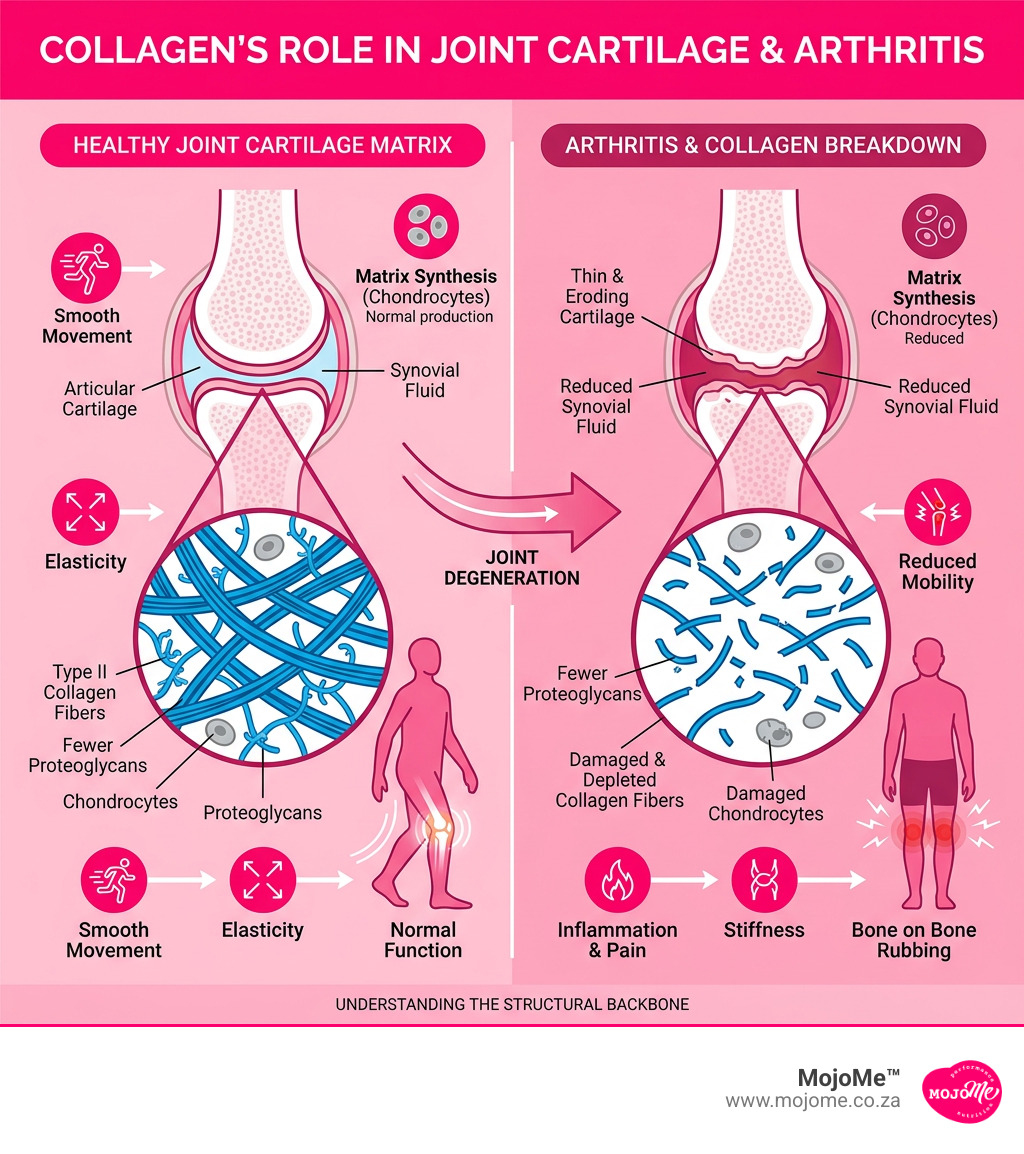
When we talk about collagen supplements and arthritis, we are usually focusing on Osteoarthritis (OA). OA is a major source of chronic pain and disability worldwide. In fact, statistics show that OA affects roughly 10–15% of individuals aged over 60, with a notably higher prevalence among females than males.
At its core, arthritis is the “wear and tear” of the joint. Inside your joints, you have articular cartilage—a firm, slippery tissue that allows nearly frictionless joint motion. In a healthy joint, Type II collagen fibers account for about 80% of the total collagen in this cartilage. As we age, or due to injury, this cartilage begins to degrade. The smooth surface becomes rough, and eventually, if the cartilage wears down completely, bone will rub on bone.
The scientific research on the epidemiology of osteoarthritis highlights that while we can’t stop time, we can certainly look at nutritional interventions to support the joint matrix. Because collagen provides the framework for this matrix, supplementing has become a primary strategy for those looking to maintain mobility.
Understanding Collagen Types and Hydrolyzed Peptides for Joint Health
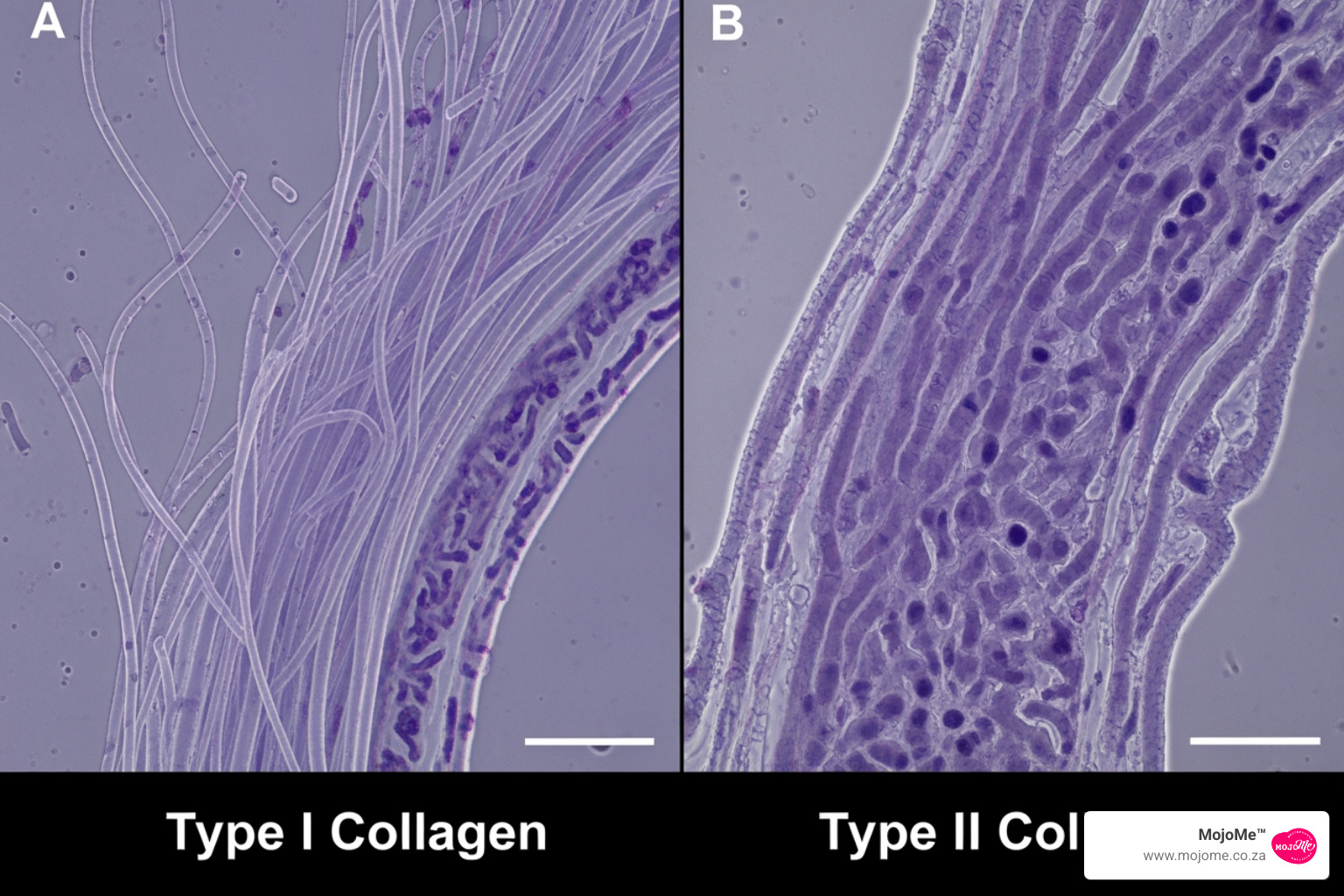
Not all collagen is created equal. If you’ve spent any time looking at labels, you’ve probably seen Roman numerals flying everywhere. Let’s simplify the “Collagen Alphabet”:
- Type I Collagen: This is the big hitter for bones and skin. It represents more than 90% of the organic matter in bone, tendons, and ligaments. If you want strong bones and glowing skin, Type I is your go-to.
- Type II Collagen: This is the joint specialist. It is the primary component of joint cartilage.
- Type III Collagen: Usually found alongside Type I, it supports the structure of muscles, organs, and arteries.
In collagen supplements and arthritis, you will encounter two main forms: Hydrolyzed Collagen Peptides and Native (Undenatured) Collagen.
Hydrolyzed collagen has been broken down into tiny pieces called peptides. This process makes it incredibly easy for your body to absorb. These peptides are like “delivery trucks” carrying the specific amino acids (glycine, proline, and hydroxyproline) your body needs to rebuild its own collagen stores. We’ve explored this in depth in our guide on unraveling the mystery of what collagen type 2 does.
When you take hydrolyzed peptides, they don’t just provide raw materials; they actually act as signaling molecules. They tell your chondrocytes (cartilage cells) to wake up and start producing more extracellular matrix. It’s like giving your joints both the bricks and the builder. You can learn more about these collagen types and their specific differences to see which fits your needs best.
Choosing Collagen Supplements and Arthritis Relief
Bioavailability is the “holy grail” of supplementation. It doesn’t matter how much collagen is in the tablet if it just passes through your system. This is a common concern, often referred to as type 2 collagen powder absorption problems.
To ensure you are getting the most out of your supplement, you need to look at the molecular weight. High-quality hydrolyzed peptides usually have a molecular weight between 1 and 3 kDa (kilodaltons). The smaller the number, the smaller the particle, and the faster it hits your bloodstream.
Research on collagen peptide absorption shows that when we ingest these low-molecular-weight peptides, they are absorbed into the blood and actually accumulate in the cartilage tissue. This is a game-changer for arthritis relief because it means the supplement is actually reaching the site of the pain.
The amino acid profile is another critical factor. Collagen is unique because it is exceptionally high in glycine and proline. These aren’t just random proteins; they are the specific building blocks for connective tissue. For those of us in Cape Town looking for natural ways to stay active, choosing a supplement that mimics the body’s natural composition is vital.
What the Science Says: Clinical Evidence for Knee OA
We don’t just rely on “feeling better” — we look at the hard data. Clinical trials for collagen supplements and arthritis often focus on knee osteoarthritis because it is so common and easy to measure.
In a significant study involving adults aged 30–81 with grade II or III OA, researchers looked at several key markers of success:
- VAS (Visual Analogue Scale): A 0–100 scale where patients rate their pain.
- Lequesne Algofunctional Index (LAI): A tool used to measure how much pain affects daily activities like walking and climbing stairs.
- Biomarkers (CRP and ESR): These are blood markers that measure systemic inflammation.
The results? After 6 months of taking 10g of collagen peptides daily, the “verum” (active) group showed significant reductions in VAS pain scores and Lequesne index scores compared to the placebo group (p < 0.001). Even more impressively, their inflammatory markers (CRP and ESR) dropped significantly. This suggests that collagen isn't just a mechanical cushion; it may have actual anti-inflammatory properties.
A systematic review of collagen for knee osteoarthritis echoed these findings, noting that people taking collagen experienced modest but meaningful improvements in pain compared with those taking a sugar pill.
Mechanisms of Action for Collagen Supplements and Arthritis
How does a powder or tablet actually change a joint? There are two main theories supported by science:
1. The “Bricks and Mortar” Approach (Chondroprotection) As mentioned, hydrolyzed collagen provides the amino acids necessary for cartilage repair. It stimulates the chondrocytes to produce new Type II collagen and proteoglycans, which are the “shock absorbers” of your joints.
2. The “Peace Treaty” Approach (Oral Tolerance) This applies specifically to Native Type II Collagen (often labeled as UC-II). This form of collagen isn’t broken down by heat or chemicals. When it reaches your gut, it interacts with the immune system in the Peyer’s patches (lymphoid tissue). It essentially “trains” your immune system to stop attacking its own joint collagen. This process is known as oral tolerance.
By reducing this autoimmune-like inflammatory response, native collagen helps prevent further cartilage breakdown. This is why even a tiny dose (40mg) can be effective. This study on native type II collagen and oral tolerance explains how this low-dose approach can prevent pain in OA models.
Practical Guide: Dosage, Safety, and Quality
If you’re ready to try collagen supplements and arthritis relief strategies, here is how to do it right.
The Right Dose
Based on the clinical evidence we’ve reviewed:
- For Hydrolyzed Peptides: Aim for 10g per day. This is usually one large scoop of powder or several large tablets.
- For Native Type II Collagen: You only need 40mg per day. This is usually found in type 2 collagen capsules.
Duration is Key
Arthritis didn’t develop overnight, and collagen won’t fix it overnight either. Most successful studies lasted at least 3 to 6 months. You need to be consistent. Think of it like watering a plant; you won’t see growth the next morning, but in a few months, the difference is clear.
Safety and Tolerability
One of the best things about collagen is its safety profile. In study after study, collagen shows “good tolerability and safety with no adverse effects.” It is a food-based supplement, meaning it plays well with standard OA treatments like physiotherapy or the occasional anti-inflammatory. However, always consult your doctor if you are on heavy medication.
What to Look for on the Label
Don’t get fooled by fancy marketing. Look for:
- Sourcing Transparency: Is it bovine, marine, or chicken? For joints, collagen type 2 chicken is often cited as highly effective.
- Purity: Ensure there are no fillers, sugars, or artificial flavors. At MojoMe™, we pride ourselves on providing pure collagen powder that is 100% natural.
- Third-Party Testing: Organizations like ConsumerLab found that while most collagen products are accurate, a few can contain contaminants like cadmium. Stick to reputable brands that prioritize science and safety.
Frequently Asked Questions about Collagen for Joints
How long does it take for collagen to work for arthritis?
While some small studies show minor improvements in as little as 30 days, the “gold standard” for results is 90 to 180 days (3 to 6 months). Your body needs time to cycle these amino acids into the joint tissues and for the anti-inflammatory effects to stabilize.
Can collagen replace standard arthritis medication?
We view collagen as a complementary treatment, not a replacement. It can help reduce your reliance on analgesics and NSAIDs (like ibuprofen) over time by addressing the root cause of the discomfort, but you should never stop prescribed medication without talking to your specialist. Combining collagen with a structured exercise program is actually one of the top life-changing health benefits of collagen.
Are there any side effects of taking collagen for arthritis?
Side effects are rare and usually very mild. Some people report a feeling of “heaviness” in the stomach or mild bloating if they take a large dose of powder all at once. If you have a sensitive stomach, try splitting your 10g dose into 5g in the morning and 5g in the evening.
Conclusion
The connection between collagen supplements and arthritis is backed by a growing body of promising evidence. Whether you are dealing with early-stage stiffness or more advanced Grade II/III osteoarthritis, collagen offers a natural, safe way to support your joints and potentially lower systemic inflammation.
By choosing a high-quality, bioavailable product and staying consistent for at least six months, you are giving your body the best chance to build a resilient body.
At MojoMe™, we are committed to your wellness journey. Based in the beautiful Western Cape, we produce science-backed, award-winning supplements that contain zero fillers, sugars, or grains. Whether you need collagen for athletes to support recovery or are looking for the surprising benefits of collagen for bone health, we have a pure, potent solution for you.
Ready to support your joints the natural way? Explore our range of collagen products and start your journey toward better mobility today.