Why Allulose Sweetener for Baking is Changing Keto Kitchens Across South Africa
Using allulose sweetener for baking is one of the most effective ways to replace sugar in keto, low-carb and diabetic-friendly recipes without sacrificing taste or texture.
Quick answer: How to use allulose in baking
- Replace sugar with allulose at a 1:1 ratio by volume (or use 1.3 parts allulose for equal sweetness)
- Reduce oven temperature by 15 degrees Celsius to prevent over-browning
- Allulose has a glycaemic index of 0 and does not raise blood sugar levels
- It contains roughly 0.4 calories per gram compared to sugar’s 4 calories per gram
- It does not crystallise, making it ideal for smooth frostings, caramels and frozen desserts
- It is suitable for keto, vegan and diabetic diets
Most sugar alternatives force a trade-off. You get the sweetness but lose the golden crust. Or you get the right colour but end up with a gritty, crystallised texture that ruins the result.
Allulose is different. It is a rare natural sugar found in small amounts in figs, raisins and wheat. Unlike regular sugar, your body does not metabolise it for energy. It passes through your system largely unchanged, which is why it contributes virtually no calories and has no meaningful impact on blood glucose levels.
For South Africans managing diabetes, grain sensitivity or simply trying to reduce refined sugar, this makes allulose a genuinely practical baking ingredient rather than just another sweetener with a health claim attached.
It browns. It caramelises. It keeps baked goods moist. And it does all of this without the bitter aftertaste or cooling sensation that makes erythritol and stevia frustrating to bake with.
This guide covers everything you need to know to use allulose with confidence in your South African kitchen.

What is Allulose and Why is it the Best Allulose Sweetener for Baking?
To understand why allulose is such a breakthrough, we have to look at its chemistry. Allulose is technically a monosaccharide, often referred to as a “rare sugar” because it occurs naturally in very small quantities in specific plants like wheat, figs and raisins.
Unlike table sugar (sucrose), which is a disaccharide that your body breaks down and converts into energy, allulose is a simple sugar with a different molecular structure. This structure means that while it tastes like sugar and behaves like sugar in a mixing bowl, your body does not treat it like sugar. Approximately 70% of the allulose you consume is absorbed in the small intestine but is then excreted unchanged in the urine. The remaining 30% passes into the large intestine where it is fermented by gut bacteria.
The result is a sweetener that provides only 0.4 calories per gram. For context, regular sugar provides 4 calories per gram. This 90% reduction in calories makes it a powerhouse for weight management. When it comes to sweetness, allulose is roughly 70% as sweet as sucrose. This mild sweetness is often preferred by those who find modern processed treats overly cloying.
As we discuss in our Baking Without The Breakup Your Guide To The Best Sugar Substitutes, finding a replacement that doesn’t ruin the structural integrity of a cake is the “holy grail” of keto baking. For more technical details on its classification, you can explore What Is Allulose? The Complete Guide for 2026.
Mastering the Science and Health Benefits of Keto Confectionery
For the health-conscious baker in Cape Town or the Western Cape, the primary draw of allulose is its metabolic profile. It has a glycaemic index (GI) of zero. This means it does not cause the rapid spikes in blood glucose or insulin that lead to energy crashes and fat storage.
This makes it an essential tool for Type II diabetics. In fact, research suggests that allulose does not just remain neutral; it may even help manage blood glucose levels when consumed alongside other carbohydrates. Because it is plant-based and contains no animal derivatives, it is perfectly suited for vegan diets as well.
Whether you are following a strict keto lifestyle or just trying to lower your family’s sugar intake, allulose provides the “mouthfeel” of real sugar. This is a technical term for the weight and texture a sweetener adds to food. High-intensity sweeteners like stevia provide sweetness but no bulk, often leaving cakes feeling light and airy in a way that feels “off.” Allulose provides the necessary mass to create a satisfying, traditional crumb.
You can find more on the lifestyle benefits in Everything You Need to Know About Baking With Allulose.
Achieving the Perfect Maillard Reaction with Allulose Sweetener for Baking
One of the most exciting things about allulose sweetener for baking is that it is one of the few sugar alternatives that actually undergoes the Maillard reaction. This is the chemical process that causes browning and creates that deep, toasted flavour we love in bread crusts and cookies.
However, allulose is a bit of an overachiever in this department. It begins to caramelise at roughly 140 degrees Celsius, which is significantly lower than the 160 degrees Celsius required for regular sugar. If you bake at your usual temperatures, you might find your muffins looking burnt on the outside while the centre is still raw.
To master this, we recommend “tenting” your bakes. If you see the top of your cake browning too quickly, loosely cover it with a piece of aluminium foil to reflect some of the heat while the inside finishes cooking. For more local advice on perfecting your technique, check our Baking Hints Tips.
Texture and Moisture Control in Sugar Free Recipes
Allulose is highly hygroscopic. This means it loves water and is very good at attracting and holding onto moisture. In the baking world, this is a double-edged sword.
On the positive side, it keeps your keto brownies fudgy and your cookies chewy for days. Unlike erythritol, which can turn a cake dry and crumbly after 24 hours, allulose preserves a tender crumb. It also has a zero-crystallisation property. When you make a Sugar Free Cake Frosting, you want it to stay smooth and glossy. Allulose won’t develop those gritty “sand-like” crystals that occur with other sweeteners when they cool down.
Practical Conversion Guide for South African Kitchens
Converting your favourite family recipes to be sugar-free doesn’t require a degree in chemistry, but it does require a few small adjustments to account for allulose’s unique personality.
The most important rule is the temperature adjustment. Because allulose browns faster, you should reduce your oven temperature by 15 degrees Celsius. If a recipe calls for 180 degrees Celsius, set your oven to 165 degrees Celsius. You may need to bake for a few minutes longer, but the result will be a perfectly golden finish rather than a scorched one.
Always use parchment paper. Allulose-based batters can be slightly stickier than traditional ones. Lining your tins ensures your hard work doesn’t stay stuck to the bottom of the pan. For a deep dive into converting your pantry, see How to Convert Any Recipe to Sugar-Free With Allulose.
Substitution Ratios for Allulose Sweetener for Baking
Since allulose is about 70% as sweet as sugar, a direct 1:1 swap by volume will result in a treat that is noticeably less sweet. For many, this is actually a benefit as it allows the flavours of cocoa, vanilla or fruit to shine through.
If you want to match the exact sweetness of the original recipe, use the following guide:
- For Sweetness Match: Use 1.3 cups of allulose for every 1 cup of sugar.
- For Volume Match: Use a 1:1 ratio. This is usually best for the structure of cakes and muffins.
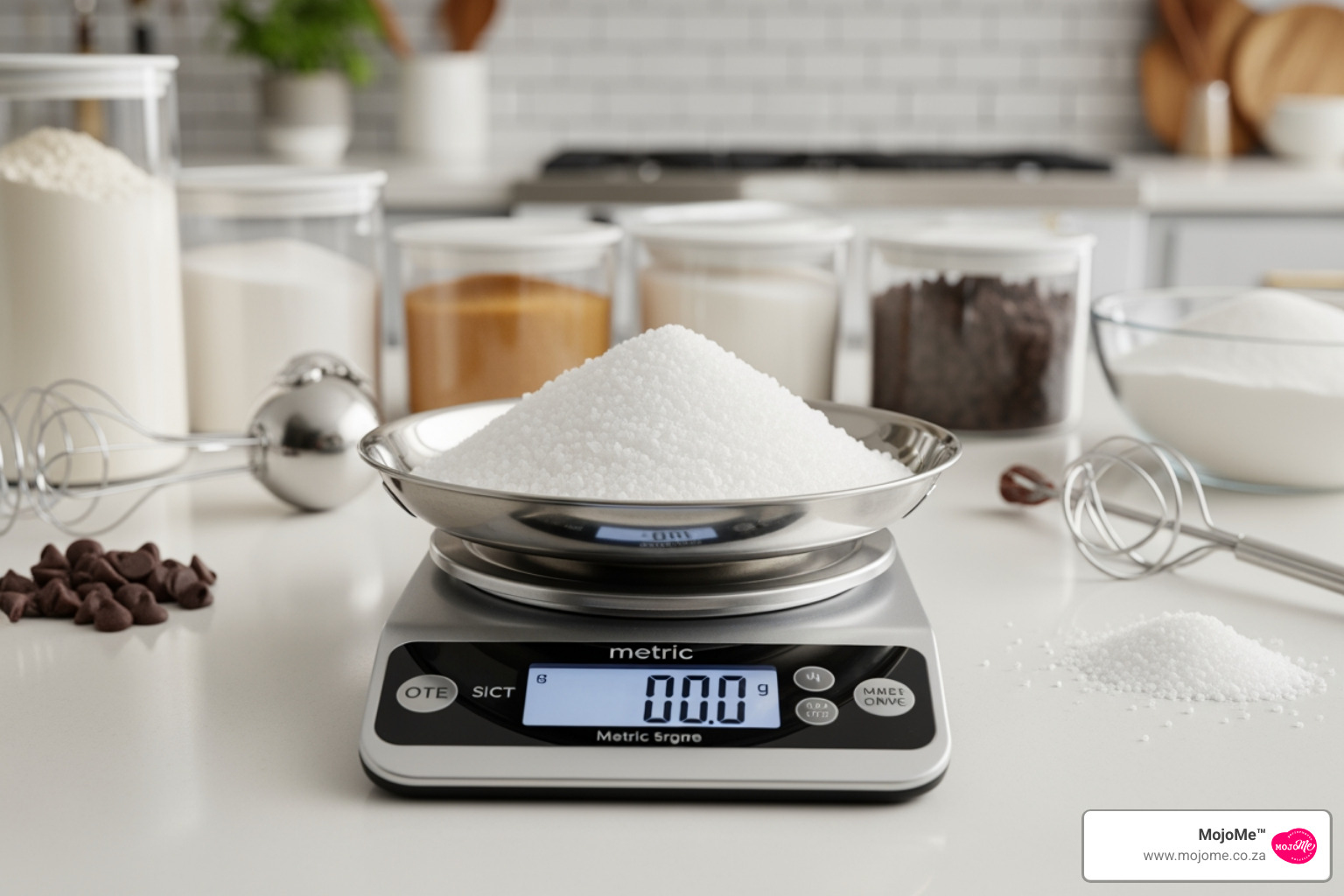
- By Weight: In South Africa, we prefer metric measurements. 250 millilitres (one standard cup) of granulated allulose weighs approximately 160 grams. In comparison, a cup of white sugar weighs about 200 grams.
If you find your bakes are coming out too soft or “gummy,” you might be facing a moisture imbalance. We offer tips on Fixing Sugar Free Baking Mix Texture Problems to help you troubleshoot these issues.
Storage and Shelf Life in Local Climates
In the humid coastal air of Cape Town or Muizenberg, allulose needs to be handled with care. Because it is so good at attracting moisture, it can clump if left in an open bag.
We recommend storing your allulose in an airtight glass or plastic container in a cool, dry cupboard. In its granulated form, it has an impressive shelf life of up to 26 months. If you are storing finished baked goods, keep them in an airtight container. Cookies will generally stay fresh for 3 to 4 days, while muffins and cakes should be consumed within 2 to 3 days for the best texture.
Frequently Asked Questions about Allulose
Choosing the right sweetener can be confusing with so many options on the market. Here is how allulose stacks up against other popular choices:
| Feature | Allulose | Erythritol | Xylitol |
|---|---|---|---|
| Calories (per g) | 0.4 | 0.2 | 2.4 |
| Glycaemic Index | 0 | 0 | 7-13 |
| Browning | Excellent | None | Minimal |
| Crystallisation | None | High | Moderate |
| Aftertaste | None | Cooling Effect | None |
| Pet Safety | Safe | Safe | Toxic to Dogs |
Does allulose have a bitter aftertaste?
One of the biggest complaints about sweeteners like stevia or saccharin is the metallic or bitter lingering taste. Allulose has a remarkably clean flavour profile because it is a real sugar. It does not have the “cooling sensation” associated with erythritol, which can sometimes make your mouth feel like you’ve just sucked on a mint even when eating a chocolate brownie.
Is allulose safe for long term use?
Yes, allulose has been granted GRAS (Generally Recognized As Safe) status by the FDA. It has been used in various food markets for years with a strong safety record. While it is highly tolerable, we recommend a serving limit of roughly 50 grams per day for most adults to avoid potential digestive discomfort. Like any fibre or rare sugar, excessive amounts might cause mild bloating or a laxative effect in sensitive individuals.
Can I use allulose to make hard candy?
Allulose is the king of soft textures, but it struggles with hard candy. It has a low glass transition temperature of about 32 degrees Celsius. This means it doesn’t set into a hard, brittle snap like sucrose does. While it is perfect for chewy caramels, fudge and ice cream (where it prevents the mixture from freezing rock-hard), it is not the best choice for lollipops or peanut brittle.
Conclusion
At MojoMe, we are committed to providing South Africans with the highest quality, science-backed nutrition. Based in Cape Town, our award-winning range is designed for those who refuse to compromise on their health or their taste buds.
Our allulose is 100% natural and free from the fillers, grains and hidden sugars often found in supermarket alternatives. Whether you are whipping up a keto cheesecake or a simple batch of morning muffins, using a premium allulose sweetener for baking ensures your results are consistently delicious and truly healthy.
Ready to transform your keto kitchen? Explore our full range of sugar substitutes and baking essentials at our Product Category/Sugar Substitute page and join the thousands of South Africans who have discovered the secret to baking without the breakup.