What Grass Fed Whey Isolate Actually Is (And Why It Matters)
Grass fed whey isolate is a highly filtered dairy protein derived from the milk of cows raised on pasture rather than grain-based feedlot diets. It is one of the purest forms of whey protein available, typically containing over 90% protein by weight with very low levels of lactose, fat and carbohydrates.
Quick answer: What makes grass fed whey isolate different?
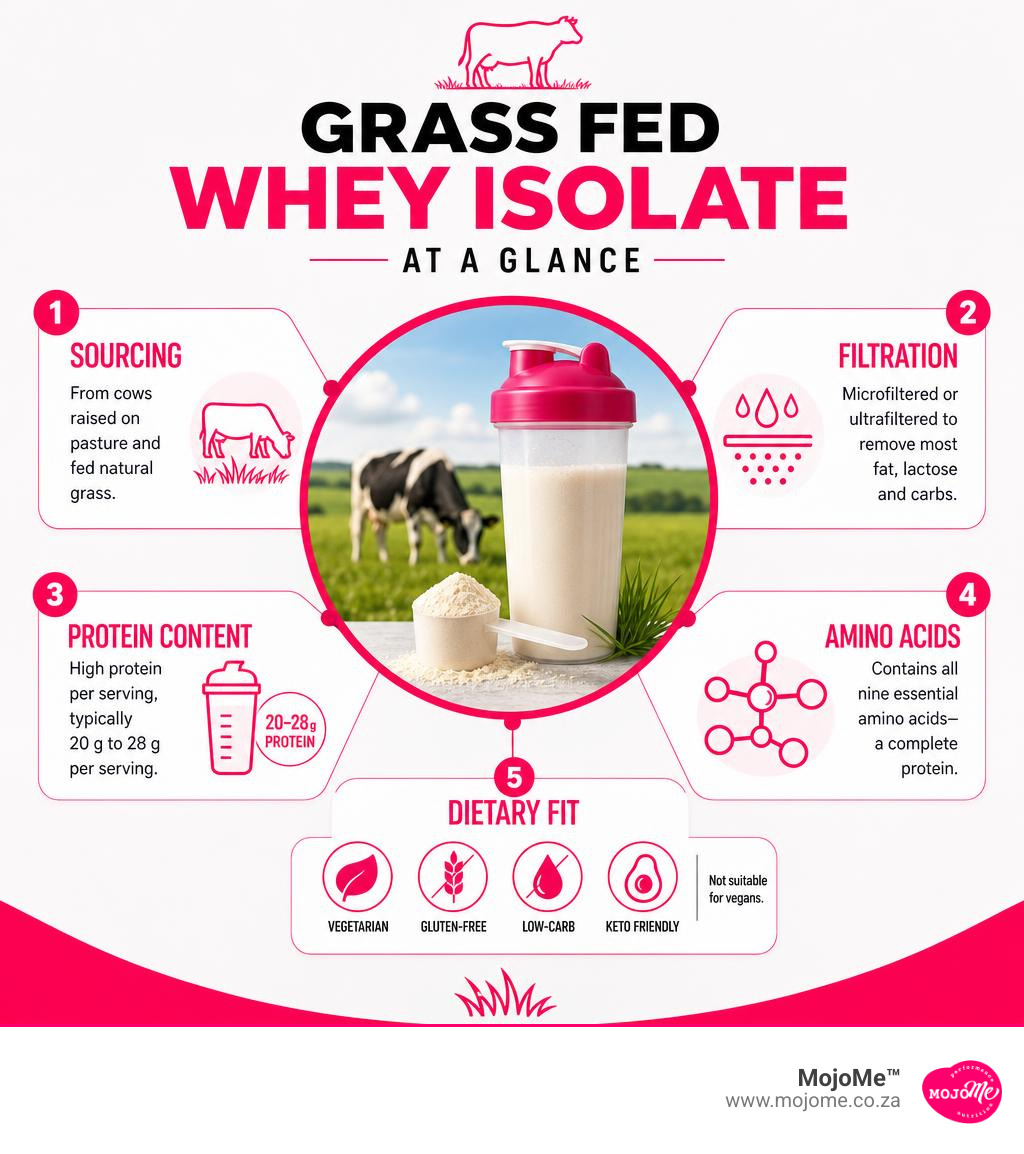
- Sourced from pasture-raised, grass-fed cows rather than conventionally farmed dairy
- Processed through microfiltration or ultrafiltration to remove most fat and lactose
- Delivers a high protein content per serving, typically between 20 g and 28 g per serving
- Contains all nine essential amino acids, making it a complete protein
- Generally lower in calories, carbohydrates and sugar than whey concentrate
- Suitable for vegetarian, gluten-free, low-carb and keto diets (not suitable for vegans)
If you are navigating grain sensitivity, sugar intolerance or inflammation linked to processed foods, the source and purity of your protein supplement matters more than most labels let on. Not all whey protein is the same and the difference between a cheap concentrate loaded with fillers and a clean, cold-processed grass fed isolate can be significant for how your body responds.
This guide covers everything you need to know, from how grass fed whey isolate is made and what to look for on the label, to how it compares with other protein options and how to use it practically every day.
Grass fed whey isolate terms to know:
What Is Grass Fed Whey Isolate?
Grass fed whey isolate is a powdered protein made from whey, the liquid part of milk that separates during cheese-making. That whey is filtered to concentrate the protein and reduce much of the lactose, fat and carbohydrate naturally present in milk.
The “grass fed” part refers to the dairy source. It suggests that the cows supplying the milk were raised primarily on pasture or grass-based diets rather than grain-heavy feed. The “isolate” part refers to the filtration level. Whey isolate is more refined than whey concentrate, which is why it usually provides more protein per gram of powder.
A high-quality isolate is useful when you want:
- High protein with fewer extra calories
- Low sugar and low carbohydrate intake
- A complete amino acid profile
- A fast-mixing daily protein option
- A dairy protein that is often easier to digest than whey concentrate
For a clean isolate option from our range, see MojoMe Pure Whey Isolate.
How grass fed whey isolate is made
The process starts with milk. After the whey is separated, it is filtered to remove much of the non-protein fraction.
Common filtration methods include:
- Microfiltration: Uses fine membranes to separate protein from fat, lactose and minerals.
- Ultrafiltration: Further concentrates protein and reduces smaller components such as lactose.
- Cold processing: Uses lower temperatures to help preserve protein quality, flavour and solubility.
- Drying: Converts filtered liquid whey into a powder that can be mixed into water, milk, smoothies or recipes.
The result is a protein powder with a high protein ratio and lower levels of fat, sugar and lactose than less-filtered whey formats.
Think of it like coffee. Whey concentrate is a cappuccino. Whey isolate is closer to an espresso shot of protein: more direct, less extra milk and much easier to fit into a tight macro plan.
Grass fed whey isolate versus regular whey protein
“Regular whey protein” usually refers to whey concentrate or a blend of concentrate, isolate and sometimes hydrolysate. These can still be useful, but they are not the same as a true isolate.
Here is the practical difference:
- Whey concentrate: Less filtered, usually lower in protein by weight and higher in lactose, fat and carbohydrates.
- Whey isolate: More filtered, usually over 90% protein by weight with lower lactose, fat and carbohydrates.
- Grass fed whey isolate: Combines isolate filtration with milk sourced from grass fed dairy systems.
If you want to understand this in more detail, our guide to whey protein content in concentrates and isolates breaks down the differences clearly.
For active people in South Africa who are managing body composition, blood sugar awareness or low-carb eating, isolate often makes more sense than a concentrate because you get more protein with fewer extras.
Grass fed versus pasture fed, hormone free and rBST free
These label terms sound similar but they do not always mean the same thing.
- Grass fed: Cows are fed grass or forage for a meaningful part of their diet.
- Pasture raised: Cows spend time grazing outdoors on pasture.
- Grass finished: Often used in meat and dairy contexts to indicate animals continued on grass-based feeding later in life.
- Hormone free: Usually means no added growth hormones were used, but the wording should be checked carefully.
- rBST free: Means the dairy source does not use recombinant bovine somatotropin, a synthetic hormone used in some dairy systems globally.
In the South African market, label language is not always consistent across imported and locally packed products. This is why traceability matters. Look for clear sourcing information, allergen statements and testing documentation rather than relying only on front-label claims.
Benefits of Grass Fed Whey Isolate for Training and Recovery Plus Daily Nutrition

Grass fed whey isolate is popular for gym recovery, but its value is not limited to athletes. It can also help busy adults, older adults and people on controlled-carbohydrate eating plans reach daily protein targets more easily.
The main benefits are:
- Supports muscle repair after resistance training
- Helps maintain lean muscle mass
- Provides all nine essential amino acids
- Offers a convenient low-sugar protein source
- Can support satiety as part of a balanced diet
- Fits many low-carb, keto and gluten-free routines
- Usually contains less lactose than whey concentrate
It is not magic powder. You still need food, sleep and training. But it is a very useful tool when your meal plan is doing that classic South African thing where breakfast is rushed, lunch is whatever is nearby and dinner is suddenly expected to solve everything.
Muscle protein synthesis and amino acid profile
Whey isolate is a complete protein, meaning it contains all nine essential amino acids. These are amino acids your body cannot make on its own and must get from food.
Of special interest is leucine, one of the branched-chain amino acids. Leucine helps trigger muscle protein synthesis through the mTOR pathway, which is part of the body’s muscle repair and adaptation process. Research and sports nutrition practitioners often use a leucine target of around 2 g to 3 g per protein feeding to support muscle protein synthesis. For broader evidence on protein intake and exercise adaptation, see the International Society of Sports Nutrition position stand on protein and exercise.
Whey is naturally rich in:
- Leucine
- Isoleucine
- Valine
- Lysine
- Threonine
- Methionine
- Phenylalanine
- Tryptophan
- Histidine
For best results, combine adequate protein intake with resistance training. Protein provides the building blocks. Training provides the signal.
Why isolate suits low carb, low sugar and calorie conscious diets
Whey isolate is useful for macro control because it is protein dense. Many grass fed whey isolate products provide roughly:
- 20 g to 31 g protein per serving
- 80 to 120 calories, equal to about 335 kJ to 502 kJ
- 0 g to 3 g carbohydrates
- 0 g to 1 g sugar
Exact values vary by brand, flavouring and serving size. Unflavoured isolates are usually the leanest. Chocolate, vanilla or sweetened versions may include cocoa, flavouring or sweeteners that add small amounts of carbohydrate.
This makes isolate useful for:
- Low-carb eating
- Keto-style nutrition
- Weight management plans
- High-protein breakfasts
- Post-training recovery without a heavy meal
- Diabetic-aware eating, where total carbohydrate and sugar still need to be checked
If you have diabetes or any metabolic condition, always check the nutrition panel and speak to your healthcare practitioner for personalised guidance.
Digestibility and sensitive stomach considerations
Whey isolate is not lactose free by default, but it is generally much lower in lactose than whey concentrate. This can make it more comfortable for some people who struggle with standard dairy proteins.
Still, there are important limits:
- If you have a milk allergy, whey isolate is not suitable.
- If you have severe lactose intolerance, choose only products specifically labelled lactose free or consult a healthcare professional.
- If you are sensitive to sweeteners, avoid formulas with sugar alcohols or artificial sweeteners.
- If you react to gums or thickeners, choose a simpler formula.
Some formulas include digestive enzymes such as protease, bromelain or papain. These may support protein breakdown for some users, but they are not a licence to ignore your body’s signals.
Whey isolate is usually suitable for lacto-vegetarians because it comes from milk. It is not vegan.
How Sourcing and Production Affect Quality
The quality of a whey isolate depends on two big things: the milk source and the processing method.
Grass fed dairy sourcing can matter because cow diet, farming practice and feed quality all influence the raw material. Processing then determines how much protein remains, how much lactose and fat are removed and whether the final powder mixes smoothly.

Filtration, heat exposure and protein integrity
Good whey isolate production aims to concentrate protein without unnecessary damage. This is why many premium isolates focus on microfiltration, ultrafiltration and controlled low-temperature processing.
High heat can change protein structure. This is called denaturation. Denaturation is not automatically dangerous, but excessive processing can affect texture, solubility and taste. A well-made isolate should mix easily and avoid a gritty or gluey texture.
Clumping can still happen, especially in humid coastal areas like Cape Town and Muizenberg. It does not always mean the protein is poor. Moisture exposure, storage temperature and shaker technique matter too.
To improve mixing:
- Add liquid first, then powder.
- Use cold or room-temperature liquid.
- Shake for 20 to 30 seconds.
- Let it stand for 1 minute, then shake again.
- Use a blender for smoothies, oats or thicker recipes.
- Store the pouch or tub tightly sealed.
For more practical help, read our guide to solving protein powder mixing issues.
Third party testing and certification standards
A premium protein powder should be able to prove quality, not just claim it.
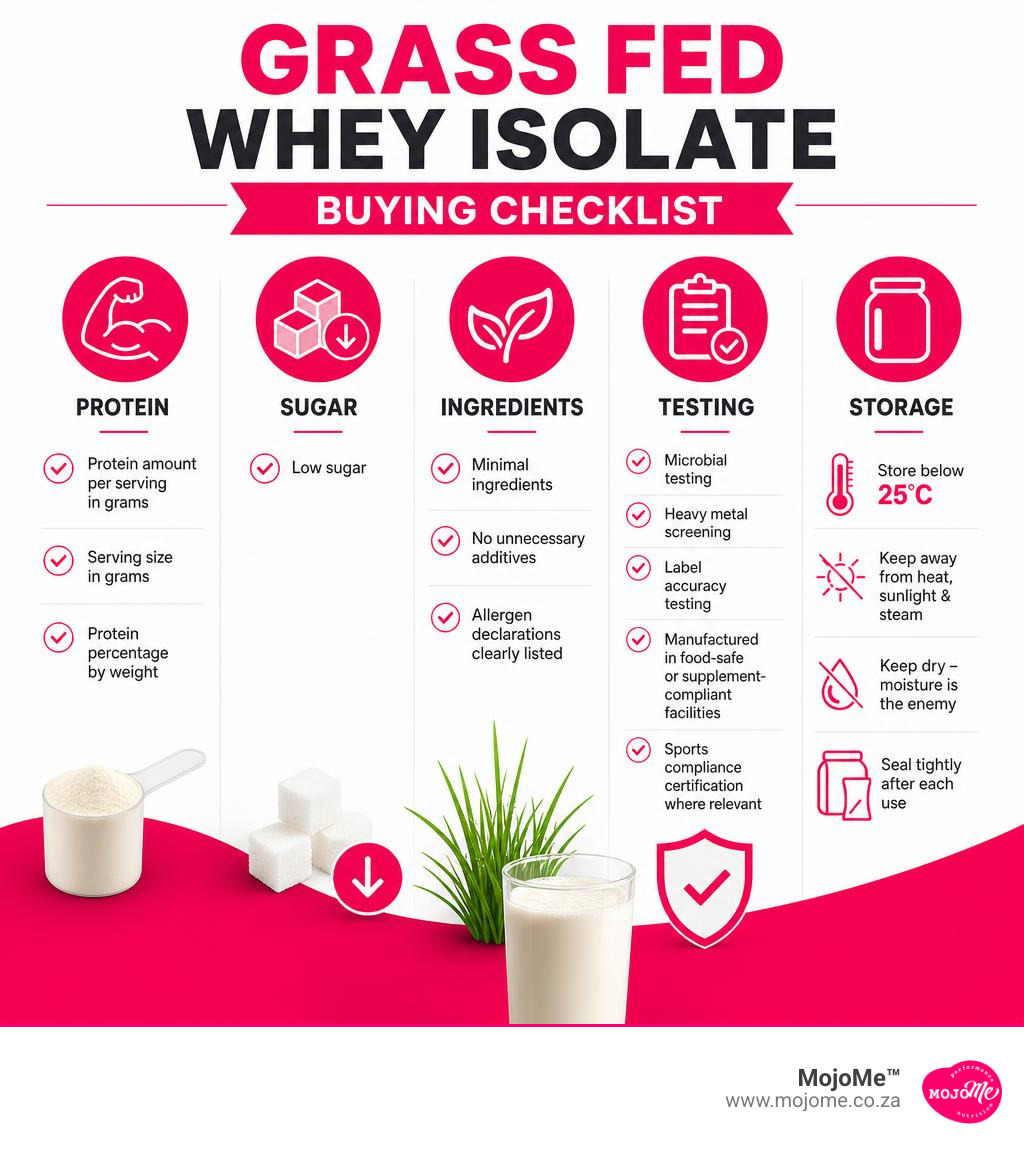
Look for quality controls such as:
- Batch testing
- Certificate of analysis availability
- Microbial testing
- Heavy metal screening
- Allergen declarations
- Label accuracy testing
- Manufacturing in food-safe or supplement-compliant facilities
- Sports compliance certification where relevant
Heavy metals can occur naturally in agricultural products and processing environments, so testing is important. Microbial testing is also essential because protein powders are dry foods that still require strict quality control.
If you are a competitive athlete, check whether the product is tested for banned substances through a recognised sport certification programme. This is especially important if your career depends on clean testing.
South African buyer considerations
South African shoppers face a few extra realities:
- Some whey raw materials are imported and locally packed.
- Rand pricing can fluctuate with exchange rates.
- Serving cost matters more than tub price.
- Heat and humidity can affect storage.
- Allergen labelling should be checked carefully.
- Courier delays in hot weather can affect texture if packaging is poor.
Store whey isolate in a cool, dry cupboard below 25°C where possible. Keep it away from steam, direct sunlight and the top of the fridge, which is often warmer than people think.
If the product uses a pouch, squeeze out excess air and seal it properly after each use. If it comes in a tub, close the lid tightly. Moisture is the enemy. Your protein powder wants a dry pantry, not a sauna.
What to Look for in a High Quality Grass Fed Whey Isolate
Before buying grass fed whey isolate, read the back label before the front label. Marketing tells you the story. The nutrition panel tells you the truth.
Buying checks:
- Protein amount per serving in grams
- Serving size in grams
- Protein percentage by weight
- Carbohydrates and sugar per serving
- Fat per serving
- Ingredient list length
- Type of sweetener used
- Artificial flavour, colourant or preservative status
- Gum, filler or thickener content
- Allergen statements
- Country of origin or sourcing transparency
- Batch testing or quality documentation
- Storage instructions
- Cost per serving in Rand
Check the nutrition panel before the marketing claims
A good isolate should usually deliver about 20 g to 31 g protein per serving, depending on the serving size. The protein by weight ratio is often more revealing than the protein per serving.
For example:
- 25 g protein in a 28 g serving is very protein dense.
- 25 g protein in a 40 g serving may include more flavouring, carbohydrate or filler.
Check these items:
- Protein: Ideally high relative to serving size.
- Energy: Often around 335 kJ to 502 kJ per serving.
- Carbohydrates: Usually low, often 0 g to 3 g.
- Sugar: Often 0 g to 1 g in lean formulas.
- Fat: Usually low in isolate.
- Sodium: Useful to know if you monitor blood pressure.
- Cholesterol: Usually low but worth checking if relevant to your health plan.
The front label may say “lean”, “clean” or “premium”. The panel will show whether that is true.
Compare ingredients, additives and sweeteners
A simple ingredient list is usually a good sign. Unflavoured isolate may contain only whey protein isolate and sometimes an emulsifier such as sunflower lecithin for mixability.
Flavoured formulas may include:
- Cocoa powder
- Vanilla flavour
- Natural flavouring
- Monk fruit
- Stevia
- Small amounts of cane sugar
- Salt
- Digestive enzymes
Ingredients to evaluate carefully include:
- Sucralose or other artificial sweeteners
- Artificial colourants
- Preservatives
- Gums and thickeners
- Fillers
- Excess sugar
- Unclear “proprietary blends”
Not every additive is automatically bad. The key is whether it serves a clear purpose and whether it fits your digestion, goals and tolerance.
Grass fed whey isolate versus standard whey options
| Protein type | Protein density | Lactose | Fat and carbs | Calories | Texture | Best fit |
|---|---|---|---|---|---|---|
| Grass fed whey isolate | Very high | Low | Very low | Low | Light and clean | Low-carb, keto, recovery, sensitive digestion |
| Standard whey isolate | Very high | Low | Very low | Low | Light | Macro control and post-training use |
| Whey concentrate | Moderate to high | Higher | Higher | Moderate | Creamier | General protein support and budget use |
| Whey blend | Varies | Varies | Varies | Varies | Usually creamy | People wanting mixed texture and price balance |
If you are browsing options, our whey protein category is a good place to compare formats.
When to use grass fed whey isolate during the day
You can use whey isolate whenever it helps you reach your protein target. Timing matters less than total daily intake, but there are useful windows.
Good times include:
- After resistance training
- With breakfast when protein is low
- Between meals to support satiety
- In a smoothie after a busy morning
- In oats or yoghurt for a higher-protein meal
- In baking when you want a cleaner protein boost
Post-training use is popular because whey is fast digesting and rich in essential amino acids. For a deeper look at timing, see our article on using whey protein post-workout.
Practical Uses, Recipes and Daily Routine Ideas
Grass fed whey isolate is convenient because it can be used in more than just a shaker. The trick is to match the flavour to the job. Unflavoured isolate is flexible. Vanilla works well in oats and smoothies. Chocolate is a natural match for cocoa drinks, yoghurt bowls and higher-protein desserts.
Simple ways to use grass fed whey isolate
Try these simple options:
Basic shake
- Mix 20 g to 30 g whey isolate with 250 ml cold water.
- Shake well and drink after training or between meals.
Creamier shake
- Mix 20 g to 30 g whey isolate with 250 ml milk or unsweetened almond milk.
- Use this when you want more fullness.
Smoothie
- Blend whey isolate with water or milk, ice, berries and nut butter.
- Keep fruit portions moderate if you are managing carbohydrates.
Greek yoghurt bowl
- Stir 15 g to 25 g whey isolate into plain Greek yoghurt.
- Add cinnamon, cocoa or a few berries.
Protein oats
- Cook oats first.
- Let them cool slightly.
- Stir in whey isolate after cooking to reduce clumping.
Protein pancakes
- Add unflavoured or vanilla whey isolate to a pancake batter.
- Keep the heat moderate to avoid rubbery texture.
Homemade protein bars
- Combine whey isolate with nut butter, coconut flour and a small amount of milk.
- Chill before cutting.
Coffee or cocoa
- Mix whey isolate with a small amount of cold liquid first.
- Add warm coffee or cocoa slowly while stirring.
Avoid boiling whey directly. High heat can affect texture and turn your smooth drink into something closer to regret.
How much protein do active adults need?
Protein needs depend on body weight, training level, age and goals.
For active adults, a practical evidence-based range is often:
- 1.6 g to 2.2 g protein per kilogram body weight per day
That means:
| Body weight | Daily protein range |
|---|---|
| 60 kg | 96 g to 132 g |
| 70 kg | 112 g to 154 g |
| 80 kg | 128 g to 176 g |
| 90 kg | 144 g to 198 g |
You do not need to get all of this from powder. In fact, we suggest a whole-food-first approach.
Good whole-food protein sources include:
- Eggs
- Fish
- Chicken
- Beef
- Yoghurt
- Cottage cheese
- Lentils
- Beans
- Tofu
- Bone broth powders
- Collagen products used for their specific amino acid profile
Whey isolate simply helps fill the gap when food alone is not practical.
Storage, safety and suitability
Use whey isolate sensibly.
Storage tips:
- Keep sealed in a cool, dry place.
- Store below 25°C where possible.
- Keep away from steam and moisture.
- Do not use a wet spoon.
- Reseal immediately after use.
- Check the best-before date.
Suitability notes:
- Contains milk and is not suitable for people with milk allergy.
- Usually low in lactose but not automatically lactose free.
- Not suitable for vegans.
- Often suitable for lacto-vegetarians.
- Gluten-free only if stated and supported by allergen controls.
- Soya-free only if stated.
- Pregnant or breastfeeding women should consult a healthcare practitioner before using supplements.
- People with kidney disease, liver disease or complex medical conditions should get medical guidance before increasing protein intake.
- Children should only use protein supplements under adult supervision and preferably with healthcare guidance.
Frequently Asked Questions About Grass Fed Whey Isolate
Is grass fed whey isolate better than normal whey?
It depends on what you mean by “better”.
Grass fed whey isolate is usually better if you want:
- Higher protein purity
- Lower lactose
- Lower fat
- Lower carbohydrate intake
- Fewer calories per protein gram
- A cleaner ingredient profile
- More sourcing transparency
Standard whey concentrate may still suit people who tolerate dairy well, want a creamier texture or prefer a lower price. The best choice depends on your digestion, budget and goals.
For lean muscle support, low-carb eating and simple label preferences, grass fed whey isolate is often the stronger option.
Does grass fed whey isolate contain lactose?
Yes, it can contain lactose, but usually much less than whey concentrate.
Whey isolate is filtered to remove much of the lactose, which is why many people tolerate it better than standard whey. However, it is not lactose free unless the label specifically says so.
Important distinctions:
- Lactose intolerance means difficulty digesting milk sugar.
- Milk allergy is an immune reaction to milk proteins and whey is not suitable.
- Low lactose does not mean zero lactose.
If you are highly sensitive, start with a small serving or speak to a healthcare professional first.
Can grass fed whey isolate be used every day?
Yes, most healthy adults can use whey isolate daily as part of a balanced diet. The key is to use it to support your protein intake, not replace proper meals.
Daily use makes sense when:
- You train regularly.
- You struggle to meet protein targets through food.
- You need a quick breakfast addition.
- You want a low-sugar snack option.
- You are supporting muscle maintenance with age.
- You are improving body composition through training and nutrition.
A common practical amount is 20 g to 30 g protein from whey isolate per serving, once daily or as needed. Your total daily protein should still fit your body weight, activity and health status.
Conclusion
Grass fed whey isolate is a high-protein, low-sugar and low-lactose dairy protein designed for people who want clean, efficient protein without unnecessary extras. Compared with standard whey concentrate, it usually offers more protein per gram, fewer carbohydrates, less fat and easier digestion for many users.
For South African buyers, the most important checks are simple:
- Read the nutrition panel.
- Check protein by weight.
- Look for low sugar and low carbohydrate values.
- Avoid unnecessary fillers if you are sensitive.
- Confirm allergen statements.
- Store it properly in warm or humid conditions.
- Compare cost per serving in Rand, not just tub size.
At MojoMe, we care about pure, potent and practical nutrition that fits real daily life. Whether your goal is post-training recovery, better breakfast protein or cleaner low-carb support, choose a whey option that is transparent, well formulated and easy to use consistently.
You can explore our range here: Shop whey protein options