Why Bovine Collagen Hair Benefits Matter as You Age
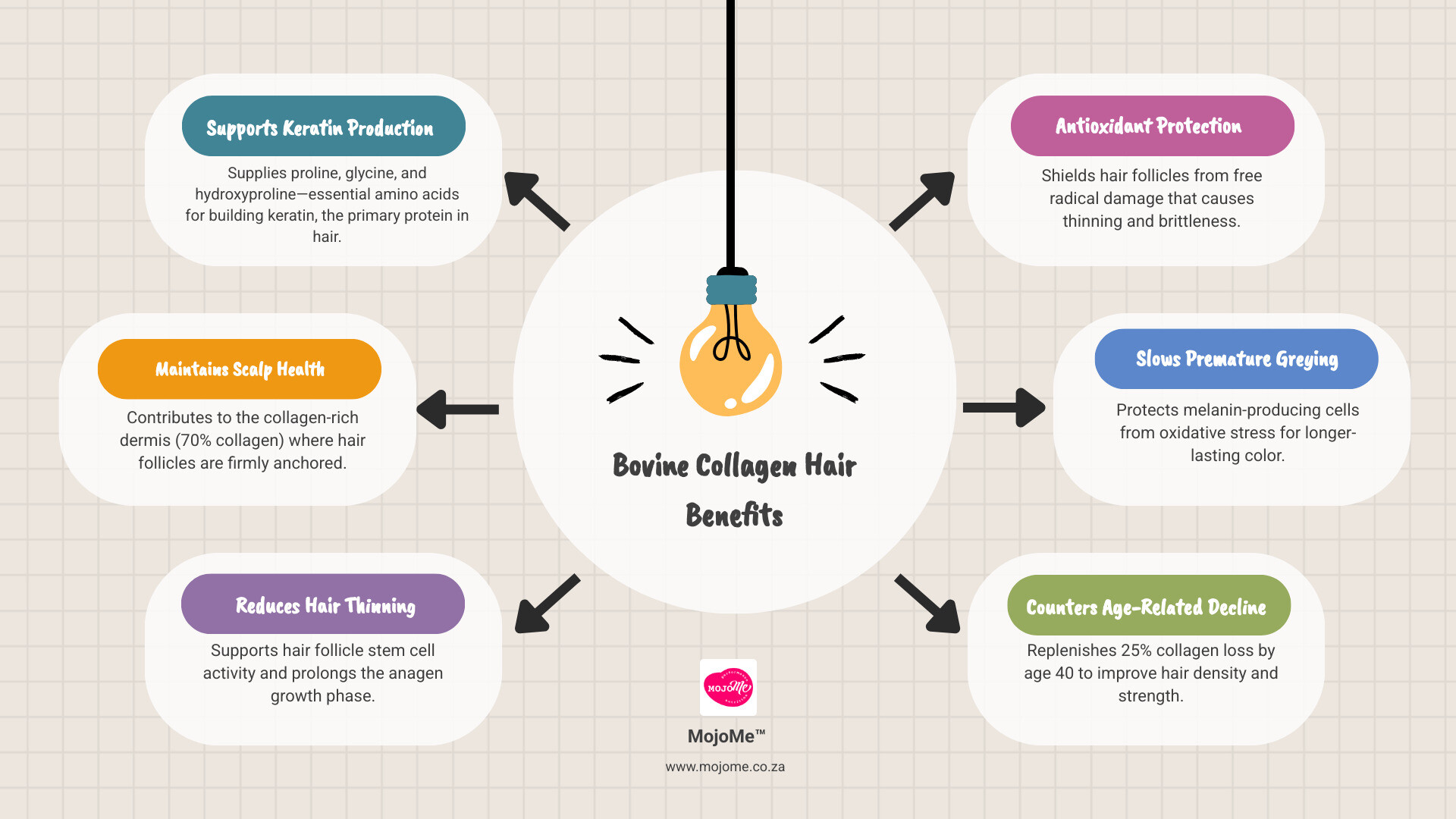
Bovine collagen hair benefits include supporting stronger, thicker hair by providing key amino acids for keratin production, helping maintain scalp health and protecting hair follicles from oxidative damage that accelerates thinning and greying.
Key bovine collagen hair benefits at a glance:
- Supports keratin production by supplying proline, glycine and hydroxyproline, the building blocks your hair protein needs
- Helps maintain scalp health by contributing to the collagen-rich dermis where hair follicles are anchored
- May reduce hair thinning by supporting hair follicle stem cell activity and prolonging the growth phase
- Offers antioxidant protection that helps shield follicles from free radical damage
- May help slow premature greying by protecting melanin-producing cells from oxidative stress
Here is why this matters for you.
By the time you reach your 40s, your body produces roughly 25% less collagen than it did in your youth. Since the dermis, where every hair follicle is rooted, is composed of approximately 70% collagen, that decline has a direct impact on hair density and strength.
The drop does not happen overnight. Collagen production begins declining at roughly 1.5% per year from your early 20s. Most people only notice the visible effects, thinner strands, increased shedding and duller hair, years later.
Bovine collagen, sourced from the connective tissue of cattle and rich in Type I and Type III collagen, is one of the most researched supplemental sources for addressing this decline from the inside out.
Understanding Bovine Collagen and its Role in Hair Structure
To understand how bovine collagen works, we first need to look at what it is. Bovine collagen is a naturally occurring protein found in the cartilage, bones and hides of cows. It is remarkably similar to the collagen we have in our own bodies, making it a highly compatible supplement for human health.
When we talk about collagen 101, we are usually referring to different “types”. Bovine collagen is particularly prized because it is a rich source of Type I and Type III collagen. Type I is the most abundant form in the human body and is the primary structural component of our skin and hair. Type III is often found alongside Type I and supports the elasticity of our tissues and the health of our blood vessels.
The magic of bovine collagen lies in its amino acid profile. It is packed with three specific amino acids:
- Proline: This is the primary component of keratin. Since your hair is roughly 65% to 95% keratin protein, proline is the essential raw material your body needs to build new, strong strands.
- Glycine: This amino acid supports the health of the scalp and helps protect the hair from environmental damage.
- Hydroxyproline: This is unique to collagen and helps maintain the stability of the collagen fibres in your skin.
Scientific research has shown that collagen-derived dipeptides can stimulate cell proliferation and gene expression related to keratin. By supplementing with these building blocks, we provide our bodies with the “spare parts” needed to maintain hair integrity as natural production slows down.
The Science Behind Bovine Collagen Hair Benefits
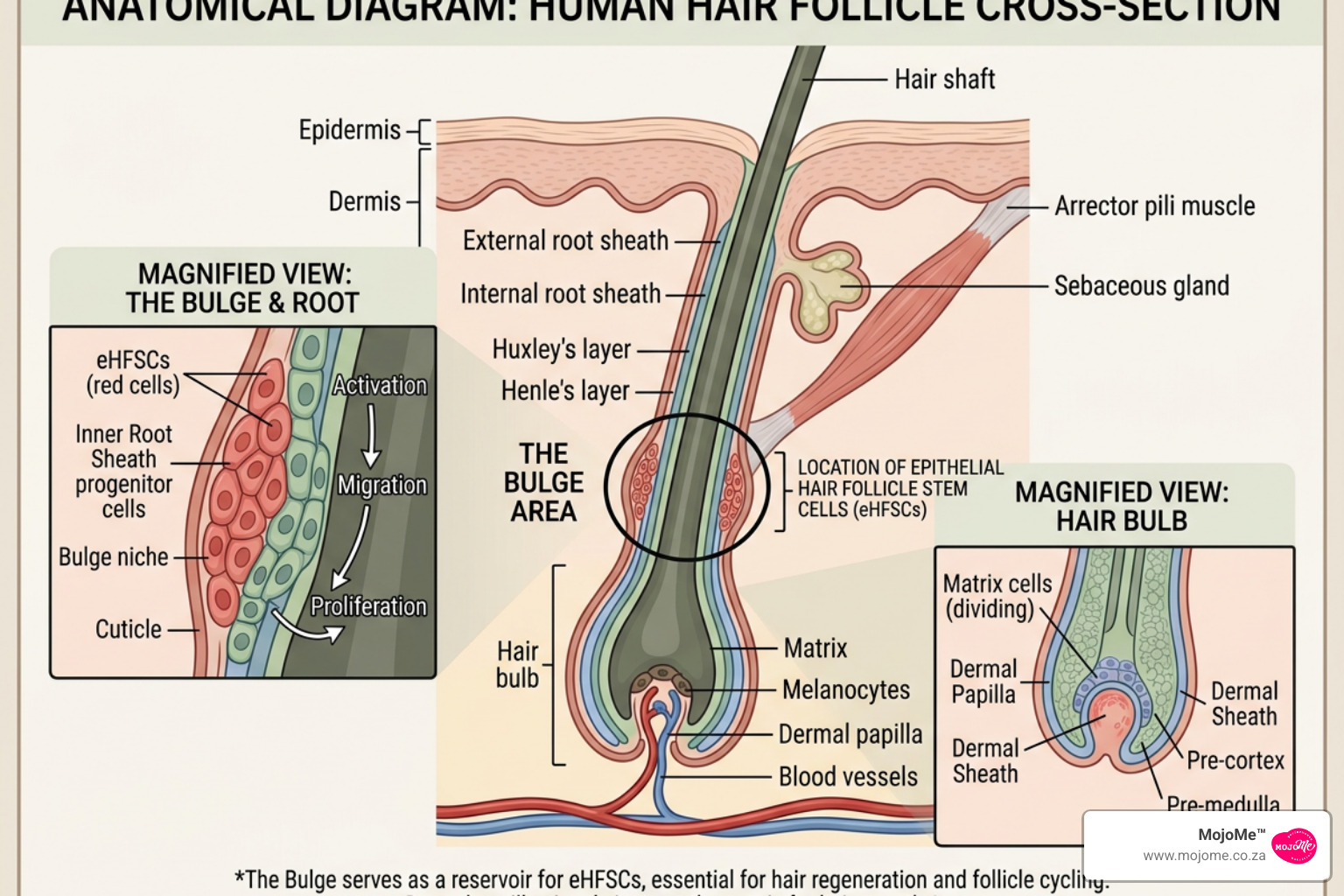
The health of your hair is determined deep within the scalp, specifically in the hair follicle. Each follicle goes through a cycle: the anagen (growth) phase, the catagen (transition) phase and the telogen (resting) phase.
One of the most exciting bovine collagen hair benefits is its ability to influence this cycle. Recent scientific studies using human hair follicle organ cultures have revealed that collagen peptides can actually prolong the anagen phase. This means your hair stays in the growing stage for longer before shedding.
Research indicates that bovine collagen peptides significantly increase the population of K15+ epithelial hair follicle stem cells (eHFSCs) located in the “bulge” area of the follicle. These stem cells are responsible for regenerating the hair. By maintaining the health and “quiescence” (a state of readiness) of these stem cells, collagen helps ensure that the follicle continues to produce new hair progeny.
Furthermore, collagen peptides have been shown to increase the expression of Vascular Endothelial Growth Factor (VEGF). This is a fancy way of saying it helps improve blood flow to the scalp. Better blood flow means more nutrients and oxygen reach the hair root, which is a cornerstone of the ultimate guide to collagen for hair growth.
Specific Bovine Collagen Hair Benefits for Thinning
If you have noticed your ponytail feels a bit thinner or your parting is looking wider, the issue might be your dermis. The dermis is the middle layer of your skin, and it is where the roots of your hair are anchored. As we mentioned, the dermis is about 70% collagen.
When collagen levels drop, the dermis becomes thinner and less elastic. This makes it harder for the hair follicles to stay firmly anchored, leading to increased shedding. By topping up your collagen levels, you help maintain the density and hydration of the scalp. Studies on skin hydration show that regular collagen intake can significantly improve skin moisture levels, creating a healthier “soil” for your hair to grow in.
Another vital benefit is antioxidant protection. Our hair follicles are constantly under attack from free radicals caused by pollution, UV rays and stress. These free radicals can damage the melanin-producing cells that give your hair its colour, leading to premature greying. Bovine collagen acts as an antioxidant, neutralising these unstable molecules. Research on oxidative stress suggests that reducing this cellular damage can help preserve your natural hair colour for longer and prevent the follicle miniaturisation that leads to thinning.
Comparing Bovine and Marine Collagen for Hair Growth
A common question we hear at MojoMe is whether bovine or marine collagen is better for hair. Both have unique strengths, and the choice often comes down to your specific health goals and dietary preferences.
| Feature | Bovine Collagen | Marine Collagen |
|---|---|---|
| Source | Cow hides and connective tissue | Fish skin and scales |
| Collagen Types | Type I and Type III | Primarily Type I |
| Key Benefits | Hair, skin, nails, gut health and joints | Hair, skin and nails |
| Absorption | Highly bioavailable when hydrolysed | Slightly smaller particle size |
| Dietary | Not for vegetarians/vegans or Halal/Kosher (unless certified) | Not for vegetarians/vegans or those with fish allergies |
| Price Point | Generally more cost effective | Often more expensive |
While marine collagen is often praised for its smaller particle size, modern collagen marine v bovine comparisons show that once collagen is hydrolysed into peptides, the difference in absorption becomes negligible for most people.
Bovine collagen offers a distinct advantage because it contains Type III collagen. This type is essential for the health of our gut lining and blood vessels, which are often overlooked factors in hair health. A healthy gut ensures you are actually absorbing the nutrients from your food that your hair needs. Scientific research on marine versus bovine peptides suggests that while marine collagen is excellent for the growth phase, bovine collagen is particularly effective at supporting the stem cell niche in the hair follicle.
How to Use Bovine Collagen for Optimal Hair Health
To get the most out of your supplement, consistency is key. You cannot take one dose and expect Rapunzel-like locks the next morning. Hair grows slowly, usually about 1 cm per month, so you need to provide a steady supply of nutrients over time.
We recommend a daily intake of 10g to 15g of pure collagen powder. Because MojoMe collagen is hydrolysed, the large protein molecules have been broken down into tiny peptides. This makes the powder “instantised,” meaning it dissolves easily in both hot and cold liquids without clumping or leaving a gritty texture.
Here is how you can easily add it to your South African lifestyle:
- Morning Coffee or Rooibos: Stir a serving into your morning brew. It is tasteless and heat-stable.
- Smoothies: Add it to your post-workout shake for a protein boost.
- Bone Broth: For a traditional approach, sip on a warm mug of bone broth, which naturally contains collagen and gelatin.
- Cooking: You can even stir it into soups, stews or oats.
Results typically begin to show between 4 to 12 weeks. You might notice your nails getting stronger first, followed by improved skin hydration around week 8, and then a noticeable difference in hair volume and shine by week 12. Scientific research on absorption confirms that these peptides are rapidly absorbed into the bloodstream and delivered directly to the tissues that need them most.
Maximising Bovine Collagen Hair Benefits with Vitamin C
If collagen is the “bricks” for your hair, Vitamin C is the “mortar.” Your body cannot effectively synthesise collagen without Vitamin C (ascorbic acid). It acts as a vital cofactor in the enzymatic process that links amino acids together.
To maximise your bovine collagen hair benefits, ensure you are getting enough Vitamin C in your diet. In South Africa, we are lucky to have access to incredible fresh produce. Pair your collagen routine with:
- Oranges or naartjies
- Red and yellow bell peppers
- Guavas (one of the highest sources of Vitamin C)
- Strawberries
Staying hydrated is also crucial. Collagen helps your skin and scalp hold onto water, but you need to drink enough water to give it something to work with. Research on Vitamin C and collagen highlights that this combination is far more effective than taking collagen alone.
Frequently Asked Questions about Bovine Collagen
How long does it take to see results from bovine collagen for hair?
The timeline for seeing bovine collagen hair benefits varies, but most people notice a change in skin hydration within 4 weeks. For hair thickness and reduced shedding, it generally takes 8 to 12 weeks of consistent daily use. This is because the supplement needs to influence the new hair growing from the follicle, rather than changing the hair that has already left your scalp.
Are there any side effects of bovine collagen supplements?
Bovine collagen has an excellent safety profile and is considered safe for most people. Some individuals might experience mild digestive fullness or a slight aftertaste if the product is not high quality. MojoMe ensures our products are free from fillers and sugars to minimise any risk of discomfort. Research on supplement safety suggests that as long as you stick to the recommended dosages, side effects are rare.
Is bovine collagen suitable for vegetarians or vegans?
No, bovine collagen is derived from cattle, so it is not suitable for vegetarians or vegans. For those following a plant-based lifestyle, we recommend “collagen boosters” which contain the vitamins and minerals your body needs to support its own natural production, though these do not contain actual collagen peptides.
Conclusion
At MojoMe, we believe that true beauty and health start from within. Based in beautiful Cape Town, we are dedicated to providing South Africans with the purest, science-backed nutrition possible. Our bovine collagen is 100% natural, award-winning and completely free from the fillers, grains and sugars that often hide in lesser supplements.
Whether you are looking to combat age-related thinning or simply want to give your hair the best possible foundation for growth, our multi-collagen powders offer a potent solution. By supporting your body’s structural needs today, you are investing in the strength and thickness of your hair for years to come.
Ready to experience the difference for yourself? Shop MojoMe Collagen and start your journey to healthier hair today.