
Understanding Cellulite and the Role of Dermal Structure
Marine collagen for cellulite is one of the most searched skin health topics among women in South Africa, and for good reason. Cellulite affects roughly 85% of women over the age of 20, cutting across body types, fitness levels and ages. Yet despite how common it is, the dimpled skin on thighs, buttocks and abdomen remains one of the most frustrating cosmetic concerns to address.
Here is what you need to know upfront:
- Marine collagen supports skin structure by strengthening the connective tissue beneath the surface where cellulite forms
- Clinical research shows that daily collagen peptide supplementation over six months can reduce the visible appearance of cellulite, particularly in women with a healthy body weight
- Results are gradual. Most people see meaningful changes after three to six months of consistent use
- Marine collagen is rich in Type I collagen, the dominant type found in skin, making it especially relevant for cellulite support
- It works best as part of a broader approach that includes hydration, strength training and a nutrient-dense diet
So no, marine collagen is not a cure. But the evidence suggests it is one of the most practical, science-supported tools available for improving the look and feel of skin affected by cellulite.
The reason this matters comes down to biology. Cellulite forms when fat cells push upward through weakened collagen fibres in the connective tissue beneath the skin. As collagen production naturally declines with age, those fibres become thinner and less resilient, making the dimpling more visible. Marine collagen supplementation works from the inside, helping to rebuild that structural foundation rather than just masking the surface.
This guide walks you through exactly how that process works, what the clinical evidence actually says and how to use marine collagen effectively for cellulite support.
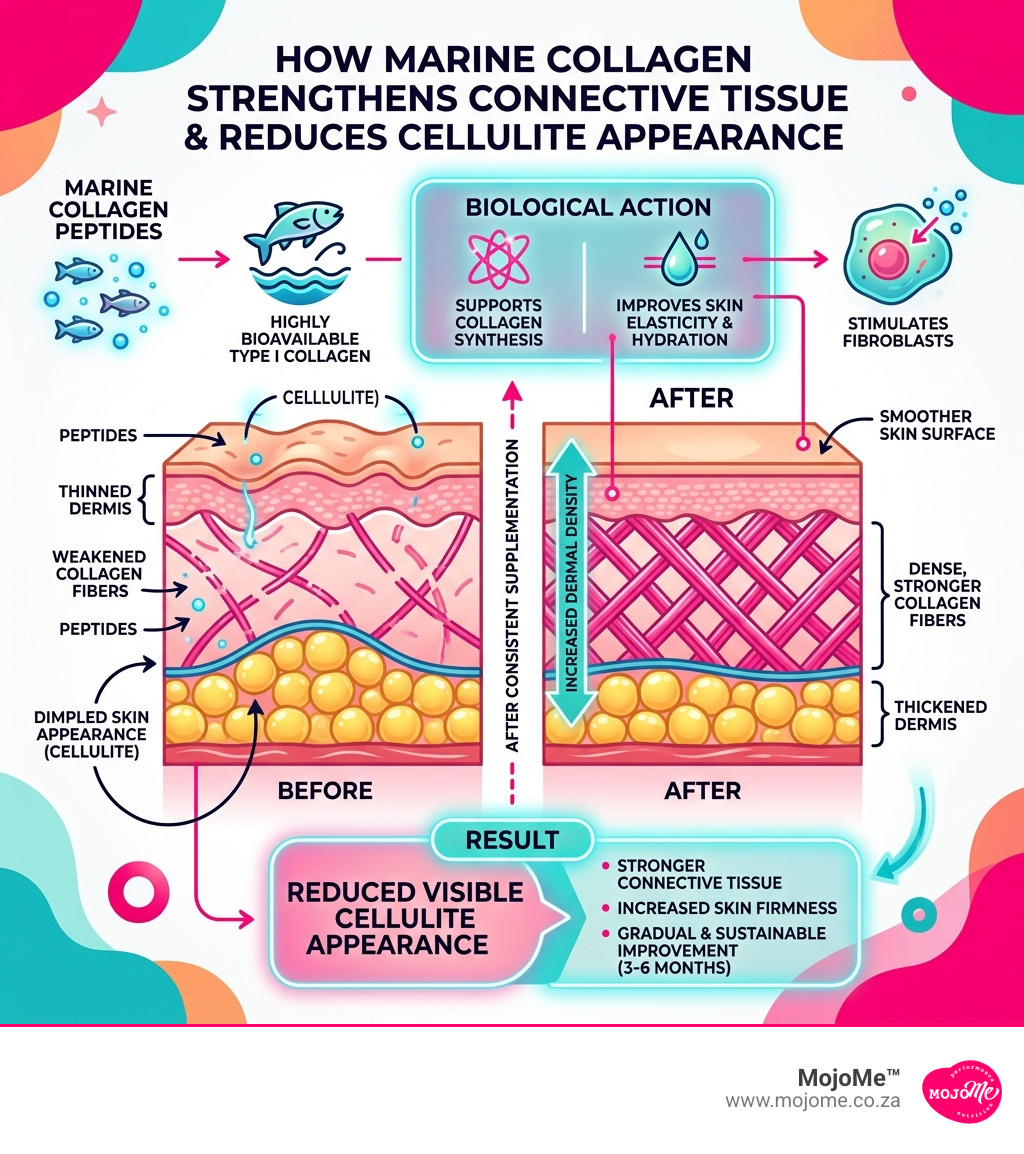
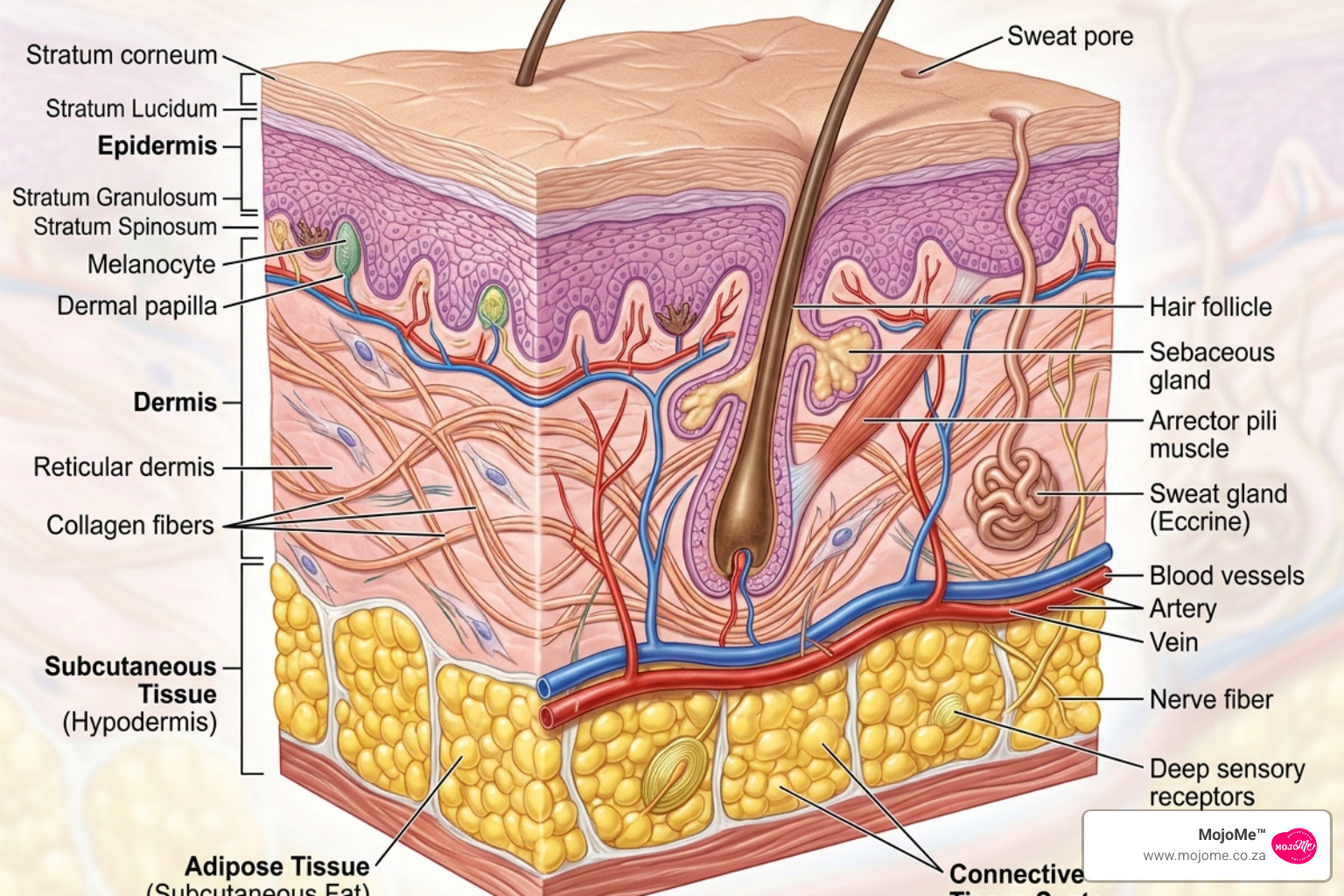
To understand how marine collagen for cellulite works, we first need to look at what is happening beneath the surface of your skin. Cellulite is not just “fat” in the traditional sense. It is a structural issue involving the relationship between your fat cells and the connective tissue that holds them in place.
In women, the connective tissue (known as fibrous septa) is arranged in vertical columns. When fat cells in the subcutaneous layer expand or when the overlying skin becomes thin and weak, these fat cells push up against the skin. Meanwhile, the vertical connective bands pull downward. This “push-pull” dynamic creates the characteristic pitted or “orange peel” texture we call cellulite.
Maintaining the health of your dermal matrix is essential for minimising this effect. Products like Marine Collagen – African Secret highlight how replenishing these proteins can support the skin’s foundation. When the dermis is thick and the connective tissue is resilient, it acts as a stronger barrier that keeps fat cells tucked neatly away.
The Biological Causes of Dimpled Skin
Cellulite is a complex condition influenced by several biological factors:
- Hormonal Fluctuations: Estrogen plays a massive role in collagen production and fat distribution. When estrogen levels shift, particularly during menopause or pregnancy, it can weaken the blood vessels in the skin and decrease collagen synthesis, making cellulite more prominent.
- Microcirculation and Lymphatic Drainage: Poor blood flow to the pelvic region and legs can lead to fluid retention and a buildup of toxins. This puts pressure on the connective tissue, causing it to stiffen and lose its elasticity.
- Genetics: Your DNA determines your fat distribution, skin thickness and metabolic rate, all of which dictate how likely you are to develop visible dimpling.
- Collagen Degradation: From our mid-twenties, we lose about 1% of our collagen every year. As this structural protein disappears, the skin loses its “snap” and becomes more transparent, making the underlying fat structures more visible.
Why Marine Collagen for Cellulite is a Superior Choice
When we talk about marine collagen for cellulite, we are specifically referring to Type I collagen. While there are many types of collagen in the body, Type I makes up roughly 80% of our skin’s structure. Marine collagen is almost exclusively Type I, making it highly targeted for skin health.
One of the primary reasons we recommend marine sources over bovine (cow) or porcine (pig) is bioavailability. Marine collagen is extracted from fish skin and scales, then broken down into smaller particles through a process called hydrolysis. These “peptides” usually have a molecular weight of around 2000 Daltons. Because these particles are so small, they are absorbed into the bloodstream up to 1.5 times more efficiently than other types.
You can learn more about these specific advantages in our guide on the Benefits of Marine Collagen and why Marine vs Bovine Collagen and Why Your Skin Might Prefer the Sea.
The Science Behind Marine Collagen for Cellulite Reduction
The effectiveness of marine collagen for cellulite isn’t just marketing hype; it is rooted in how these peptides interact with your cells. When you ingest high-quality marine collagen, the peptides act as a signal to your body’s fibroblasts (the “collagen factories” in your skin).
This stimulation leads to:
- Increased Dermal Density: By thickening the skin layer, you create a more opaque “shield” over the fat cells.
- Reduced Skin Waviness: Strengthening the extracellular matrix helps smooth out the surface.
- Improved Elasticity: Restoring the “bounce” to your skin prevents the connective bands from pulling as harshly against the surface.
Research, such as the insights found in Age Control with Marine Collagen – Balance Cape Town, suggests that this internal “renovation” is far more effective than topical creams that cannot penetrate the deep dermal layers.
Structural Integrity and Skin Firmness
The magic of marine collagen lies in its amino acid profile. It is exceptionally high in glycine, proline and hydroxyproline. These three amino acids are the building blocks your body needs to knit together new, strong collagen fibres.
Glycine also has anti-inflammatory properties that may help soothe the underlying tissue stress associated with cellulite. By providing these specific nutrients, you are giving your skin the raw materials it needs to stay firm. For a deeper look at how this fights the signs of time, see our article on Does Collagen Really Help Fight Wrinkles and Aging.
Clinical Evidence and Realistic Expectations
It is important to manage expectations when using marine collagen for cellulite. While it is a powerful tool, it is not an overnight “eraser” for dimples.
Clinical studies have provided us with some very specific data on what to expect. In a double-blind, placebo-controlled study involving 105 women, the results were telling:
| Category | Supplement Dose | Duration | Result |
|---|---|---|---|
| Normal Weight (BMI ≤25) | 2.5g daily | 6 Months | 9% reduction in cellulite score |
| Overweight (BMI >25) | 2.5g daily | 6 Months | 4% reduction in cellulite score |
| All Participants | 2.5g daily | 6 Months | 8% reduction in skin waviness |
This data shows that while everyone benefited, the results were more pronounced in those with a lower BMI. This is likely because a higher volume of subcutaneous fat puts more physical pressure on the skin, making it harder for the collagen matrix to “contain” the fat cells. For more on the science of hydrolyzed peptides, read about Hydrolyzed Collagen Powder for Aging Skin.
Impact of Body Mass Index on Results
As the table above suggests, your BMI plays a role in how quickly and effectively you might see changes. In overweight individuals, the fat cells are often larger, which can further stretch and damage the already weakened collagen fibres.
However, this doesn’t mean you shouldn’t take it if you are over your target weight. On the contrary, marine collagen can help prevent the “skin sag” that often occurs during weight loss, ensuring that as you lose fat, your skin remains firm and tight. Choosing the Best Collagen Supplement for Skin Health involves finding a product that supports this metabolic repair.
Timeline for Visible Improvements
If you start taking marine collagen for cellulite today, don’t expect to see a difference in the mirror tomorrow morning. The body needs time to rebuild its internal structures.
- Months 1-2: You may notice improved skin hydration and perhaps stronger nails or hair. The “internal renovation” is just beginning.
- Months 3-4: This is the “milestone” period where many women report subtle improvements in skin texture and firmness.
- Month 6+: Maximum benefits are usually reached after six months of consistent use. This is when the cumulative effect of dermal thickening becomes most visible.
Consistency is the most important factor. Skipping doses will reset the “clock” on your progress. You are treating your skin from within, and that takes patience.
How to Use Marine Collagen for Cellulite Effectively
To get the most out of your supplement, you need to ensure you are taking the right amount and using it correctly. While the clinical study mentioned 2.5g, many experts and premium brands recommend a higher daily intake for more significant results.
We recommend a daily dose of at least 5000mg (5g) for general skin health, and up to 10000mg (10g) if you are specifically targeting stubborn cellulite or are in a post-menopausal stage of life.
When looking for a product, ensure it is 100% pure with no fillers. You can find our top-tier options here:
Optimising Your Marine Collagen for Cellulite Routine
To maximise absorption, consider these professional tips:
- The Morning Ritual: Take your collagen on an empty stomach about 30 minutes before breakfast. This allows the peptides to be absorbed without competing with other proteins for digestion.
- Vitamin C Synergy: Vitamin C is the essential co-factor for collagen synthesis. Without it, your body cannot effectively turn those amino acids into new skin fibres. Ensure your diet is rich in citrus or take a supplement alongside your collagen.
- Hydration is Key: Collagen holds onto water. If you are dehydrated, your skin will look “flat” and dimples will appear deeper. Aim for at least 2 litres of water a day.
- Flavour Management: High-quality marine collagen should be virtually tasteless, but if you have a sensitive palate, mix it into a smoothie or coffee. If you’re worried about a “fishy” taste, check out our tips on When Marine Collagen Powder Tastes Fishy.
Sourcing and Quality Standards
In the South African market, not all collagen is created equal. We strongly advocate for wild-caught marine collagen over factory-farmed alternatives. Wild-caught fish (like cold-water Cod) are free from the antibiotics and hormones often found in aquaculture.
Sustainability is also a major concern. Look for MSC-certified sources to ensure the oceans are being respected. Furthermore, because fish can accumulate heavy metals, always choose a brand that provides third-party testing for purity. Learn Why Choose Wild Caught Marine Collagen to protect your health and the environment.
Complementary Lifestyle Strategies for Smoother Skin
While marine collagen for cellulite provides the structural building blocks, your lifestyle provides the environment for those blocks to stay in place.
- Strength Training: Building the muscle beneath the fat is one of the most effective ways to reduce the appearance of cellulite. When muscles are toned (especially the glutes, hamstrings and quads), they provide a firm base that pushes out against the skin, smoothing the surface.
- Circulation Boosters: Dry brushing and regular massage can help stimulate lymphatic drainage. This reduces the fluid retention that often makes cellulite look worse.
- Sun Protection: UV rays break down collagen faster than almost anything else. If you want to keep your skin thick and resilient, wear sunscreen on your legs if they are exposed.
Our Marine Collagen Powder Spring Favorite guide offers more tips on refreshing your routine for the warmer South African months.
Nutritional Support for Collagen Synthesis
What you eat matters just as much as what you supplement.
- Antioxidants and Zinc: Found in leafy greens and seeds, these protect your existing collagen from oxidative stress.
- Low Sugar Diet: High sugar intake leads to “glycation,” a process where sugar molecules attach to collagen fibres, causing them to become brittle and snap.
- Marine vs Factory Farmed: Avoid the toxins associated with poor-quality fish by understanding the difference between Marine Collagen vs Factory Farmed Fish Collagen.
Frequently Asked Questions about Marine Collagen
Can marine collagen completely eliminate cellulite?
In the interest of honesty: no. Because cellulite is influenced by genetics and hormones, it is almost impossible to eliminate it 100% forever. However, marine collagen can significantly smooth the skin’s appearance, reduce the depth of dimples and improve overall skin “snap.” Think of it as a way to move from “obvious” to “subtle.”
Is marine collagen better than bovine collagen for skin?
For skin-specific concerns like cellulite, marine collagen is generally considered superior because it is a “purer” source of Type I collagen and has a smaller molecular weight for better absorption. Bovine collagen is a mix of Type I and Type III, which is great for overall body health and joints, but marine is the specialist for your complexion.
Are there any side effects to taking marine collagen?
Marine collagen is very safe for most people. The primary contraindication is a fish or shellfish allergy. Some people may experience mild digestive comfort if they start with a very high dose, so we recommend starting with 5g and working your way up. Always consult a healthcare professional if you are pregnant, breastfeeding or have underlying kidney issues.
Conclusion
At MojoMe, we believe in science-backed nutrition that fits into your real life. Based in Cape Town, we produce pure, potent marine collagen that is 100% natural, free from fillers, sugars and gluten. We know that South African women want results they can see and feel, which is why we focus on the highest quality, wild-caught sources.
Addressing cellulite requires a holistic approach, but strengthening your skin’s foundation with marine collagen is a powerful first step. By rebuilding your dermal density from the inside out, you can regain your confidence and enjoy smoother, firmer skin.
Ready to start your journey? Shop Pure Marine Collagen today and give your skin the support it deserves.