Why Vitamin C Is Your Immune System’s Most Essential Nutrient
Immune support vitamin C is one of the most studied and trusted nutrients in human health — and for good reason.
Here’s a quick summary of how Vitamin C supports your immune system:
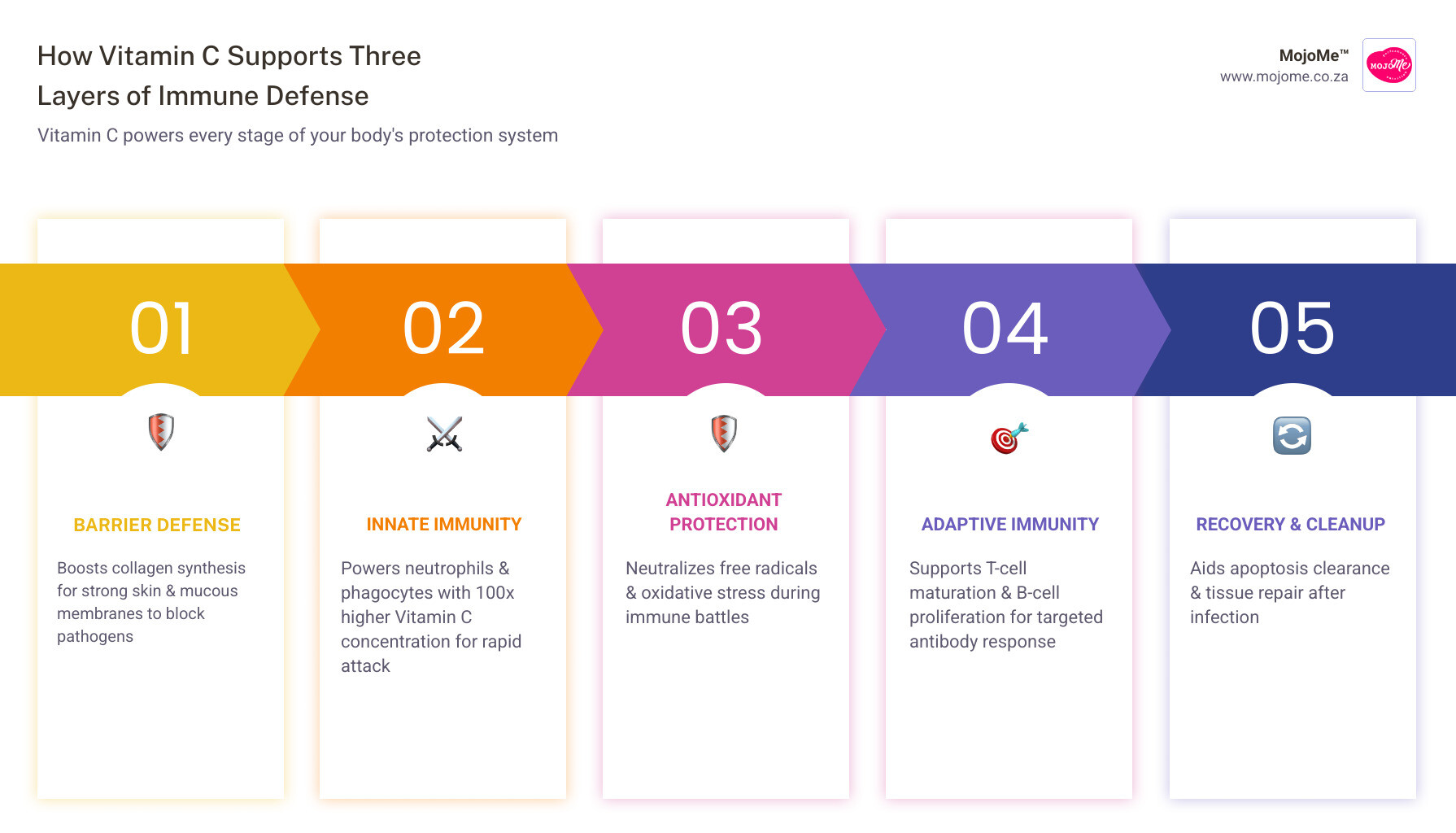
- Strengthens physical barriers — boosts collagen production in skin and mucous membranes to keep pathogens out
- Powers immune cells — neutrophils and other white blood cells concentrate Vitamin C up to 100x higher than blood plasma to fight infection
- Acts as an antioxidant — neutralizes free radicals produced during immune responses, protecting healthy tissue
- Supports lymphocyte function — helps T-cells and B-cells mature and multiply for a stronger adaptive immune response
- Shortens illness — regular intake may reduce cold duration and severity, especially under physical stress
Here’s the thing most people don’t know: your body cannot make Vitamin C at all. Somewhere in human evolution, we lost the gene (L-gulono-gamma-lactone oxidase) that most other animals use to produce it internally. A goat, for example, makes its own Vitamin C on demand — ramping up production when stressed or sick.
We can’t do that. We depend entirely on what we eat or supplement.
And Vitamin C deficiency is far more common than most people realize. It’s the fourth most common nutrient deficiency in the United States, with low levels quietly undermining immune defenses long before any obvious symptoms appear.
Whether you’re trying to stay well through winter, recover faster, or simply give your immune system the raw materials it needs — understanding Vitamin C is a great place to start.
The Biological Mechanisms of Immune Support Vitamin C
To understand why immune support vitamin C is so vital, we have to look at what’s happening on a cellular level. Think of your immune system as a multi-layered defense force. Vitamin C isn’t just one soldier; it’s the logistics officer, the shield-bearer, and the clean-up crew all in one.
One of the most fascinating aspects of Vitamin C is how our bodies prioritize it. While your blood plasma might have a certain level of Vitamin C, your white blood cells (leukocytes) actually “hoard” it. These cells accumulate Vitamin C at concentrations 50 to 100 times higher than the surrounding plasma. When an infection hits, these cells use that stored Vitamin C to fuel their specialized tasks.
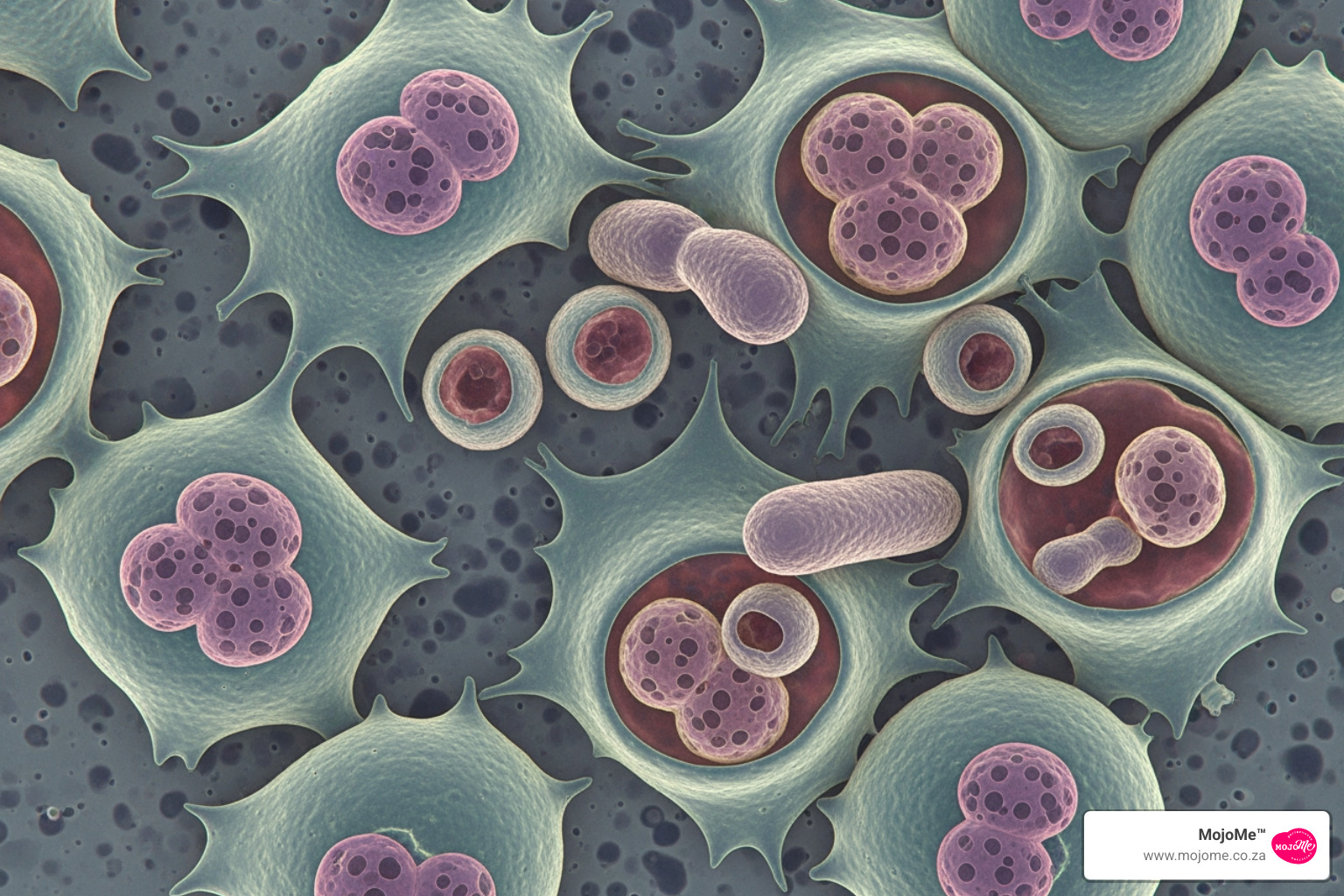
Scientific research on vitamin C and immune function highlights its potent antioxidant properties. During an immune response, your body undergoes significant “oxidative stress.” As your immune cells fight off invaders, they create reactive oxygen species (ROS)—essentially chemical exhaust—that can damage your own healthy cells. Vitamin C steps in to neutralize these free radicals, ensuring that the “battle” doesn’t destroy the “battlefield” (your body).
Strengthening the Epithelial Barrier
Your first line of defense isn’t a white blood cell; it’s your skin and the linings of your lungs and gut. This is known as the epithelial barrier. Vitamin C is the primary cofactor for collagen synthesis. Without enough of it, your collagen structures weaken, making it easier for pathogens to penetrate.
Beyond just “glue” for your skin, research on vitamin C and skin health shows that it promotes keratinocyte differentiation and helps in the formation of the lipid barrier. It also accelerates wound healing, which is critical because any break in your skin is an open door for bacteria. This is one reason why we often recommend Mixing Buffered Vitamin C Powder with Collagen to provide the body with both the building blocks and the “tools” needed for structural integrity.
Enhancing Phagocyte and Neutrophil Function
If a pathogen makes it past your skin, your innate immune system kicks in. This involves cells called phagocytes, particularly neutrophils. These are the “front-line infantry.”
Vitamin C supports these cells in three specific ways:
- Chemotaxis: This is the process by which immune cells “smell” an invader and move toward it. Vitamin C helps these cells navigate quickly to the site of infection.
- Phagocytosis: This is the actual act of the cell “eating” the pathogen.
- Microbial Killing: Once the cell has swallowed the bacteria, it uses an “oxidative burst” to kill it. A study on neutrophil oxidative burst confirms that Vitamin C is essential for this process to happen effectively without the neutrophil accidentally killing itself in the process.
Supporting Lymphocytes and Antibody Production
Finally, we have the adaptive immune system—the “Special Forces” that remember specific invaders. This involves T-cells and B-cells (lymphocytes).
Research on T-cell development has shown that Vitamin C promotes the maturation of T-cells, which are vital for coordinating the immune response and killing virus-infected cells. It also plays a role in B-cell proliferation and the production of antibodies (like IgG and IgM). Furthermore, Vitamin C boosts the production of interferons, which are signaling proteins that tell your cells to ramp up their antiviral defenses.
Vitamin C and the Common Cold: What the Evidence Shows
There’s a lot of folklore surrounding Vitamin C and the common cold. Let’s look at the hard data. Can it prevent you from catching a cold? For the average person living a normal life, the evidence suggests that routine Vitamin C supplementation doesn’t significantly reduce the incidence of colds.
However, there is a major “but.”
According to a comprehensive Cochrane review on vitamin C and infections, regular Vitamin C intake (at least 200mg per day) consistently reduces the duration of cold symptoms. In adults, the duration was reduced by 8%, and in children, by 14%. It also tends to reduce the severity of symptoms, meaning you might feel less “hit by a bus” when you do get sick.
There is one group where Vitamin C does prevent colds: people under extreme physical stress. Studies on marathon runners, skiers, and soldiers training in sub-arctic conditions showed that Vitamin C supplementation cut their risk of catching a cold by 50%. If you’re pushing your body to the limit, your immune system’s demand for Vitamin C skyrockets.
How to Meet Your Daily Requirements
Because Vitamin C is water-soluble, your body can’t store it for long periods. You need a steady daily supply. But how much is enough?
The amount you need depends on your lifestyle, age, and whether you are currently fighting off an illness. While very low doses (around 10mg) can prevent scurvy, they are nowhere near enough for optimal immune support vitamin C levels. Scientific research on optimal requirements suggests that 100–200 mg per day is required to saturate the plasma in healthy individuals.
Recommended Daily Allowances (RDAs) for Immune Support Vitamin C
The official RDAs are often considered the “bare minimum” to avoid deficiency, rather than the “optimal” for peak performance.
| Group | Recommended Daily Allowance (RDA) |
|---|---|
| Men (19+ years) | 90 mg |
| Women (19+ years) | 75 mg |
| Pregnant Women | 85 mg |
| Breastfeeding Women | 120 mg |
| Smokers | RDA + 35 mg |
It is important to note that during an active infection, your Vitamin C levels drop precipitously. This is because your immune cells are “burning” the nutrient to fuel the fight. In these cases, much higher doses (often in the gram range) are frequently used in clinical settings to restore tissue levels.
Best Food Sources vs. Supplements for Immune Support Vitamin C
We always advocate for a “food first” approach. Nature packages Vitamin C with bioflavonoids that can aid absorption.
Some of the best food sources include:
- Guava: One of the highest sources on the planet.
- Bell Peppers: Red peppers actually have more Vitamin C than oranges!
- Kiwi Fruit: Highly bioavailable and great for digestion.
- Citrus Fruits: The classic choice—oranges, lemons, and grapefruit.
- Broccoli and Kale: Great sources that also provide fiber and minerals.
However, modern life can make it hard to get enough. Between soil depletion, long transport times for produce (Vitamin C degrades over time), and the high-stress levels many of us face, supplements can bridge the gap. When choosing a supplement, look for purity. Our Pure Vitamin C Powder contains no fillers or sugars, ensuring you get exactly what your immune system needs.
Research on vitamin supplementation indicates that for those with marginal status or high oxidative stress, supplements are a reliable way to ensure “immune readiness.” If you find standard ascorbic acid too harsh on your stomach, you might want to read our guide on Buffered Vitamin C Powder or Tablets: Which Feels Gentler?.
Safety, Side Effects, and the Upper Limit
Vitamin C is remarkably safe because it is water-soluble; your kidneys simply flush out the excess. However, there is a “Tolerable Upper Intake Level” (UL) set at 2,000 mg per day for adults.
If you exceed this amount, you might experience:
- Diarrhea (the most common sign you’ve hit your “bowel tolerance”)
- Nausea
- Stomach cramps
While high doses are generally safe for most, people with a history of kidney stones or iron overload disorders (like hemochromatosis) should be cautious. Vitamin C significantly increases the absorption of non-heme iron (from plants), which is usually a benefit, but can be an issue for those who already have too much iron in their system.
Frequently Asked Questions about Vitamin C
Can you take too much Vitamin C?
Yes, but the “too much” usually just results in a trip to the bathroom. Because it’s water-soluble, it doesn’t build up to toxic levels in the way fat-soluble vitamins (like A or D) can. Stick to the 2,000mg limit unless otherwise directed by a healthcare professional.
Does Vitamin C prevent the flu?
While it doesn’t act like a vaccine, it does strengthen your antiviral response by boosting interferon production. It’s better thought of as “strengthening the host” (you) rather than “attacking the virus.”
Why do smokers need more Vitamin C?
Smoking creates a massive amount of oxidative stress in the lungs. Research shows that smokers have significantly lower blood levels of Vitamin C because their bodies are using it up so fast to repair smoke-induced damage. An extra 35mg is the minimum, but many experts suggest even more for active smokers.
Conclusion
At MojoMe, we believe that health shouldn’t be complicated. Based in beautiful Cape Town, South Africa, we are dedicated to providing science-backed, 100% natural nutrition that helps you thrive. Our immune support vitamin C solutions, like our Pure Vitamin C Powder and Buffered Vitamin C, are designed with zero fillers, sugars, or gluten—just pure potency.
Key Takeaways for Optimal Immunity:
- Daily Consistency: Your body can’t store Vitamin C, so you need it every single day.
- Barrier Defense: It’s the essential “glue” for your skin and gut health.
- Cellular Power: It fuels the “Pac-Men” of your immune system (neutrophils).
- Stress Support: If you’re training hard or stressed, you need more.
- Quality Matters: Avoid supplements packed with artificial colors and sugars.
Whether you’re mixing it into your morning smoothie or pairing it with your daily collagen, Vitamin C remains the undisputed MVP of immune health.