Can You Take Collagen Pills While Pregnant? Here Is What You Need to Know
Can you take collagen pills while pregnant is one of the most common questions health-conscious mums-to-be ask, and for good reason. Your body is doing something remarkable, and you want to be sure every supplement you take is both safe and worthwhile.
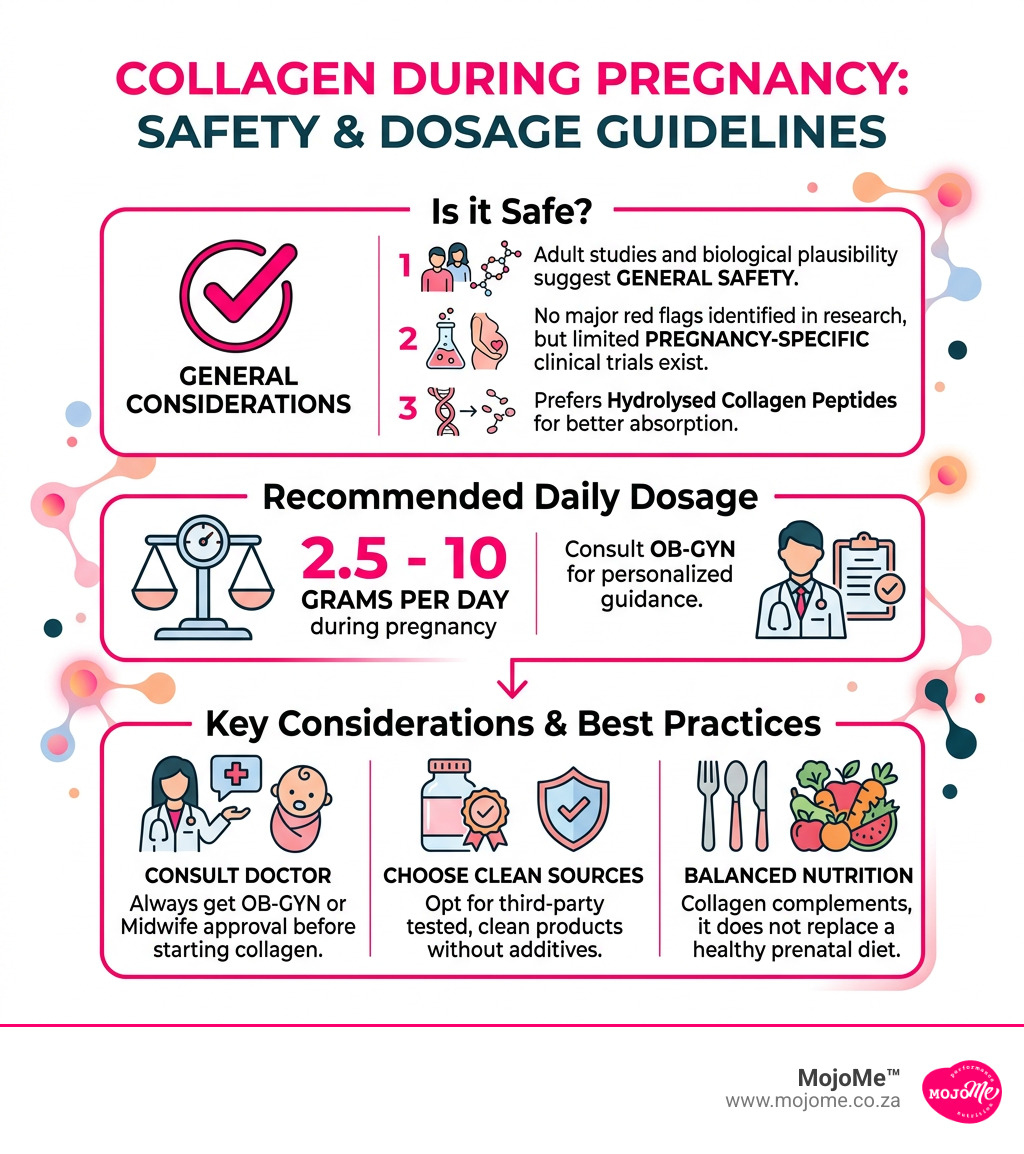
The short answer:
- Collagen supplements are generally considered safe during pregnancy
- No major red flags exist in adult research, but pregnancy-specific clinical trials are limited
- Hydrolysed collagen peptides from clean, third-party-tested sources are the preferred form
- Always consult your OB-GYN or midwife before adding any supplement to your routine
Here is a quick summary of what the current evidence says:
| Question | What the Research Suggests |
|---|---|
| Is it safe? | Generally yes, based on adult studies and biological plausibility |
| Best form? | Hydrolysed collagen peptides for better absorption |
| Recommended daily amount? | 2.5 to 10 grams per day during pregnancy |
| Need a doctor’s sign-off? | Yes, always |
| Can it replace prenatal nutrition? | No, it complements a balanced diet |
Collagen makes up nearly a third of all the protein in your body. During pregnancy, your body’s demand for structural proteins increases significantly, making this a topic worth understanding properly.
Read on for the full picture, including benefits, risks, how to choose a quality product and what South African mums should look for on the label.
Understanding Collagen and Its Role in the Body
To understand why so many women are asking can you take collagen pills while pregnant, we first need to look at what this protein actually does. Collagen is the most abundant protein in the human body, accounting for roughly 25 to 30 per cent of our total protein mass. It acts as the “glue” that holds everything together, providing structure to our skin, bones, muscles, tendons and ligaments.
There are more than 28 different types of collagen identified by science, but the vast majority of the collagen in our bodies consists of Types I, II and III. Each serves a specific purpose:
- Type I: This is the most common type and is found in skin, bones, teeth and connective tissues. It is famous for providing skin with its “bounce” and elasticity.
- Type II: Primarily found in cartilage, this type is essential for joint health and cushioning the spaces between our bones.
- Type III: Often found alongside Type I, it supports the structure of muscles, organs and large blood vessels.
Research into the collagen family shows that these proteins are not just static structures. They are dynamic, constantly being broken down and rebuilt. During pregnancy, this process of tissue remodelling goes into overdrive. Your body is literally building a new human being from scratch, which requires a massive amount of “building blocks”—specifically amino acids like glycine, proline and hydroxyproline.
In the South African health context, where busy lifestyles can sometimes lead to nutritional gaps, understanding these building blocks is vital. Collagen is unique because it contains high concentrations of these specific amino acids that are not found in high amounts in typical lean muscle meats like chicken breast or steak.
Can you take collagen pills while pregnant?
When we look at the safety profile of collagen, the general consensus among healthcare professionals is that it is safe for most expectant mothers. Because collagen is a food-derived protein, your body treats it much like the protein found in a piece of beef or fish. Once ingested, the body breaks it down into individual amino acids which are then used where they are needed most.
However, the question of can you take collagen pills while pregnant requires a nuanced look at the research. While there are no “red flags” suggesting harm, it is important to note that most clinical trials on collagen have been conducted on non-pregnant adults. Research on daily collagen doses generally supports the use of 2.5 to 15 grams of hydrolysed collagen peptides per day, finding them well-tolerated with minimal side effects.
The Importance of Consultation
Before you start any new supplement, including collagen pills, we always recommend a chat with your OB-GYN or midwife. Every pregnancy is unique, and your healthcare provider can help you determine if a supplement fits into your specific health profile. They will consider your existing protein intake, any allergies you may have and your overall nutritional needs.
Hydrolysed Peptides vs Whole Collagen
If you decide to supplement, the form matters. Hydrolysed collagen peptides are “predigested” into smaller chains of amino acids. This makes them significantly easier for your body to absorb and gentler on the digestive system, which is a major plus if you are dealing with pregnancy-related tummy sensitivity.
Source Considerations
Collagen is always animal-derived. The two most common sources are:
- Bovine Collagen: Derived from cows, typically providing Types I and III.
- Marine Collagen: Derived from fish skin and scales, primarily providing Type I.
If you have a known allergy to beef or fish, you must avoid the corresponding collagen source. For most women, bovine collagen is a popular choice during pregnancy because it is robust and supports the types of tissues that undergo the most stress during gestation.
Benefits of Collagen Supplementation During Pregnancy
Pregnancy is a physically demanding marathon. As your baby grows, your body undergoes massive structural changes. Supplementing with collagen can offer several targeted benefits that help you navigate these changes more comfortably.

Digestive Health and Bloating Relief
Many pregnant women suffer from digestive issues ranging from bloating to heartburn. Interestingly, research on collagen and gut health suggests that collagen peptides may act as a prebiotic. This means they help nourish the beneficial bacteria in your gut. Furthermore, the amino acids in collagen, particularly glycine and glutamine, are known to support the integrity of the gut lining. This can be particularly helpful for managing the “leaky gut” symptoms or general inflammation that sometimes occurs during pregnancy.
How collagen supports specific pregnancy concerns like stretch marks and skin elasticity
One of the most mind-blowing statistics in prenatal biology is that the collagen content in the uterus grows up to 800 per cent during pregnancy. Your uterus must expand from the size of a small pear to the size of a watermelon, and collagen provides the structural framework for this expansion.
When it comes to your skin, research on oral collagen and skin shows that supplementation can significantly improve skin elasticity and hydration. While stretch marks are often influenced by genetics and the speed of weight gain, providing your body with the raw materials to support dermal integrity can help your skin stretch more gracefully.
Joint support and bone health during gestation
As your due date approaches, your body produces a hormone called relaxin, which loosens your ligaments to prepare the pelvis for birth. While this is necessary, it can lead to joint instability and pain. Collagen is a key component of your ligaments and tendons. Research on collagen for bones and joints indicates that it helps maintain strong, flexible joints and supports bone mass by working alongside calcium and Vitamin D. This added support can be a lifesaver when you are carrying the extra weight of a growing baby.
Meeting increased protein requirements for foetal development
Protein needs skyrocket during pregnancy. A study on pregnancy protein needs suggests that protein requirements increase to approximately 79 grams per day during early gestation (around 16 weeks) and up to 108 grams per day during late gestation (around 36 weeks).
For many women, especially those struggling with morning sickness or food aversions to meat, hitting these targets can be difficult. Collagen pills or powders offer a convenient, low-volume way to top up your protein intake without having to face a large meal.
Choosing the Best Collagen for Pregnancy
Not all collagen is created equal. When you are shopping for supplements in South Africa, purity should be your top priority. You want a product that supports your health without introducing unnecessary chemicals or contaminants.
Selecting high quality collagen pills while pregnant
The supplement industry is not as strictly regulated as the pharmaceutical industry, which means the burden of quality control often falls on the manufacturer. Here is what we believe you should look for:
- Third-Party Testing: Look for brands that invest in independent lab testing. Third-party certification ensures that the product actually contains what it says on the label and is free from heavy metals like lead or mercury.
- No Fillers or Sugars: Many flavoured collagen products are packed with artificial sweeteners, colours and fillers. During pregnancy, it is best to stick to pure, single-ingredient hydrolysed collagen.
- Non-GMO and Grass-Fed: Choosing bovine collagen from grass-fed, pasture-raised cows ensures a cleaner amino acid profile and avoids the potential for hormones or antibiotics often found in grain-fed cattle.
- South African Manufacturing: Supporting local brands like MojoMe™ ensures you are getting a product designed for our market, with clear transparency regarding its Cape Town origins.
Bovine vs Marine Collagen for Pregnancy
Both are excellent, but they have slight differences.
| Feature | Bovine Collagen | Marine Collagen |
|---|---|---|
| Primary Types | Type I and III | Type I |
| Best For | Skin, muscles and gut health | Skin and hair |
| Sustainability | High (by-product of beef industry) | High (by-product of fishing) |
| Allergy Risk | Beef (rare) | Fish/Shellfish (more common) |
| Taste | Generally neutral | Can have a faint “ocean” hint |
Dietary sources vs supplementation
While supplements are convenient, we always advocate for a food-first approach. You can get natural collagen from your diet by consuming:
- Bone Broth: Slow-simmered bones release collagen and minerals.
- Fish with Skin: The skin is where the highest concentration of collagen lies.
- Tougher Cuts of Meat: Cuts like chuck or brisket that require slow cooking are rich in connective tissue.
To optimise your body’s natural collagen production, you must pair these protein sources with Vitamin C. Vitamin C is the essential cofactor that allows your body to actually link amino acids together to form collagen fibres. Squeezing a lemon over your fish or eating a bowl of berries with your breakfast can make a world of difference.
Frequently Asked Questions about Collagen and Pregnancy
Is collagen safe during the first trimester?
Yes, it is generally considered safe during the first trimester. This is a critical time for tissue remodelling and the initial stages of placentation (the formation of the placenta). Some women find that the neutral taste of collagen peptides is one of the few protein sources they can tolerate when morning sickness is at its peak. However, if you find that any supplement triggers nausea, it is perfectly fine to wait until the second trimester when your appetite returns.
Can I take collagen while breastfeeding?
Absolutely. In fact, many women find it even more beneficial postpartum. A study on postpartum collagen use found that it helped women maintain healthy protein levels and supported recovery after birth. It can also help with the dreaded “postpartum hair shed” by providing the amino acids needed for hair and nail growth.
Are there any side effects or risks?
Side effects are rare but can include:
- Digestive Sensitivity: Some people experience mild bloating or a feeling of heaviness.
- Allergies: As mentioned, avoid bovine or marine sources if you have known allergies.
- Heavy Metals: Low-quality supplements can contain trace heavy metals. This is why we insist on third-party testing and clean labels.
Conclusion
The journey of pregnancy is a beautiful, albeit taxing, transformation. When you ask can you take collagen pills while pregnant, you are taking a proactive step toward supporting your body through its most demanding season.
At MojoMe™, we are committed to providing pure, potent and natural nutrition. Based in the heart of Cape Town, we produce science-backed supplements that contain no fillers, no sugars and no gluten. Our multi-collagen and bone broth products are designed for those who refuse to compromise on quality.
Whether you are looking to support your skin elasticity, protect your joints or simply meet your increased protein needs, collagen can be a powerful ally. Remember to prioritise a balanced diet, stay hydrated and always keep your healthcare provider in the loop.
Your body is doing the hard work of creating life. Give it the best possible building blocks to ensure you both thrive. Safe, natural and backed by science—that is the MojoMe™ way.