What Are Bone Broth Collagen Benefits?
Bone broth collagen benefits include supporting gut health, joint comfort, skin elasticity and muscle maintenance, all from a single nutrient-dense food source.
Here is a quick summary:
| Benefit | How Bone Broth Collagen Helps |
|---|---|
| Gut health | Amino acids like glutamine help maintain the intestinal lining |
| Joint support | Collagen provides building blocks for cartilage repair and comfort |
| Skin elasticity | Glycine and proline support collagen synthesis and hydration |
| Bone and muscle strength | Protein and minerals contribute to structural maintenance |
| Sleep and stress | Glycine may support relaxation and sleep quality |
Bone broth has been a kitchen staple across cultures for centuries. In South Africa, as more people move away from processed foods and towards natural, whole-food nutrition, bone broth is having a well-deserved moment in the spotlight.
But what makes it genuinely useful is not the trend. It is the collagen.
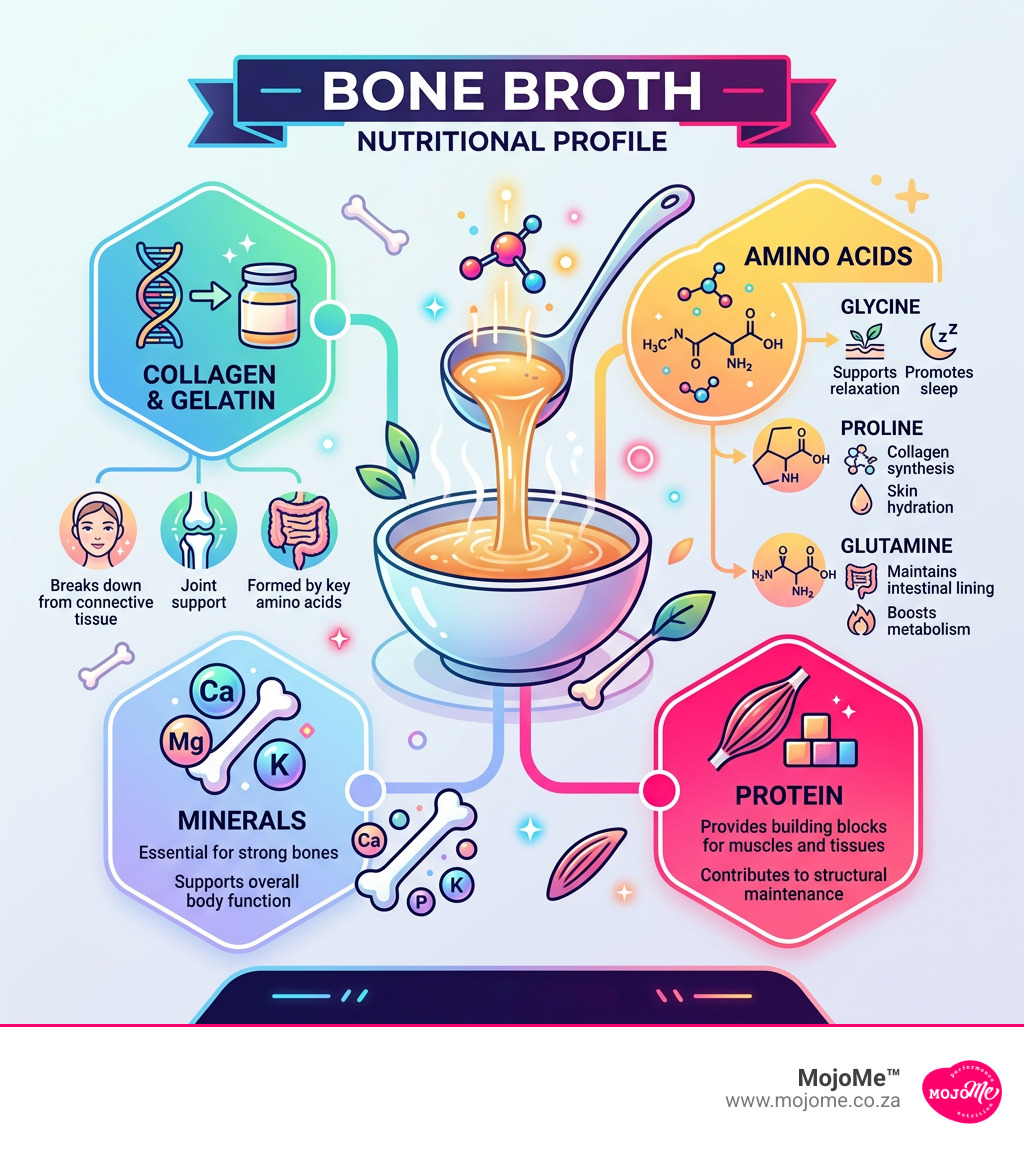
When bones are simmered slowly in water, collagen from the connective tissue breaks down into gelatin and then into individual amino acids. These amino acids, particularly glycine, proline and glutamine, are the raw materials your body uses to repair the gut lining, cushion joints and support healthy skin.
The research is promising, though it is important to be clear: most clinical evidence comes from studies on collagen supplements rather than bone broth directly. What bone broth does offer is a natural, bioavailable source of collagen precursors, alongside minerals and protein, in a form that is easy to digest and incorporate into daily life.
This guide breaks down what the science actually says, what bone broth can and cannot do and how South African consumers can get the most from it.
Understanding Bone Broth and Collagen Extraction

Bone broth is a nutrient-dense liquid made by simmering animal bones and connective tissue for an extended period, usually between 12 and 24 hours. This “low and slow” method is essential because it facilitates the breakdown of collagen, the most abundant protein in the body, into a more digestible form known as gelatin.
To maximize the extraction of these nutrients, we recommend using an acidic catalyst, such as apple cider vinegar or lemon juice. The acid helps demineralise the bones and break down the tough connective tissues, ensuring that the resulting broth is rich in proteins and minerals. Without this acidic component and a long simmering time, you are essentially making a standard stock rather than a true bone broth. For those looking to optimize their intake, understanding how to Improve Bone Broth Collagen Absorption for Better Results is key to reaping the full rewards of this ancient superfood.
Distinguishing Broth from Stock and Bone Broth
While the terms are often used interchangeably in South African kitchens, there are distinct differences in how these liquids are prepared and what they offer nutritionally.
| Feature | Regular Broth | Stock | Bone Broth |
|---|---|---|---|
| Primary Ingredient | Meat | Bones with some meat | Bones, joints and connective tissue |
| Simmering Time | 45 minutes to 2 hours | 3 to 6 hours | 12 to 24+ hours |
| Texture | Thin and watery | Slightly viscous | Gel-like when chilled |
| Protein Content | 2g to 6g per cup | 2g to 6g per cup | 8g to 10g per cup |
| Purpose | Flavour base | Culinary foundation | Nutritional supplement |
Regular broth is typically made by simmering meat for a short time. It is tasty but lacks the high concentration of collagen found in bone broth. Stock is a middle ground, simmered long enough to extract some flavour and body from bones but usually not long enough to fully break down the collagen into a therapeutic dose of gelatin. Bone broth is the gold standard for health, as the lengthy cooking process ensures the liquid is packed with the building blocks of our own structural tissues.
The Role of Amino Acids in Bone Broth
The true power of bone broth collagen benefits lies in its unique amino acid profile. Unlike muscle meat, which is high in methionine, bone broth is rich in “non-essential” amino acids that are often lacking in modern diets.
- Glycine: This is the smallest amino acid but carries a heavy load. It is essential for the synthesis of glutathione, the body’s master antioxidant, and plays a vital role in DNA strand health.
- Proline: Proline is a major component of collagen. It helps the body produce its own collagen stores, which is vital for maintaining the integrity of skin, tendons and joints.
- Glutamine: Known as the “gut-healing” amino acid, glutamine is the primary fuel source for the cells lining the small intestine.
- Arginine: This amino acid is involved in immune system function and wound healing.
By providing these specific precursors, bone broth gives your body the tools it needs to maintain its “internal scaffolding.”
How Bone Broth Collagen Benefits Gut Health
The gut is the foundation of our health. In South Africa, where digestive issues and inflammatory conditions are increasingly common, bone broth is often recommended for its potential gut healing properties.
The primary way bone broth supports the digestive tract is through its high gelatin content. Gelatin is hydrophilic, meaning it attracts and holds onto water. When you consume bone broth, the gelatin helps to keep water in the digestive tract, which supports healthy bowel movements and protects the mucosal lining of the stomach and intestines. This is one of the most celebrated Benefits of Bone Broth for those struggling with sensitive stomachs.
Specific Bone Broth Collagen Benefits for Leaky Gut
“Leaky gut,” or increased intestinal permeability, occurs when the tight junctions in the intestinal wall become loose, allowing undigested food particles and toxins to enter the bloodstream. This can trigger inflammation and immune responses throughout the body.
The amino acid glutamine found in bone broth is particularly effective inreducing gut inflammation. It helps to “seal” these tight junctions, reinforcing the intestinal barrier. While many studies have been conducted on mice, the anti-inflammatory properties of bone broth suggest it may be a soothing addition to the diet for those managing conditions like ulcerative colitis.
Supporting the Microbiome and Immune Function
Did you know that roughly 70% of your immune system resides in your gut? A healthy gut barrier is your first line of defence against pathogens.
A recent study indicated that amino acids like glycine can increase intestinal immunity and microbial diversity. By supporting a healthy environment for beneficial bacteria to thrive, bone broth indirectly strengthens your immune response. This is especially relevant during the South African winter months when the risk of colds and flu increases.
Maximising Bone Broth Collagen Benefits for Joints and Skin
As we age, our bodies produce less collagen, which can lead to the stiff joints and sagging skin we often associate with getting older. Bone broth provides the raw materials to help mitigate these changes.
For the active South African—whether you are hiking up Table Mountain or running the Comrades Marathon—joint health is paramount. Collagen is a primary component of cartilage, the “cushion” between your bones. When this cartilage wears down, it can lead to osteoarthritis.
Studies have shown that Bone Broth Collagen Helps Joints Feel Less Stiff by providing the amino acids required for tissue repair. One study even found that adults taking chicken collagen for 8 weeks reported significant improvements in mobility and a reduction in joint pain.
Impact on Skin Elasticity and Ageing
The beauty industry has long touted collagen as a “fountain of youth” for reducing wrinkles. While topical creams have limited effectiveness, consuming collagen precursors through bone broth may help from the inside out.
A comprehensive research review of 19 studies found that hydrolyzed collagen helps improve skin hydration and elasticity. By supporting the dermal layer of the skin, bone broth can help reduce the appearance of fine lines over time. It typically takes about 3 months of consistent consumption to see visible changes in skin texture and hydration.
Comparing Bone Broth Collagen Benefits to Supplements
It is a common question: “Is bone broth better than a collagen supplement?” The answer depends on your goals.
Scientific analysis shows that bone broth is not a significant source of all vitamins and minerals, despite its reputation. Furthermore, a study comparing standardized bone broth to a 20g therapeutic dose of collagen supplements found that the broth had significantly lower concentrations of key amino acids like hydroxyproline and glycine.
However, bone broth is a whole food. It contains electrolytes like potassium and magnesium, and it provides a “matrix” of nutrients that supplements may lack. For targeted therapeutic results, many people choose to use a high-quality Chicken Bone Broth Powder which offers the convenience of a supplement with the nutritional profile of traditional broth.
Practical Considerations for the South African Consumer
When buying bone broth in South Africa, you must be a savvy label reader. The popularity of the “bone broth” name means that many commercial products are simply standard stocks with clever marketing.
One of the biggest concerns with store-bought broth is sodium. Some brands contain over 450mg of sodium per cup, which is nearly 20% of the recommended daily limit. For those with high blood pressure or kidney concerns, this is a significant factor.
There is also the question of heavy metals. Because bones can store lead, some have worried that long simmering times might release toxins. However, research has shown that the levels of lead and other contaminants in bone broth are extremely low and well within safety limits. It is considered safe for daily consumption as part of a balanced diet.
Choosing Quality Store Bought Options
If you are buying broth from a local supermarket or health shop, look for these indicators of quality:
- Protein Content: Aim for at least 8g to 10g of protein per 250ml serving.
- The “Gel” Test: High-quality bone broth should turn into a jelly-like substance when refrigerated. This proves it is rich in gelatin.
- Simmer Time: Look for brands that specify a simmering time of at least 12 to 24 hours.
- Ingredients: Avoid products with added sugar, MSG, or excessive preservatives.
MojoMe™ offers pure, potent multi-collagen bone broth powders that are free from fillers, sugars and grains, making them an excellent choice for those following a keto or clean-eating lifestyle in South Africa.
Homemade Preparation Tips
Making your own broth at home is cost-effective and allows you to control the quality of ingredients.
- Start with Good Bones: Use a mix of marrow bones and “jointy” bones like chicken feet, necks, or beef knuckles. These are the highest in collagen.
- Roast for Flavour: Roasting your bones at 200°C for 30 minutes before simmering adds a deep, rich flavour.
- Add Acid: Use 30ml of apple cider vinegar per 2 litres of water to help pull the collagen from the bones.
- Low and Slow: Use a slow cooker or a heavy-bottomed pot on the lowest setting. Simmer chicken for 12 to 24 hours and beef for 24 to 48 hours.
- Strain and Store: Strain out the solids and cool the liquid quickly. It will stay fresh in the fridge for 4 days or in the freezer for up to 6 months.
Frequently Asked Questions about Bone Broth
How much bone broth should I drink daily for collagen benefits?
For general wellness, drinking 250ml (one cup) of bone broth daily is a great starting point. This provides roughly 10g of protein and a steady supply of collagen-building amino acids. If you are using it for a specific goal, such as a Bone Broth Fast: Your Ultimate Reset and Detox, you may consume more, but always listen to your body and monitor your sodium intake.
Can bone broth help with sleep and stress?
Yes, thanks to the amino acid glycine. Glycine acts as an inhibitory neurotransmitter, meaning it can help calm the nervous system and promote relaxation. Some research suggests that consuming glycine before bed can improve sleep quality and reduce daytime sleepiness in people with insomnia. Plus, the ritual of sipping a warm, savoury beverage is naturally soothing.
Is bone broth safe for children and during pregnancy?
Generally, yes. Bone broth is a whole-food source of nutrition that is easy for children to digest. It can be a great way to boost the protein and mineral intake of “fussy eaters.” For pregnant women, the collagen and amino acids support the growing needs of both mother and baby. However, because bones can contain trace amounts of lead, it is best to limit consumption to one cup a day and ensure you are using high-quality, organic bones where possible. Always consult your healthcare provider before making significant dietary changes during pregnancy.
Conclusion
The bone broth collagen benefits we have explored—from sealing a leaky gut to cushioning aching joints—make it clear why this ancient remedy has stood the test of time. While it is not a “magic bullet” that replaces a healthy lifestyle, it is a powerful tool for anyone looking to support their body’s structural integrity and digestive health.
At MojoMe™, we are committed to providing South Africans with the highest quality wellness products. Our multi-collagen bone broth powders are science-backed, award-winning and crafted right here in Cape Town. Whether you are looking to support your gut, your skin, or your overall vitality, we invite you to experience the MojoMe difference.
Explore the MojoMe Collagen Broth Collection and start your journey toward better health today.