
Why Medium Chain Triglycerides for Weight Loss Actually Work
Medium chain triglycerides for weight loss represent one of the most well-researched dietary fat strategies for supporting body composition in overweight adults.
Quick answer: how MCTs support weight loss
- MCTs are absorbed faster than regular fats and sent directly to the liver for energy
- They increase the number of kilojoules your body burns after eating (thermogenesis)
- They support ketone production, helping your body burn fat for fuel
- They reduce how much you eat at subsequent meals by promoting feelings of fullness
- Clinical trials show MCT oil users lost an average of 1.67 kg more than olive oil users over 16 weeks
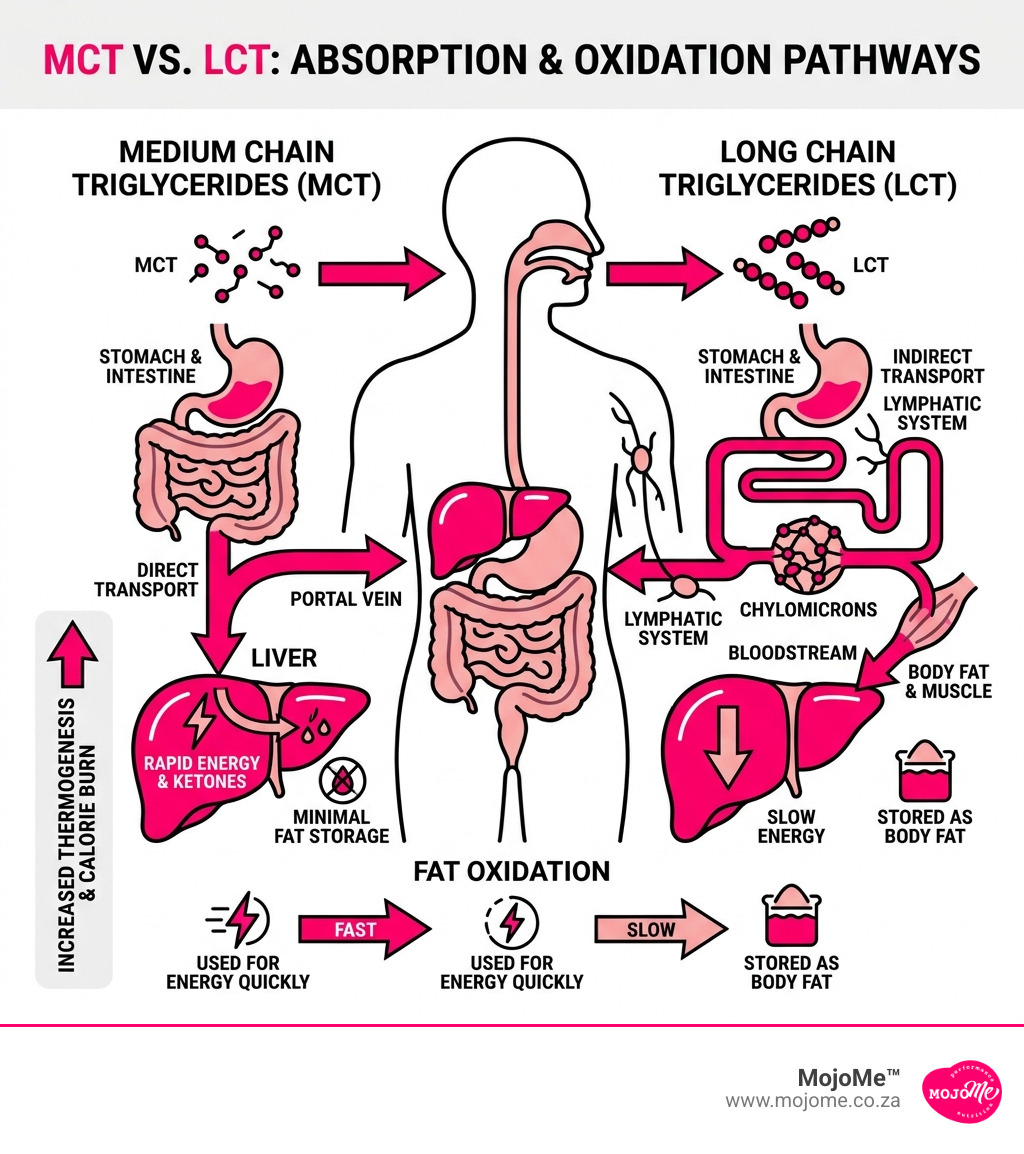
Not all fats behave the same way inside your body. Most dietary fats, known as long chain triglycerides (LCTs), are packaged into particles called chylomicrons and transported through your lymphatic system before eventually reaching the bloodstream. This slow route gives them plenty of opportunity to be stored as body fat.
MCTs take a very different path.
Because of their shorter carbon chains (6 to 12 carbon atoms), MCTs bypass lymphatic transport entirely. They travel directly from your gut to your liver via the portal vein, where they are rapidly oxidised for energy. This physiological shortcut is central to why medium chain triglycerides have attracted serious scientific attention as a weight management tool.
The research is not about hype. A 2015 meta-analysis of 13 randomised controlled trials found that replacing LCTs with MCTs produced modest but statistically significant reductions in body weight, waist circumference, total body fat and visceral fat. A separate systematic review confirmed that pure MCTs led to 1.62% greater weight reduction compared to long chain fatty acids.
For South Africans navigating grain-heavy diets, blood sugar concerns and the search for clean, natural supplementation, MCTs offer a science-backed tool worth understanding properly.
Understanding Medium Chain Triglycerides for Weight Loss
To understand why we advocate for medium chain triglycerides for weight loss, we first need to look at the molecular structure. Triglycerides are simply the technical name for fat. They consist of a glycerol backbone and three fatty acid chains. The “medium” in MCT refers to the length of these chains.
While most fats in the modern South African diet, like sunflower oil or beef tallow, contain 13 to 21 carbon atoms (long chain), MCTs contain only 6 to 12. The most effective for metabolic health are Caprylic acid (C8) and Capric acid (C10). These specific fatty acids are the ones we focus on because they offer the most rapid conversion into clean energy.
By using a process called fractionation, we can separate these potent medium chains from the long chains found in whole oils. This results in a concentrated supplement that provides more metabolic “bang for your buck” than eating raw coconut oil alone. You can find more info about the benefits of MCT oil to see how this concentration impacts everything from brain health to physical endurance.
How MCTs Differ from Long Chain Triglycerides
The fundamental difference lies in the digestion speed. Because MCT molecules are smaller, they don’t require bile or pancreatic enzymes to be broken down in the same way LCTs do. They are essentially a “fast-track” fuel.
When you consume LCTs, your body has to work hard to package them into chylomicrons. These chylomicrons circulate through your lymphatic system and then your blood. Any fat not immediately needed for energy is tucked away into your adipose tissue (body fat).
MCTs, however, head straight to the portal vein. From there, they enter the mitochondria (the power plants of your cells) without needing the “carnitine shuttle” that long chain fats require. This leads to rapid hepatic oxidation. In simpler terms, your liver burns them up for energy almost immediately, leaving very little opportunity for them to be stored on your hips or waistline. This unique pathway is supported by extensive scientific research on MCT metabolism and fat burning.
Sourcing and Production of Pure MCTs
Most commercial MCT oil is derived from either coconut oil or palm kernel oil. While coconut oil is a fantastic whole food, it is only about 15% pure C8 and C10. The rest is mostly Lauric acid (C12), which behaves more like a long chain fat in the body.
To create a high-quality Pure Coconut MCT Oil, the oil undergoes molecular distillation. This separates the C8 and C10 from the heavier fats. We prioritise sourcing that is 100% natural and free from fillers or grains, ensuring that the final product is a potent, clear liquid that remains liquid even in the fridge. This purity is vital for those of us in the Western Cape looking for clean keto nutrition that aligns with a healthy lifestyle.
The Metabolic Advantage: How MCTs Drive Fat Reduction
The primary reason medium chain triglycerides for weight loss are so effective is their impact on energy expenditure. When you eat MCTs, your body’s metabolic rate actually increases. This is known as diet-induced thermogenesis.
Essentially, your body burns more kilojoules just to process MCTs than it does for other types of fat. Research has shown that daily ingestion of just 2 g of MCTs for two weeks can increase postprandial energy expenditure and fat oxidation in overweight sedentary adults.
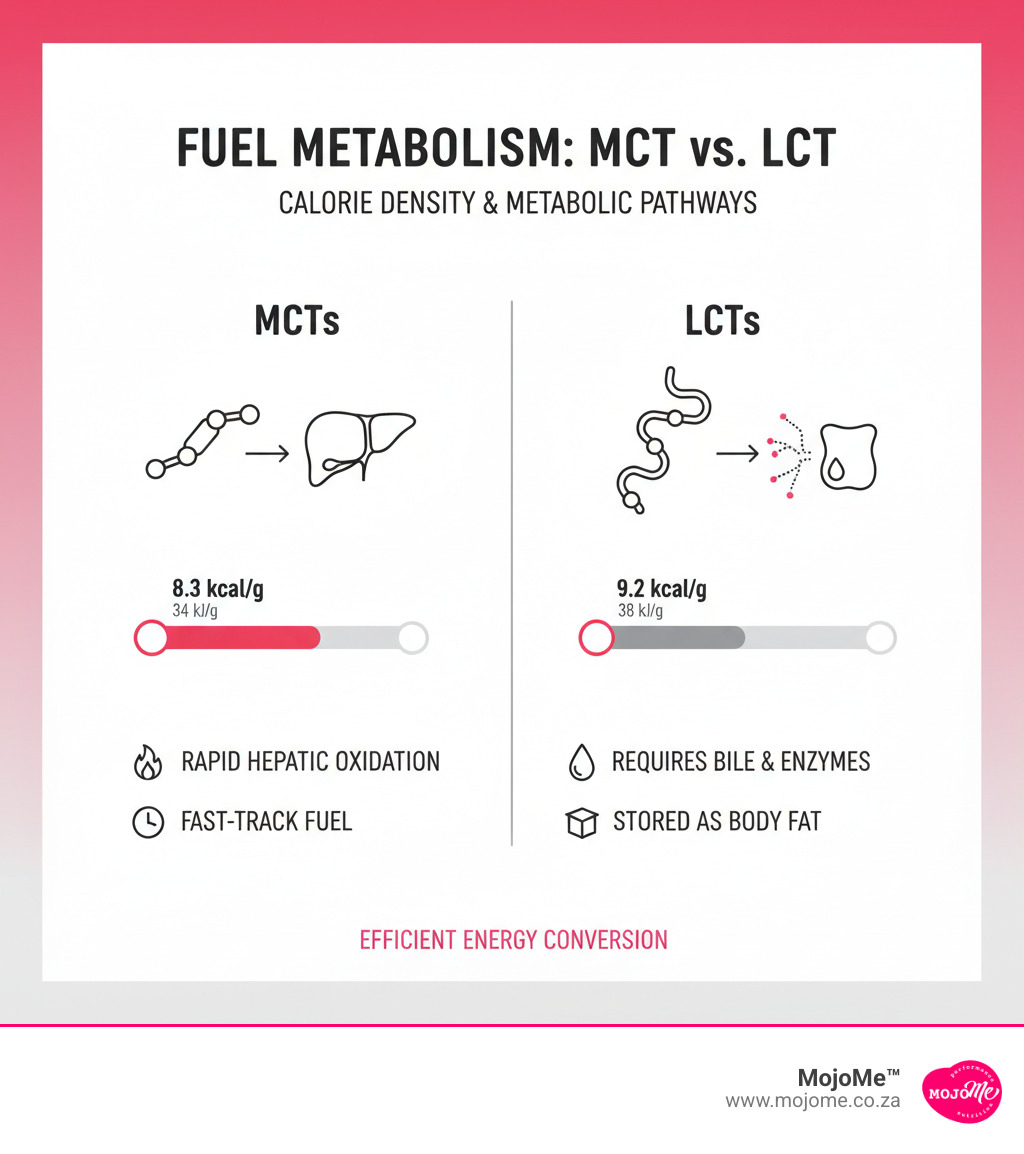
| Feature | MCTs | LCTs |
|---|---|---|
| Kilojoules per gram | ~34 kJ (8.3 kcal) | ~38 kJ (9.2 kcal) |
| Absorption Pathway | Direct to Portal Vein | Lymphatic System |
| Digestion Speed | Rapid (no bile required) | Slow (requires enzymes) |
| Primary Use | Immediate Energy / Ketones | Energy Storage / Fat Cells |
| Thermogenic Effect | High | Low |
Supporting Ketosis with Medium Chain Triglycerides for Weight Loss
For those of us following a ketogenic lifestyle in South Africa, MCTs are a game-changer. One of the hardest parts of keto is the “transition” phase where your energy might dip. Because MCTs are converted so quickly into ketone bodies in the liver, they provide an alternative fuel source for your brain and muscles even if you haven’t fully depleted your glycogen stores yet.
MCTs enhance nutritional ketosis by increasing the production of beta-hydroxybutyrate (BHB). This is why many people find that adding MCTs to their morning routine helps them reach the fat-burning phase faster. The synergy between MCT oil and the ketogenic diet is well-documented, especially for those looking to maintain high energy levels while restricting carbohydrates.
Appetite Regulation and Caloric Intake
Perhaps the most “secret” weapon of MCTs is their ability to tell your brain you are full. Two specific hormones are key here: Peptide YY (PYY) and Leptin.
Studies have shown that people taking two tablespoons of MCT oil as part of their breakfast ended up eating less food at lunch compared to those who took coconut oil or olive oil. This isn’t just about willpower; it is about biology. By stimulating these satiety hormones, MCTs help naturally reduce your overall caloric intake without the “hangry” feelings often associated with dieting. This is a core finding in the research review on MCTs and body composition.
Clinical Evidence and Weight Loss Statistics
We don’t just rely on anecdotes. The clinical evidence for medium chain triglycerides for weight loss is robust. One of the most famous studies involved 49 overweight men and women over 16 weeks. The group using MCT oil lost an average of 1.67 kg more than the group using olive oil.
While 1.67 kg might sound modest, it is important to note that this was a “free-living” study, meaning participants didn’t have to follow a strictly controlled laboratory diet. They simply swapped their usual oil for MCT oil. This proves that even small changes in the quality of your fat intake can lead to significant changes in body composition over time. You can read the full weight loss diet study comparing MCT and olive oil for a deeper look at the data.
Impact on Body Composition and Adipose Tissue
Weight loss is one thing, but fat loss is what really matters. MCTs seem to have a particular affinity for reducing visceral fat—the dangerous fat stored around your internal organs.
A 2015 meta-analysis of 13 trials showed that MCTs significantly decreased:
- Body weight
- Waist circumference
- Hip circumference
- Total body fat
- Total subcutaneous fat
- Visceral fat
A 2024 meta-analysis on MCTs and metabolic health further highlighted that pure MCTs (not mixed MLCTs) are the key to these results. For South Africans struggling with metabolic syndrome or “apple-shaped” weight distribution, focusing on trunk fat reduction through MCT supplementation is a highly effective strategy.
Practical Implementation in the South African Kitchen
Integrating medium chain triglycerides for weight loss into your daily life is surprisingly easy. Because pure MCT oil is tasteless and odourless, it won’t ruin the flavour of your favourite South African dishes.
One of our favourite ways to use it is in “Bulletproof” coffee. By blending a tablespoon of MCT oil into your morning coffee, you create a creamy, frothy latte that provides sustained energy and suppresses hunger until lunch. If you find the oil a bit too “oily” for your palate, an MCT Oil Powder is an excellent alternative. It acts like a creamy creamer but provides all the metabolic benefits of the oil.
Other ways to use MCTs:
- Salad Dressings: Mix with apple cider vinegar and herbs for a metabolic boost to your greens.
- Smoothies: Add a tablespoon to your post-workout shake to aid recovery and keep you full.
- Pre-workout: Take 5 g to 10 g before a gym session for a quick energy hit that doesn’t spike insulin.
Recommended Dosage of Medium Chain Triglycerides for Weight Loss
If you are new to MCTs, we always recommend starting small. Your digestive system needs a little time to adjust to the rapid absorption.
- Starting Dose: 5 g (about one teaspoon) per day for the first week.
- Maintenance Dose: Gradually increase to 15 g (one tablespoon) once or twice daily.
- Upper Limit: Most studies suggest a safe upper limit of around 60 ml to 100 ml per day, but most people see excellent results with just 30 ml (two tablespoons).
MCTs are still fats and contain kilojoules. To see weight loss results, they should replace other fats in your diet, not be added on top of a high-fat intake. For help with common hurdles, check out these fixes for MCT oil storage and usage problems.
Integrating MCTs with Intermittent Fasting
Many South Africans in Cape Town and beyond use intermittent fasting to manage their weight. MCTs are a perfect companion for this. Because they don’t cause a significant insulin spike, many people find that a small dose of MCT oil in the morning helps them extend their fast without feeling weak or foggy.
It helps maintain energy stability and improves insulin sensitivity, making the “fasting window” much more manageable. If you are serious about this strategy, we have written the ultimate guide to using MCT oil during intermittent fasting to help you get the timing exactly right.
Safety Considerations and Potential Side Effects
While MCTs are generally safe and non-toxic, “disaster pants” is a real term used in the keto community for a reason. If you take too much too soon, you might experience gastrointestinal distress, including abdominal cramping or diarrhoea.
This happens because MCTs are so quickly absorbed that they can draw water into the gut. The solution is simple: start with a small 5 g dose and build up slowly. If you do experience issues, we have a guide on keto supplements side effects and solutions to help you troubleshoot.
Who Should Consult a Doctor Before Use
While we love the benefits of MCTs, they aren’t for everyone. You should consult a healthcare professional before starting medium chain triglycerides for weight loss if you have:
- Liver Disease: Since MCTs are processed in the liver, those with liver issues (like cirrhosis) should be cautious.
- Heart Health Concerns: While MCTs have a neutral effect on most lipid profiles, if you are on strict saturated fat limits due to a specific heart condition, check with your cardiologist.
- Pregnancy and Breastfeeding: There isn’t enough long-term research on high-dose MCT supplementation during pregnancy, so it is best to stick to whole food sources like coconut oil unless advised otherwise.
Frequently Asked Questions
Is MCT oil more effective than coconut oil for weight loss?
Yes. While coconut oil is healthy, it only contains a small percentage of the potent C8 and C10 fatty acids that drive thermogenesis and ketone production. MCT oil is essentially “concentrated” coconut oil. For weight loss specifically, the pure C8 and C10 benefits are much more pronounced.
Can MCT oil help with neurological health?
Absolutely. The brain can use ketones as an alternative fuel source when glucose metabolism is impaired, which is often the case in conditions like Alzheimer’s or epilepsy. In fact, some studies showed a 42% reduction in seizures in adults with drug-resistant epilepsy after three months of MCT use. You can explore more about MCT oil for neurological disorders to see the latest findings.
Does MCT oil cause high cholesterol?
Most research shows that MCT oil has a neutral effect on total cholesterol, LDL and HDL levels. Some studies even show an improvement in the “good” HDL cholesterol. However, some individuals may see a small increase in triglycerides if they are in a massive caloric surplus. A 2024 study on the impact of MCTs on glucolipid metabolism confirmed that for most overweight individuals, MCTs actually improve metabolic markers like insulin resistance.
Conclusion
At MojoMe, we are committed to providing South Africans with the purest, science-backed nutrition possible. From our base in Muizenberg, Cape Town, we produce 100% natural supplements that contain no fillers, sugars or grains.
Using medium chain triglycerides for weight loss is not about a “magic pill”—it is about using biology to your advantage. By swapping out slow-digesting long chain fats for rapid-burn MCTs, you can support your metabolism, control your appetite and fuel your brain with clean ketones.
Whether you prefer a pure liquid oil or a convenient powder for your coffee, we invite you to explore our Medium Chain Triglycerides Product Category to start your journey toward better metabolic health today. We believe that when you give your body the right fuel, the results speak for themselves.