Why the Bone Broth Keto Diet is One of the Smartest Combinations in Modern Nutrition
The bone broth keto diet is a nutritional pairing that supports ketosis, helps manage the symptoms of keto adaptation and delivers a concentrated dose of collagen, electrolytes and easily digestible protein with minimal carbohydrates.
Here is why bone broth works so well on keto:
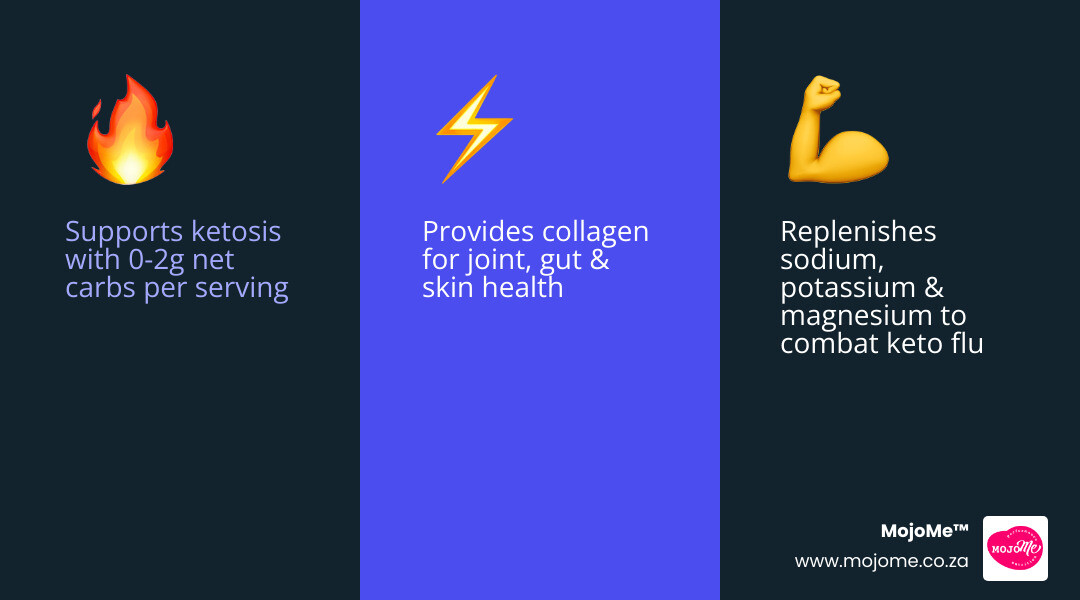
- Supports ketosis – typically contains 0 to 2g net carbs per serving, keeping you firmly in fat-burning mode
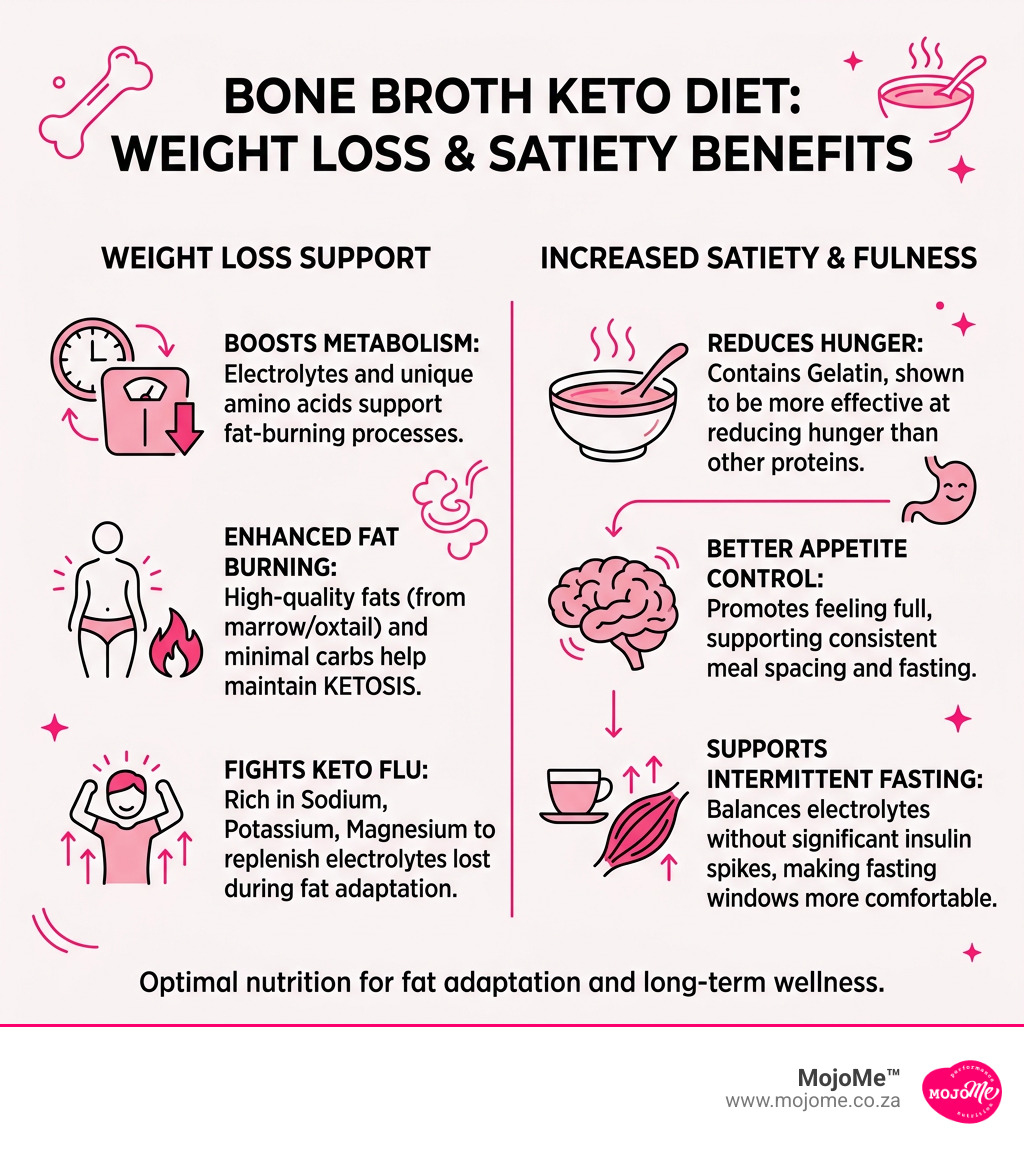
- Combats keto flu – replenishes sodium, potassium and magnesium lost during the low-carb adaptation phase
- Provides collagen protein – delivers glycine, proline and hydroxyproline that support joint, gut and skin health
- Aids satiety – gelatin and amino acids help reduce hunger and cravings between meals
- Hydration support – replaces fluids and electrolytes that the body excretes more rapidly on a low-carb diet
Starting a ketogenic diet places real demands on the body. The shift from burning glucose to burning fat as a primary fuel source triggers a rapid loss of water and minerals. This can leave you feeling fatigued, crampy and foggy, a cluster of symptoms commonly known as keto flu.
Bone broth addresses several of these challenges at once. It is low in carbohydrates, rich in minerals and packed with connective tissue proteins that are largely absent from modern diets built around lean muscle meat.
The result is a whole-food supplement that fits the macronutrient requirements of keto while filling genuine nutritional gaps.
The Role of the Bone Broth Keto Diet in Modern Wellness
In our fast paced South African lifestyle, maintaining nutritional discipline can be a challenge. The bone broth keto diet has emerged as a cornerstone of modern wellness because it aligns perfectly with the metabolic requirements of fat-adaptation. When we restrict carbohydrates to enter a state of ketosis, our insulin levels drop. This signal tells the kidneys to release excess water and sodium. While this leads to initial weight loss, it can also disrupt our internal mineral balance.
Bone broth serves as a bridge during this transition. It is inherently low in calories and carbohydrates, often containing less than 1g of net carbs per 240ml serving. This ensures that you stay within your daily macro limits while receiving a concentrated boost of nutrients. Furthermore, the benefits of bone broth extend beyond just basic nutrition. It integrates high-quality fats if prepared with marrow bones or oxtail, which helps meet the high-fat requirements of the ketogenic lifestyle.
When we burn fat for fuel, our bodies produce ketones. These small molecules do more than just provide energy; they act as powerful signalling agents. Research on ketones and anti-inflammatory signals suggests that being in ketosis can help lower systemic inflammation. By adding bone broth to this equation, we provide the body with the raw materials needed to repair tissues that may have been affected by chronic inflammation in the past.
Combating Keto Flu with a Bone Broth Keto Diet
The most common hurdle for anyone starting their keto journey in Cape Town or anywhere else in South Africa is the dreaded keto flu. This is not a viral illness but rather a metabolic protest. As your body flushes out glycogen, it takes essential minerals with it. Sodium, potassium and magnesium are the three primary electrolytes that need constant replenishment.
A well-made bone broth keto diet staple acts as a natural electrolyte drink. Unlike sugary sports drinks that would immediately kick you out of ketosis, bone broth provides:
- Sodium: Essential for maintaining blood pressure and fluid balance.
- Potassium: Crucial for heart health and preventing muscle cramps.
- Magnesium: Helps with sleep, muscle relaxation and reducing the “brain fog” associated with low-carb transitions.
The extraction of these minerals depends heavily on your preparation method. Scientific data on mineral yields and cooking times indicates that simmering bones for at least 20 to 36 hours in a low pH environment (achieved by adding an acid like apple cider vinegar) significantly increases the mineral content of the final broth. Short cooking times of under 8 hours often yield negligible levels of calcium and magnesium, making the “slow and low” approach vital for those using broth to combat keto flu symptoms.
Maximising Results on a Bone Broth Keto Diet
To get the most out of your ketogenic journey, satiety is key. One of the primary reasons people fail on diets is persistent hunger. Bone broth contains gelatin, which has been shown in various studies to be more effective at reducing hunger than other protein sources like casein. This makes it an excellent tool for those practicing intermittent fasting alongside keto.
The amino acid profile of bone broth is also unique. It is exceptionally high in glycine, an amino acid that plays a vital role in muscle repair and metabolic health. Modern diets are often over-abundant in methionine, found in lean muscle meats. An imbalance between methionine and glycine can potentially lead to increased inflammation. By consuming more glycine through bone broth, we balance our amino acid intake.
For those interested in more info on bone broth and intermittent fasting, it is important to note that a small cup of broth can provide the necessary electrolytes to keep you feeling energised during a fast without causing a significant insulin spike. This allows you to extend your fasting window comfortably, leading to better fat-burning results.
Collagen Benefits for Skin, Joint and Gut Health
One of the most significant advantages of the bone broth keto diet is the high concentration of collagen. Collagen is the most abundant protein in the human body, making up about 30% of our total protein content. However, our natural production begins to decline by about 1% every year after the age of 25.
Bone broth provides Type II collagen, which is specifically beneficial for joint health. As we age or engage in strenuous exercise, our cartilage can wear down. The glycosaminoglycans found in bone broth, such as glucosamine and chondroitin, provide the building blocks for joint repair. Many of our community members have found that bone broth collagen helps joints feel less stiff, especially when combined with a low-inflammatory ketogenic diet.
The benefits for your skin are equally impressive. A clinical study on skin elasticity and collagen demonstrated that women who supplemented with collagen peptides showed significant improvements in skin elasticity and hydration. Because bone broth is a whole-food source of these peptides, regular consumption can contribute to a more youthful appearance and stronger hair and nails.
Finally, we cannot overlook gut health. The gelatin in bone broth helps to “heal and seal” the gut lining. This is particularly important for individuals dealing with leaky gut syndrome or digestive sensitivities. By strengthening the mucosal lining of the digestive tract, bone broth improves nutrient absorption and supports a robust immune system.
How to Prepare Keto Friendly Bone Broth at Home
Making your own bone broth is a rewarding process that minimises food waste and ensures you have a nutrient-dense staple ready in your kitchen. Whether you use a traditional slow cooker or a modern pressure cooker, the goal is the same: to break down the collagen and minerals within the bones.
| Feature | Slow Cooker (Crockpot) | Pressure Cooker (Instant Pot) |
|---|---|---|
| Cooking Time | 24 to 48 hours | 2 to 4 hours |
| Effort Level | Set and forget | Fast and efficient |
| Gelatin Yield | Very high | High |
| Mineral Extraction | Excellent | Excellent |
Step-by-Step Instructions for Keto Bone Broth:
- Source Quality Bones: Use 1 to 2kg of grass-fed beef bones, marrow bones or oxtail. For chicken broth, use the carcass of a roasted chicken or chicken feet for extra gelatin.
- Roast for Flavour: Place bones in a roasting pan and bake at 200°C for 30 minutes. This caramelisation adds a deep, rich flavour to your broth.
- Add Acid: Place bones in your pot and cover with water. Add 30ml (2 tablespoons) of apple cider vinegar. This helps leach the minerals from the bones.
- Vegetables and Herbs: Add keto-friendly aromatics like celery, onion skins (for colour), garlic and bay leaves. Avoid starchy vegetables like potatoes.
- Simmer: In a slow cooker, cook on low for at least 24 hours. In a pressure cooker, use the “Soup” setting for 120 to 180 minutes.
- Strain and Store: Strain the liquid through a fine-mesh sieve. Let it cool before refrigerating. Once chilled, a layer of fat (tallow or schmaltz) will form on top. You can keep this for cooking or remove it.
The Golden Bone Broth Variation: To give your broth a thermogenic and anti-inflammatory boost, try making “Golden Bone Broth”. Simply heat 250ml of bone broth with 5ml of turmeric, a pinch of black pepper (to activate the curcumin) and a splash of coconut milk or 10g of grass-fed butter. It is a velvety, warming drink that is perfect for a South African winter evening.
Frequently Asked Questions about Bone Broth and Keto
How much bone broth should I drink daily?
For most people on a bone broth keto diet, drinking 250ml to 500ml (one to two cups) per day is ideal. This provides a consistent supply of electrolytes and collagen without significantly impacting your daily calorie count. If you are using it specifically to overcome keto flu, you might increase this to three cups a day during the first week of transition.
Does bone broth break a fast?
This depends on your goals for fasting. If you are fasting strictly for gut rest or religious reasons, the small amount of protein and fat in bone broth may “break” the fast. However, if you are fasting for weight loss or metabolic health, bone broth is generally considered acceptable. It provides enough satiety to keep you from eating solid food while maintaining a very low insulin response.
Can I use store bought broth?
Yes, but you must be careful. Many commercial stocks and broths found in South African supermarkets contain added sugars, cornflour, yeast extracts and high levels of preservatives. Always check the label for “net carbohydrates”. Ideally, look for brands that use grass-fed bones and long simmer times. If you are short on time, a high-quality bone broth powder is often a better alternative to liquid supermarket stocks as it provides a more concentrated nutrient profile without the hidden additives.
Conclusion
The bone broth keto diet is far more than a passing trend; it is a return to ancestral wisdom supported by modern nutritional science. By incorporating this liquid gold into your daily routine, you provide your body with the essential electrolytes needed to thrive in ketosis, the collagen required for structural repair and the amino acids necessary for metabolic balance.
At MojoMe, we believe in pure nutrition without compromise. Our commitment to 100% natural ingredients means our products contain no fillers, sugars, gluten or grains. Based in the beautiful Muizenberg, Cape Town, we are proud to support the South African wellness community with science-backed nutrition that delivers real results.
Whether you are sipping a warm mug of broth to start your day or using it to enhance your favourite keto recipes, you are taking a proactive step toward better health. Ready to experience the benefits for yourself? Shop MojoMe Bone Broth and discover the difference that pure, potent nutrition can make to your ketogenic lifestyle.